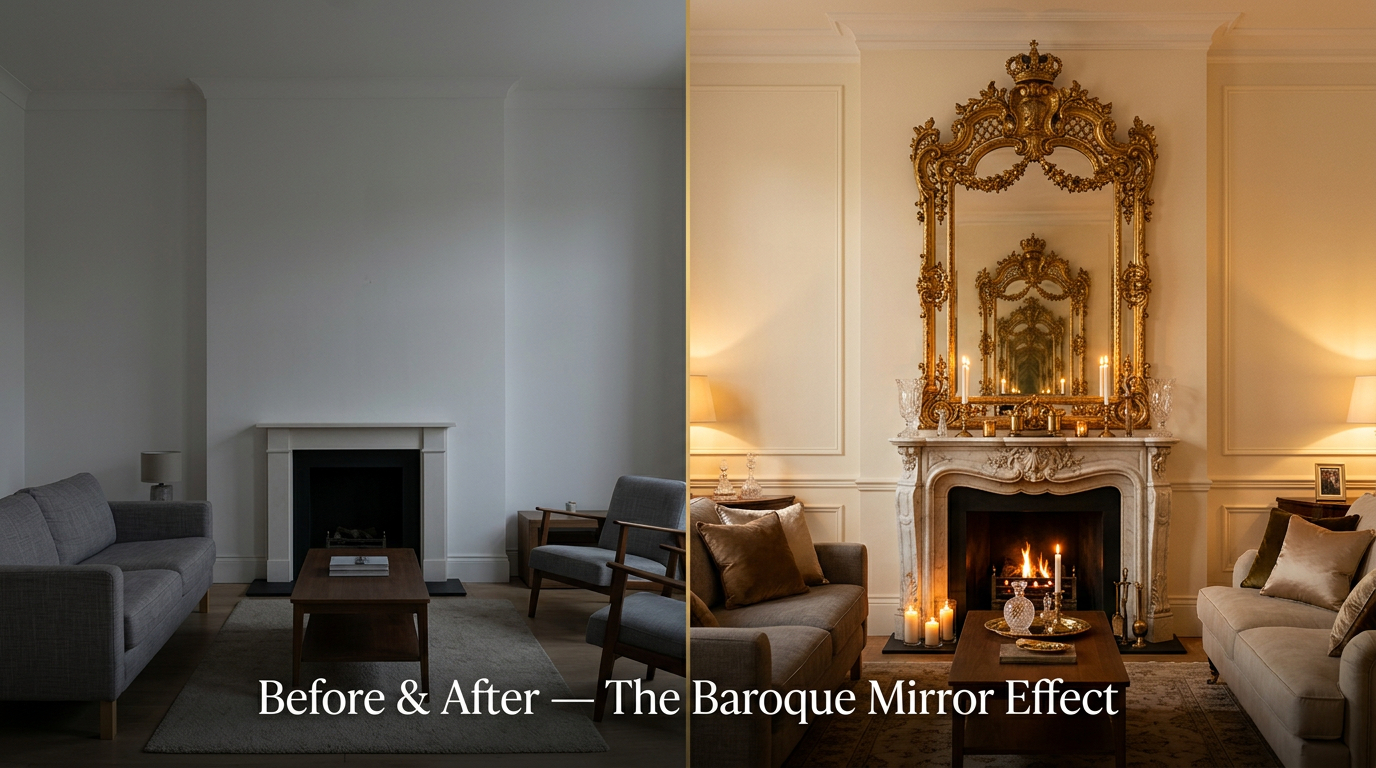
Why Baroque Mirrors Make Every Room Look More Expensive (+ How to Choose the Right One
There is a reason why the world’s most prestigious hotels, from the Ritz in Paris to the Savoy in London, rely on the Baroque style mirror to define their interiors. It isn’t just about the reflection; it’s about the “weight” of the room. A baroque mirror acts as an architectural anchor, a piece of functional art that suggests history, legacy, and, above all, a high-end lifestyle.
In the modern European home, where space is often at a premium—whether it’s a chic Berlin flat or a classic Victorian terrace in the UK—a luxury mirror is the ultimate “cheat code” for interior design. It instantly elevates the perceived value of your furniture and multiplies the natural light.
But how do you transition from a simple wall hanging to a curated Baroque vintage mirror that looks like an heirloom rather than an afterthought? This guide will walk you through why these pieces are the gold standard for expensive-looking interiors and how to choose the right one for your specific space.
The “Baroque Effect”: Why It Signals Luxury
The Baroque movement (roughly 1600–1750) was designed to awe. It was the era of the “Grand Style,” where every curve was dramatic and every surface was a canvas for intricate carvings. When you hang a Baroque style mirror, you are borrowing that historical gravity.
- Complexity Equals Value: In a world of flat-pack, minimalist furniture, the high-relief carvings of a luxury mirror—think acanthus leaves, scrolling vines, and ornate cherubs—signal craftsmanship. Human eyes are naturally drawn to detail; the more there is to look at, the “more expensive” the item feels.
- Light Multiplication: Because a baroque mirror often features a wide, gilded frame, it catches light from multiple angles, not just from the glass itself. This creates a glow that illuminates dark corners in traditional European apartments.
- Scale and Proportion: A Baroque vintage mirror is often larger and bolder than modern alternatives. This “oversized” look is a classic interior design trick used to make small rooms feel like grand halls.
1. The Entryway: The “First Impression” Luxury Mirror
In the UK and Germany, entryways are often functional but narrow. To make this transition space look expensive, you need a Baroque style mirror that draws the eye upward.
How to Choose:
- The Shape: Look for a “Pier Mirror”—a tall, slender baroque mirror designed to sit between two windows or doors.
- The Finish: In a London townhouse, a deep, burnished gold finish feels authentic. In a modern Munich apartment, a silver-leaf luxury mirror provides a cooler, more contemporary “expensive” vibe.
- The Placement: Hang it opposite a light source. The intricate frame will break up the reflection, preventing a “glare” while still doubling the brightness of the hall.
2. The Living Room: The Power of the Overmantel
In France and Spain, the fireplace is the soul of the home. Replacing a standard mirror with a Baroque vintage mirror above the mantel is the quickest way to increase the “room’s IQ.”
How to Choose:
- The Crest: To make the room look taller, choose a Baroque style mirror with a high “crown” or crest in the center. This draws the eye toward the ceiling.
- The Width: An expensive-looking setup requires balance. Your luxury mirror should be approximately 70-80% of the width of the mantelpiece. If it is too small, it looks timid; if it is too wide, it feels cluttered.
- The Tone: For a truly high-end Spanish look, consider a dark wood frame with gold-leaf accents. It feels grounded, historic, and incredibly sophisticated.
3. The Dining Room: Doubling the Drama
Dining rooms in Italy and France are built for long evenings and candlelight. A baroque mirror in this setting isn’t for checking your appearance; it’s for reflecting the “vibe.”
How to Choose:
- The “Window” Effect: Use a massive, floor-length Baroque style mirror leaning against the main wall. This makes the dining table feel twice as long and the guest list twice as large.
- The Glass Quality: For a truly expensive look, ensure your luxury mirror features beveled edges. The angled cut on the glass periphery catches light like a diamond, adding a subtle sparkle that flat glass lacks.
4. The Bedroom: The Romantic Luxury Mirror
The bedroom is where you can move away from the “bold” gold and toward the “soft” luxury of a Baroque vintage mirror.
How to Choose:
- Oval Frames: While rectangular frames are dominant in living areas, an oval Baroque style mirror feels more intimate and feminine. It softens the hard lines of wardrobes and bed frames.
- Distressed Finishes: In a French-inspired bedroom, a “white-washed” or “distressed” baroque mirror looks like a find from a Parisian flea market. This “shabby chic” luxury suggests you have the taste to appreciate the beauty of age.
5. The Bathroom: The “Boutique Hotel” Upgrade
Nothing says “expensive” like an ornate Baroque style mirror in a bathroom. It creates a stark, beautiful contrast against modern white tiles or dark marble.
How to Choose:
- Size Matters: Don’t be afraid to go slightly larger than your vanity unit. A slightly oversized baroque mirror creates a “designer” look that feels custom-made for the space.
- Moisture Protection: If you are placing a luxury mirror in a high-humidity area like a bathroom in rainy Manchester or humid Barcelona, ensure the back is properly sealed to prevent the “silvering” on the glass from peeling over time.
Buying Guide: How to Spot a High-End Baroque Mirror
If you want your home to look expensive, you must avoid “cheap” imitations that look like molded plastic. Here is what to look for when shopping for a Baroque style mirror:
| Feature | The “Expensive” Choice | The “Cheap” Alternative |
| Frame Material | Solid wood or high-density resin | Lightweight, thin plastic |
| Detailing | “High Relief” (deep, 3D carvings) | Flat, stamped patterns |
| Finish | Gold/Silver Leaf (textured) | Uniform spray paint |
| Glass | Beveled edges (4-5mm thick) | Thin, flat-edge glass |
| Style | Authentic Baroque vintage mirror | Generic “scroll” pattern |
Regional Style Tips for European Buyers
- UK: Mix your Baroque style mirror with deep navy or hunter green walls. The contrast between the dark paint and the gold frame is a classic “Old Money” aesthetic.
- Germany (DE): Keep the room minimalist. A single, massive luxury mirror in an otherwise white, clean room creates a “Gallery” effect that is very popular in Berlin.
- Italy (IT): Go for the “Glossy” look. A black-framed baroque mirror with gold highlights fits perfectly in a high-fashion Milanese apartment.
- Spain/France (SP/FR): Embrace the patina. A Baroque vintage mirror with slightly tarnished gilding looks more expensive because it implies the piece has a story to tell.
Maintenance: Keeping the Luxury Alive
An expensive-looking home is a well-maintained home. Because a Baroque style mirror has so many nooks and crannies, dust can dull its shine.
- The Frame: Use a soft-bristled makeup brush to dust the intricate carvings of your luxury mirror. This reaches where cloths cannot.
- The Glass: Never spray cleaner directly onto the mirror; it can seep into the frame and cause rot. Spray a microfiber cloth first, then wipe.
Conclusion: A Reflective Investment
Investing in a Baroque style mirror is the most cost-effective way to transform a room from “standard” to “stunning.” It is a piece that transcends trends, offering a sense of permanence and prestige that few other decor items can match. Whether it’s a Baroque vintage mirror in the hallway or a grand luxury mirror in the lounge, you are choosing a style that has defined elegance for over 300 years.