Baroque Chairs vs. Modern Chairs: What’s the Difference in Comfort and Style?
The chair you choose speaks before you do.
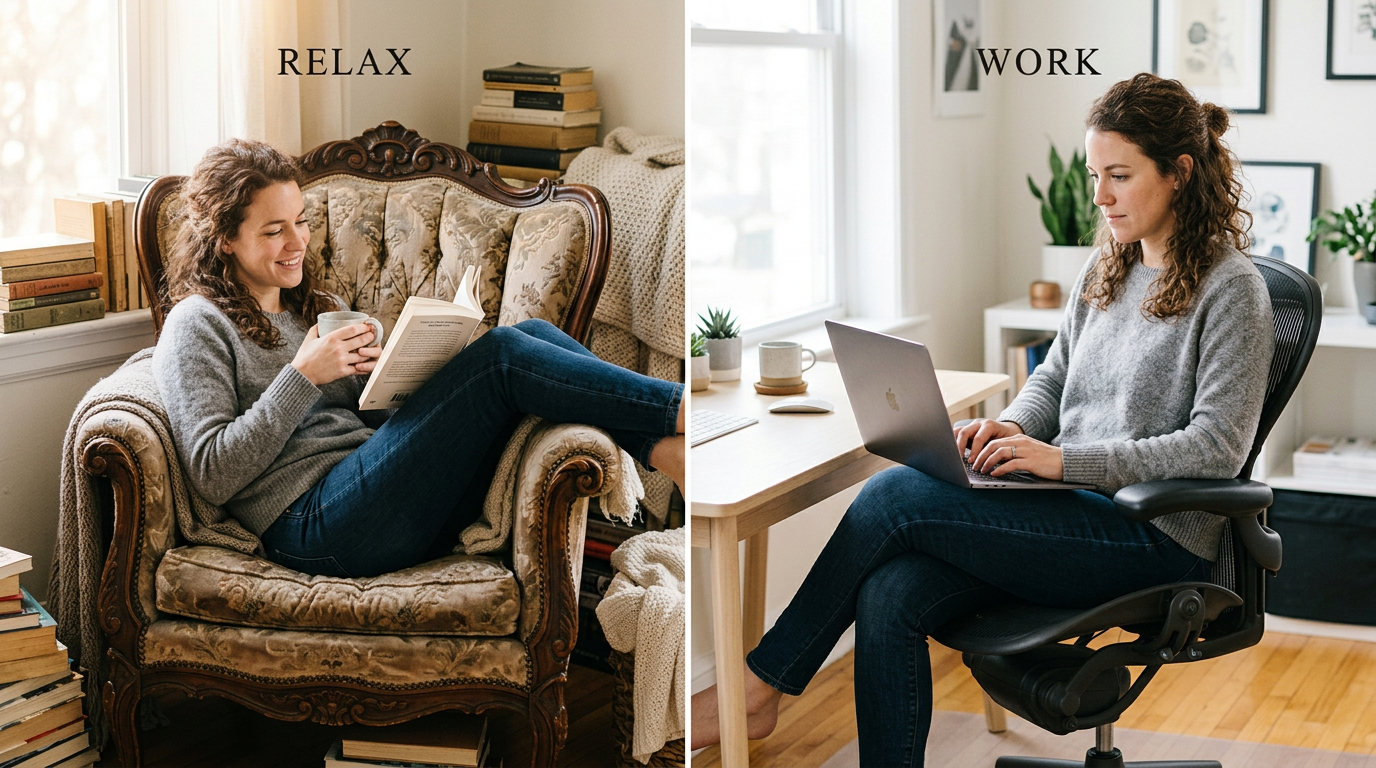
Walk into a room containing Baroque chairs—all gilded curves, velvet depths, and carved mahogany splendor—and you understand immediately: this space values heritage, drama, and the art of lingering. Enter the same room furnished with modern chairs—clean lines, honest materials, ergonomic precision—and the message shifts: efficiency, clarity, contemporary relevance.
But which actually delivers superior comfort? Which ages better? Which suits your body, your space, your life?
This isn’t merely aesthetic preference. It’s a fundamental choice between two competing definitions of how humans should inhabit furniture.
Origins: Power vs. Progress
Baroque chairs emerged from 17th-century European courts—Versailles, Vienna, Rome—where seating was political theater. Louis XIV’s throne wasn’t designed for eight-hour workdays. It was engineered to display wealth, anchor authority, and accommodate elaborate dress (those wide armrests? Originally for supporting voluminous sleeves and heavy embroidery).
The modern chair revolution arrived three centuries later, birthed by industrial capability and changing human needs. The Bauhaus宣言 of 1919—”form follows function”—rejected ornament as crime. Chairs became machines for sitting, optimized for factories, apartments, and democratic access.
Understanding this lineage explains everything that follows.

The Comfort Equation: Two Different Mathematics
Baroque Comfort: The Art of Repose
Baroque chairs prioritize positional comfort over task comfort. Their design assumes:
- Extended, stationary sitting (conversation, receiving guests, contemplation)
- Multiple posture options (upright formal, semi-reclined informal, sideways perching)
- Supportive cushioning that molds to the body over time
Key comfort features:
- Deep, loose seat cushions: Down-filled or high-resilience foam wrapped in soft batting, creating a “sinking” sensation that distributes weight broadly
- Curved backrests: Following natural spine curvature without aggressive lumbar forcing
- Generous proportions: 60cm+ seat widths accommodating various body sizes and clothing layers
- Armrest height: Positioned for elbow support during conversation, not desk work
The result? Sublime comfort for reading, talking, thinking. Potential strain for laptop use, dining, or rapid position changes.
Modern Comfort: The Science of Support
Modern chairs approach comfort as biomechanical optimization. Their design assumes:
- Varied tasks requiring focus and productivity
- Extended sitting with health consequences to mitigate
- Universal adjustability across body types
Key comfort features:
- Ergonomic engineering: Lumbar support at precise heights (typically 15-20cm above seat), pelvic tilt encouragement, neck alignment
- Responsive materials: Molded plywood, tensioned mesh, memory foam—materials that react to pressure rather than simply absorbing it
- Dimensional restraint: Seat depths around 45-50cm preventing slouching, heights enabling feet-flat-floor positioning
- Visual lightness: Open structures reducing psychological heaviness
The result? Sustainable comfort for focused work, meals, active sitting. Potential impersonality for purely social or contemplative use.
Aesthetic Impact: Atmosphere as Material
Baroque Chairs: The Maximalist Statement
A single Baroque chair commands 4-6 square meters of visual territory. Its presence:
- Anchors traditional architecture: Crown moldings, herringbone floors, and tall windows find their match in carved walnut and gold leaf
- Creates temporal depth: The patina of age—worn velvet, faded gilding—introduces narrative and authenticity
- Encourages ceremony: Sitting becomes intentional, not casual. The chair demands posture, attention, presence
European palaces and Parisian apartments deploy Baroque chairs as sculptural anchors within larger compositions. They’re rarely the only seating—instead, they establish hierarchy. The Bergère for the host. The simpler chairs for guests.
Material signatures:
- Solid hardwood frames (walnut, mahogany, beech)
- Natural upholstery (silk velvet, damask, aged leather)
- Hand-finished surfaces with deliberate imperfection
Modern Chairs: The Quiet Revolution
Modern chairs recede visually to let space breathe. Their contribution:
- Amplifies architecture: Clean lines don’t compete with views, light, or spatial flow
- Enables flexibility: Lightweight, stackable, modular—furniture as adaptable infrastructure
- Signals contemporary relevance: Sharp geometry and industrial materials read as current, progressive, aware
Scandinavian and Japanese interiors particularly favor modern chairs for their ability to create calm through reduction. The eye rests. The mind clears.
Material signatures:
- Engineered materials (molded plywood, formed plastic, bent metal)
- Performance textiles (technical weaves, stain-resistant synthetics)
- Precision finishes celebrating manufacturing capability
The Hybrid Reality: Contemporary Solutions
Contemporary furniture design increasingly refuses this binary. Consider:
Neo-Baroque: Modern chairs incorporating Baroque proportions and comfort—deep seats, curved backs—without historical ornament. Think Philippe Starck’s Ghost chair: Louis XVI silhouette in transparent polycarbonate.
Minimalist Ornament: Baroque chairs stripped to essential curves, rendered in monochrome fabrics and matte finishes. Traditional comfort, contemporary restraint.
Ergonomic Traditional: Medical-grade lumbar support hidden within Baroque chair upholstery. The eye sees heritage; the spine receives science.
Decision Framework: Which Suits You?
| Your Priority | Choose Baroque | Choose Modern |
| Primary activity | Conversation, reading, contemplation | Work, dining, active hobbies |
| Room architecture | Historic, ornate, high ceilings | Contemporary, minimal, open plan |
| Sitting duration | 1-3 hours, position changes | 4+ hours, sustained focus |
| Maintenance tolerance | High (upholstery, wood care) | Low (wipe-clean surfaces) |
| Investment timeline | Generational (30+ years) | Cyclical (5-10 years) |
| Body considerations | Prefers soft support, varied positions | Needs firm lumbar, precise alignment |
The Investment Perspective
Authentic Baroque chairs—18th-century originals or faithful reproductions—command €3,000-€15,000+ per piece. They appreciate as cultural assets, require professional restoration, and demand climate-controlled environments.
Quality modern chairs—Eames, Wegner, contemporary design—range €500-€5,000. They depreciate as functional objects, withstand intensive use, and enable easy replacement as needs evolve.
Neither is “better.” They’re different asset classes serving different life strategies.

The Verdict
The Baroque chair asks: What do you want to feel?
The modern chair asks: What do you want to do?
Your answer determines everything—comfort, cost, longevity, and the silent statement your space makes about your values.
European interiors increasingly combine both: modern chairs for daily function, Baroque chairs for occasional grandeur. The dining table surrounded by clean-lined seating. The corner anchored by a single carved throne.
Perhaps the question isn’t which to choose. It’s which deserves dominance in your particular life.