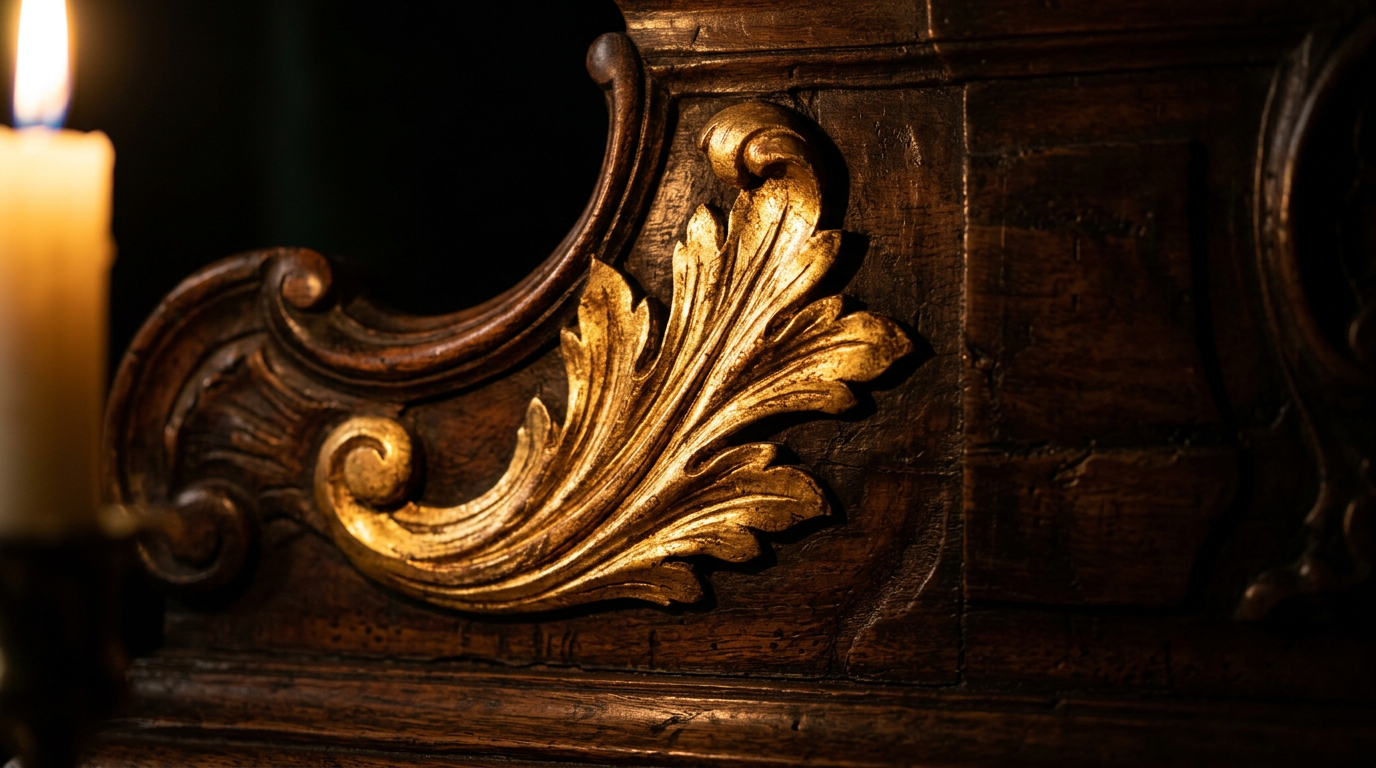
Gold, Carvings, and Drama: The Design Elements That Define True Luxury Baroque Furniture
When you walk into a room furnished with authentic Baroque pieces, you feel it immediately—the weight of history, the audacity of design, the sheer theatricality that makes contemporary furniture feel almost apologetic by comparison. But here’s the challenge: in today’s market, “Baroque style furniture” gets slapped on everything from genuine 17th-century treasures to mass-produced MDF monstrosities with plastic gold trim.
As a collector or discerning buyer, how do you separate museum-quality craftsmanship from clever marketing? This guide breaks down the four definitive elements that distinguish authentic luxury Baroque furniture from the pretenders.
1. The Gilding: More Than Just Gold Paint
The Authentic Standard: True Baroque gilding isn’t a surface treatment—it’s a metallurgical process. Master craftsmen applied genuine gold leaf (typically 23-karat) over a substrate of gesso (a mixture of plaster and glue) built up in dozens of thin layers. This creates a dimensional, luminous quality that catches light differently from every angle.
Look for:
-
Subtle imperfections: Hand-applied leaf shows slight variations in thickness and overlap
-
Aged patina: Authentic pieces develop a warm, mellow glow rather than harsh yellow shine
-
Burnished highlights: Areas of high relief where the gold has been polished to a mirror finish
The Replica Red Flag: Modern “gold finish” furniture uses spray paint, metallic foils, or gold-toned varnishes. These create a flat, uniform appearance that looks almost plastic under close inspection. Run your finger across the surface—authentic gilding has texture; fakes feel like smooth laminate.
Collector’s Tip: The French term “dorure” refers specifically to this traditional water-gilding technique. When examining a piece, ask about the gilding method. Sellers of authentic Baroque furniture should be able to explain the water-gilding process in detail.
2. Hand Carving: The Human Imperfection Test
Baroque furniture emerged when master carvers were the rock stars of the design world. Names like André Charles Boulle and Jean Bérain weren’t just designers—they were virtuosos who understood how wood flows, how grain affects detail, and how light plays across three-dimensional surfaces.
What to Look For:
| Authentic Carving | Mass Production |
|---|---|
| Tool marks visible under magnification | Perfectly uniform surfaces |
| Slight asymmetries in paired elements | Mirror-perfect symmetry (CNC-machined) |
| Deep undercutting creating dramatic shadows | Shallow relief, afraid of breakage |
| Wood grain that follows the form | Grain that ignores the carving’s movement |
The Telltale Details:
Authentic Baroque carvings feature acanthus leaves that seem to unfurl in real time, shell motifs with deeply drilled recesses, and scrollwork that appears to twist in space. The carver wasn’t afraid to create fragile-looking elements because they understood wood structure.
Modern reproductions often sand away the sharp edges that give Baroque furniture its energy. They play it safe, and it shows.
The Undercut Test: Look at carved elements from below. Authentic pieces show extensive undercutting—areas where the carver removed wood from underneath to create floating, three-dimensional effects. This is nearly impossible to replicate with modern routing equipment.
3. Upholstery: The Forgotten Art
While we obsess over frames, Baroque upholstery was equally revolutionary. This era saw the introduction of stuffing techniques that transformed seating from rigid perches into luxurious comfort.
Authentic Baroque Upholstery Elements:
-
Horsehair stuffing: The gold standard, providing resilience and structure
-
Eight-way hand-tied springs: A technique developed in this period that creates even, lasting support
-
Silk damask or velvet: Patterns woven directly into the fabric, not printed
-
Brass nailhead trim: Individually hammered, often in decorative patterns
The Modern Compromise: Today’s “Baroque style furniture” typically uses foam padding (which degrades within years), printed polyester fabrics, and plastic nailhead strips applied by the yard. The comfort is immediate but fleeting; the appearance is superficially correct but lacks depth.
The Frame Connection: Here’s what many buyers miss—authentic Baroque upholstery was designed to be removed and replaced. The frames feature webbing, tacks, and attachment methods that allow for periodic reupholstering every few decades. Cheap reproductions often upholster directly onto plywood or staple fabric to inaccessible frames, making future restoration impossible.
4. Proportions: The Drama of Scale
Baroque design rejected the balanced, rational proportions of the Renaissance in favor of movement, tension, and theatrical scale. Understanding these proportional choices helps identify authentic pieces.
Key Proportional Principles:
Exaggerated Verticality Cabinetry and case pieces often stretch upward with broken pediments, finials, and superstructures that draw the eye heavenward. A genuine Baroque armoire doesn’t just store clothing—it commands attention through sheer vertical presence.
Asymmetrical Balance While the overall composition achieves balance, Baroque designers loved contrapposto—the sense of movement created by opposing forces. A cabinet might feature heavy carving on the left side balanced by gilded bronze mounts on the right, creating visual tension.
Human-Scale Grandeur Baroque furniture is never petite. Even “small” pieces like side chairs have substantial presence. The legs are robust, the arms generous, the seats deep. This furniture was designed for aristocratic spaces where it held its own against tapestries, gilded moldings, and massive chandeliers.
The Replica Problem: Mass-market Baroque furniture often scales down these proportions to fit modern homes and shipping containers. The result loses the very essence of Baroque—its unapologetic grandeur. When a “Baroque” dining chair looks like it could be lifted by one person, it’s not authentic to the period’s spirit.
The Investment Perspective: Why Authenticity Matters
Beyond aesthetics, understanding these elements protects your investment. The market for genuine Baroque furniture has remained remarkably stable because:
-
Irreplaceable craftsmanship: The skills required for authentic gilding, carving, and joinery are nearly extinct
-
Material integrity: Solid walnut, oak, and gilt bronze age gracefully; MDF and plastic do not
-
Historical significance: Documented provenance adds exponential value
When you purchase authentic Baroque pieces, you’re not just buying furniture—you’re preserving a chapter of design history that mass production cannot replicate.
Final Thoughts: Developing Your Eye
The best way to train your eye for authentic Baroque furniture is exposure. Visit museums, attend high-end auctions, and handle genuine pieces when possible. The difference between authentic luxury and clever reproduction becomes visceral—you’ll feel it in the weight of a drawer, the crispness of a carving, the warmth of genuine gold leaf.
Mass-produced Baroque style furniture serves a purpose—it makes dramatic design accessible. But for those seeking the real thing, understanding these four elements transforms you from a buyer into a connoisseur. And in the world of Baroque, that distinction makes all the difference.
Looking to start or expand your collection? Focus on one element at a time. Master the identification of authentic gilding before moving to carving analysis. Building expertise is itself a luxury—one that pays dividends with every acquisition.