Modern Homes Are Embracing Baroque Consoles Again — Here’s Why
For the past decade, the “less is more” philosophy has reigned supreme. We’ve lived through the era of “Sad Beige” and the clinical perfection of Scandi-minimalism. But as we move further into 2026, a clear shift is occurring in the European design landscape. Homeowners and top-tier designers are reclaiming personality, and the comeback star of this movement is the baroque console.
No longer reserved for the gilded hallways of Versailles or the velvet-roped rooms of historical estates, the baroque console table is being reintroduced as the ultimate focal accent for the modern urban home. From Milan to London, this revival isn’t just about nostalgia; it’s about a desire for architectural presence in an increasingly standardized world.
The Cultural Shift: Why “Maximalism-Lite” is Winning
Interior design in 2026 is defined by a rejection of the “assembled” look. People no longer want their living rooms to look like a page from a mass-market catalog. Instead, there is a growing demand for luxury furniture that tells a story.
According to recent trend reports from Milan Design Week 2026, the industry is seeing a resurgence in material authenticity. We are moving away from disposable, flat-pack silhouettes toward pieces that offer weight, history, and craftsmanship. The baroque console—with its dramatic curves and hand-carved details—provides an immediate “anchor” for a room, transforming a generic hallway into a curated gallery space.
A Quick History: More Than Just a Table
To understand why this piece works so well today, we have to look at its pedigree. The word “Baroque” originates from the Portuguese barroco, meaning an “irregularly shaped pearl.” This essence of imperfect, organic beauty is exactly what modern homes lack.
| Era | Key Features | Modern Application |
| Early Baroque (17th C) | Massive, gilded, fixed to walls. | Use as a stationary entryway “statement.” |
| Regency/Louis XV | S-shaped “cabriole” legs, openwork carvings. | Pairs perfectly with sleek, modern mirrors. |
| Napoleon III | Heavier, often featuring caryatids or cast iron. | Works as a high-contrast piece in industrial lofts. |
Originally, the baroque console table was purely decorative—a stage for sculptures and clocks. In 2026, it maintains this “theatrical” purpose but serves as a functional bridge between classical architecture and contemporary living.
How Designers Are Reintroducing Baroque in 2026
Designers like Sophie Paterson and Kelly Wearstler have been instrumental in this revival. A standout moment of 2026 was Wearstler’s collaboration unveiled at the Palazzo Acerbi during Milan Design Week. The installation showcased a “dialogue between past and present,” placing bold, modular furniture alongside the opulent frescoes and soaring columns of the Baroque era.
The Focal Accent Strategy
Modern designers aren’t filling rooms with gold; they are using one singular baroque console to create a high-contrast “moment.”
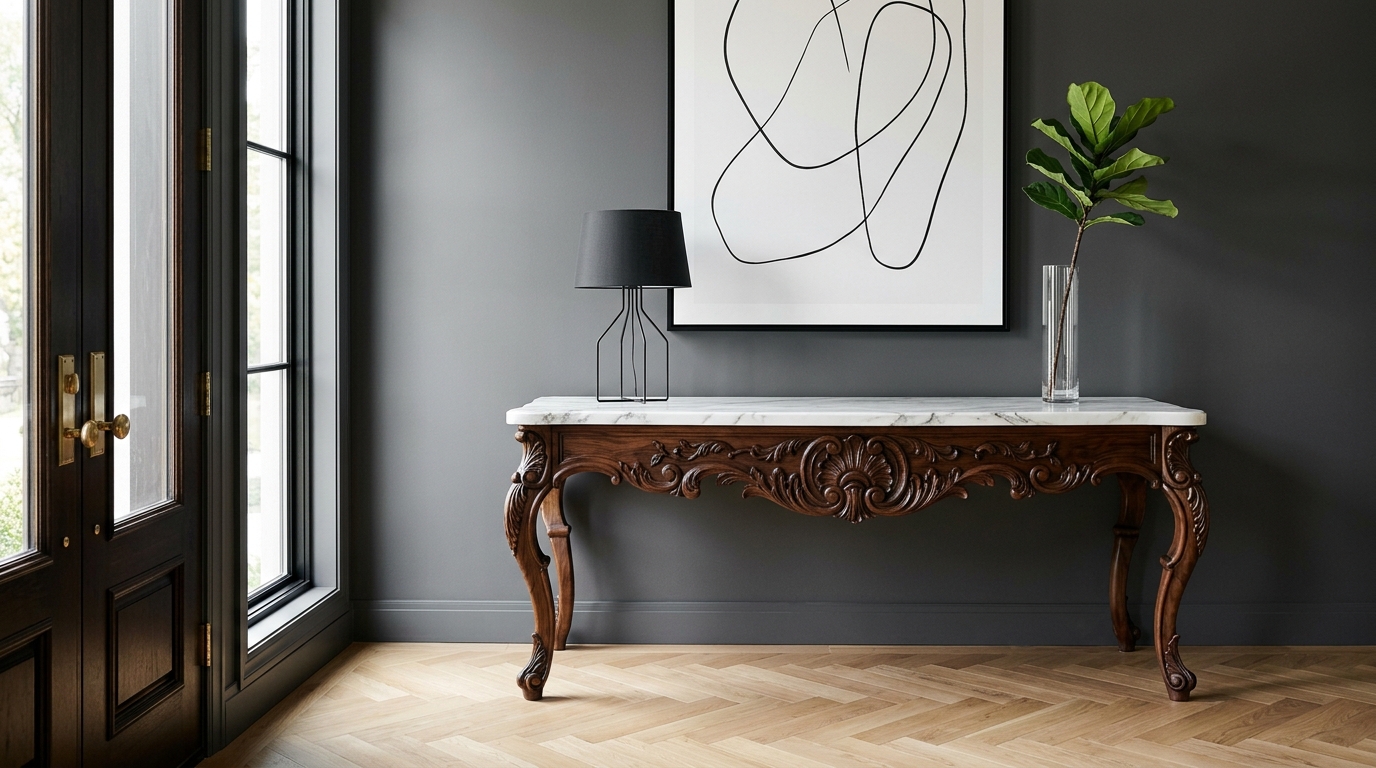
- The Entryway Handshake: A console is the first thing a guest sees. By placing a hand-carved, gilded console against a moody, matte-painted wall (think deep navy or charcoal), you create an immediate sense of luxury without overwhelming the space.
- The Living Room Anchor: Designers are placing slim Baroque consoles behind modern, low-profile sofas. The ornate carvings peeking over the back of a clean-lined sofa add a layer of “permanent architectural jewelry” to the room.
- The Dining Room Sideboard: Replacing a bulky modern buffet with a tall, slender baroque console table allows for a more open, airy feel while providing a sophisticated surface for hosting.
Verified Details: What to Look for in 2026
If you are looking to invest in a baroque console table for modern homes, look for these specific “Modern-Baroque” characteristics that are trending this year:
- Warm Wood Tones: While gold leaf is classic, 2026 is leaning toward natural, hand-waxed walnut and oak. This brings the “Old World” charm but keeps the vibe grounded and organic.
- Mixed Media Tops: Look for consoles that pair an ornate wooden base with a modern marble or tempered glass top. This blend of textures makes the piece feel intentional rather than like an antique shop find.
- The 3-Element Styling Formula: To keep your console looking modern, follow the 2026 styling rule: One Tall, One Medium, One Low. Pair your Baroque piece with a tall, minimalist branch arrangement, a medium stack of art books, and a low, sculptural tray for keys.
“Baroque furniture in 2026 does not represent a return to excess. It reflects a desire for permanence and expressive design. It’s about choosing identity over uniformity.”
— Extract from the 2026 Luxury Interiors Report
Styling Tips for the Modern European Home
To ensure your baroque console doesn’t make your home look like a museum, keep the surrounding elements “quiet.”
- The Wall Behind: Use large-scale, minimalist art above the console. A single, quiet abstract canvas balances the “noise” of the ornate carvings.
- Lighting: Avoid harsh overhead lights. Use a modern, architectural table lamp on one side of the console. The warm glow will create soft shadows in the wood carvings, highlighting the craftsmanship.
- Flooring: Baroque pieces look exceptional on herringbone parquet or polished concrete. The contrast between the intricate furniture and the clean floor lines is the hallmark of 2026 luxury furniture styling.
Conclusion: An Investment in Identity
The return of the baroque console is a celebration of the “irregular pearl” in all of us. It is a rebellion against the soulless, mass-produced interiors of the early 2020s. By introducing a piece that values curves over straight lines and craftsmanship over convenience, you aren’t just buying a table—you are defining the character of your home.
Whether you find a vintage piece in a Parisian brocante or purchase a high-end modern reproduction, the baroque console table is a timeless investment that proves that true luxury never really goes out of style.