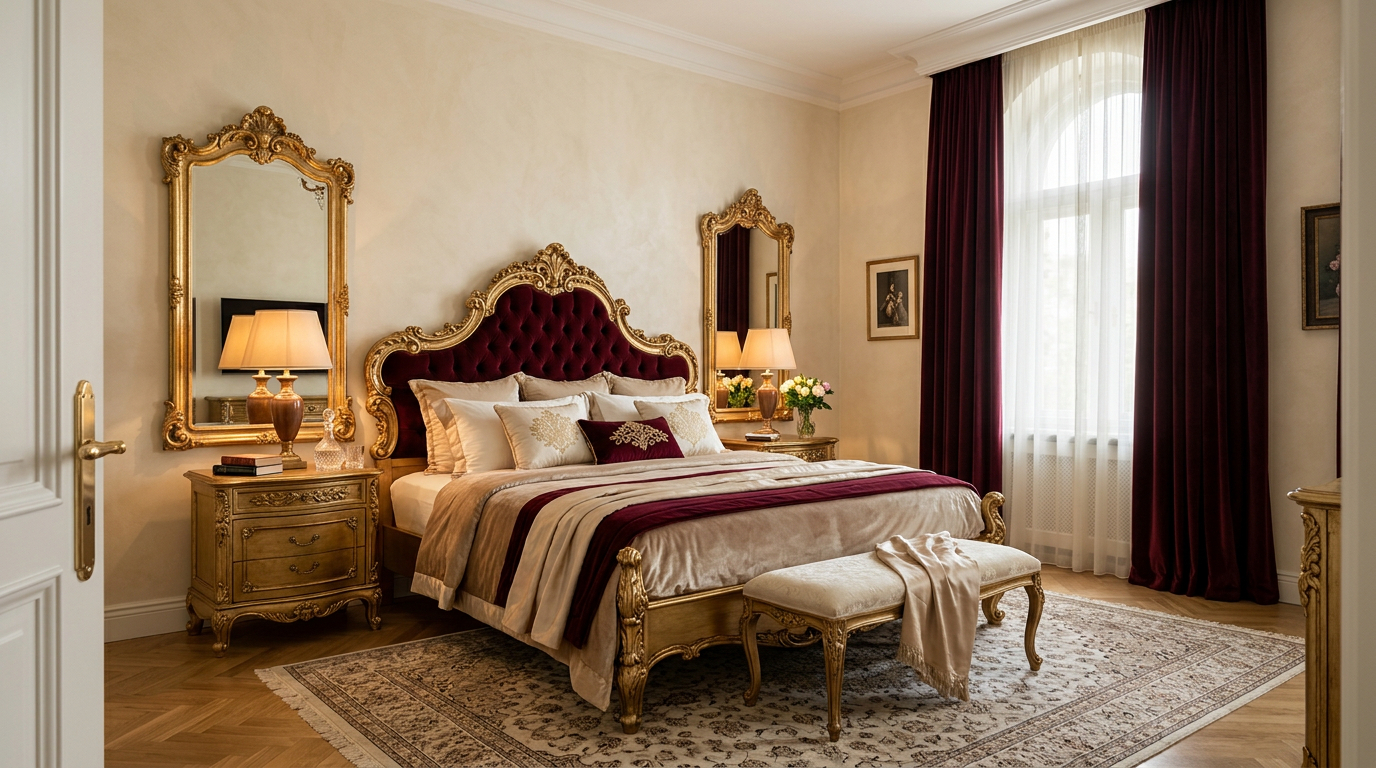
How to Create a Baroque Master Bedroom That Feels Like a 5-Star Suite Without Redesigning the Whole Room
A luxurious bedroom is not created by filling every corner with decoration. It begins with a few commanding elements that change how the entire room feels. Baroque interiors remain highly desirable among European luxury homeowners and hotel designers. Sculptural furniture, rich textiles, layered finishes, and dramatic proportions can make an ordinary bedroom feel like a private five-star suite.
You do not need new flooring, altered walls, or a complete interior redesign. By introducing a statement baroque bed, refining the textile palette, and styling the surrounding space with chosen accents, you can create a convincing Baroque master bedroom with only a few changes.
The principle is simple: let the bed establish the room’s identity, then allow every supporting detail to enhance it.
Make the Baroque Bed the Visual Anchor
In a luxury hotel suite, the bed is treated as the central architectural feature. A baroque bed achieves this naturally through its carved frame, generous proportions, decorative cresting, and upholstered details.
Choose a design that feels substantial without overwhelming the room. In a spacious bedroom, an ornate frame with a tall upholstered back, gilded carving, and curved footboard creates a palace-inspired focal point. In a smaller room, a cleaner baroque style bed with a sculpted headboard and restrained ornament can deliver the same character while preserving balance.
The finish should complement the existing interior. Antique gold adds warmth to cream, beige, burgundy, and dark timber. Silver or champagne works beautifully with pale grey, ivory, soft blue, and marble. Black lacquer creates a more dramatic, contemporary interpretation.
Once the bed is in place, avoid adding competing statement furniture. The strongest luxury bedrooms have a clear visual hierarchy, and the bed should remain the first element noticed.
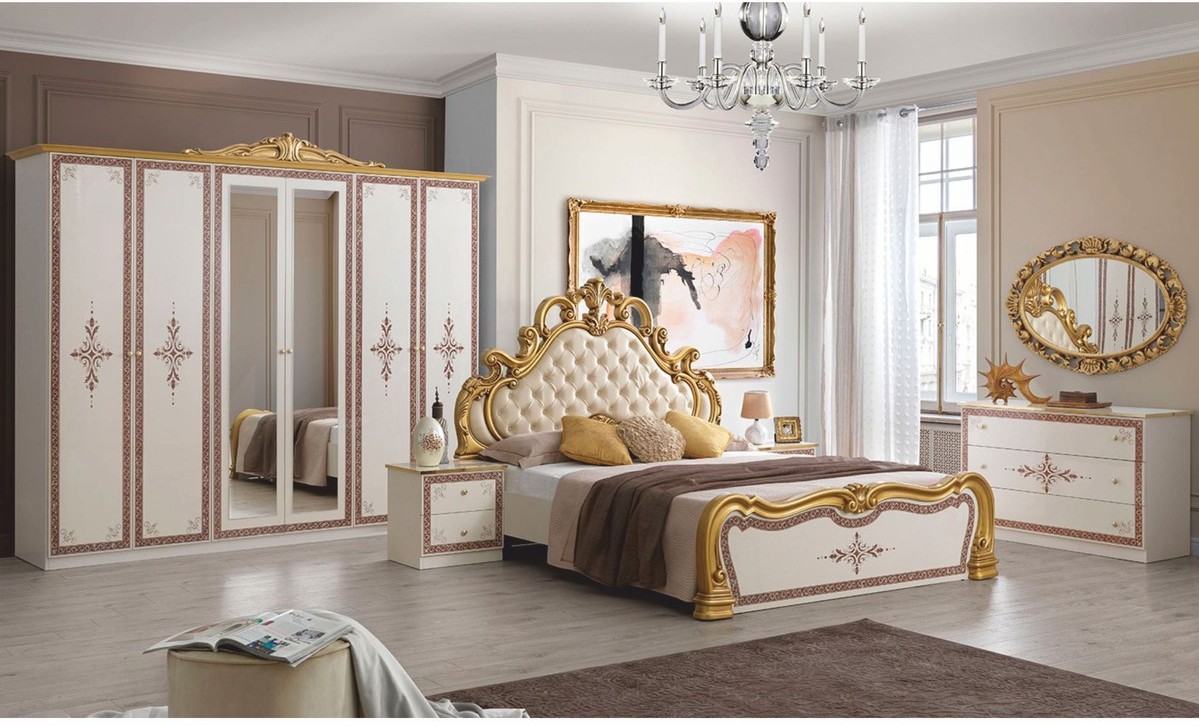
Transform an Existing Bed with a Baroque Headboard
Replacing the complete bed frame is not always necessary. A baroque headboard can create much of the same impact while allowing you to retain your current bed base.
Look for a tall design with deep button tufting, velvet upholstery, carved borders, or a decorative crown. Height draws the eye upward and creates the grand scale associated with luxury hotel rooms. A wider headboard can also make the sleeping area appear more generous.
For a refined European look, consider ivory velvet with antique-gold carving, deep emerald with dark wood, or soft taupe framed in champagne silver. Velvet, damask, suede-touch fabric, and high-quality woven textiles create depth under both daylight and warm evening lighting.
It also suits rented homes and rooms where structural changes are limited. It delivers immediate character without requiring wallpaper, panelling, or fitted joinery.
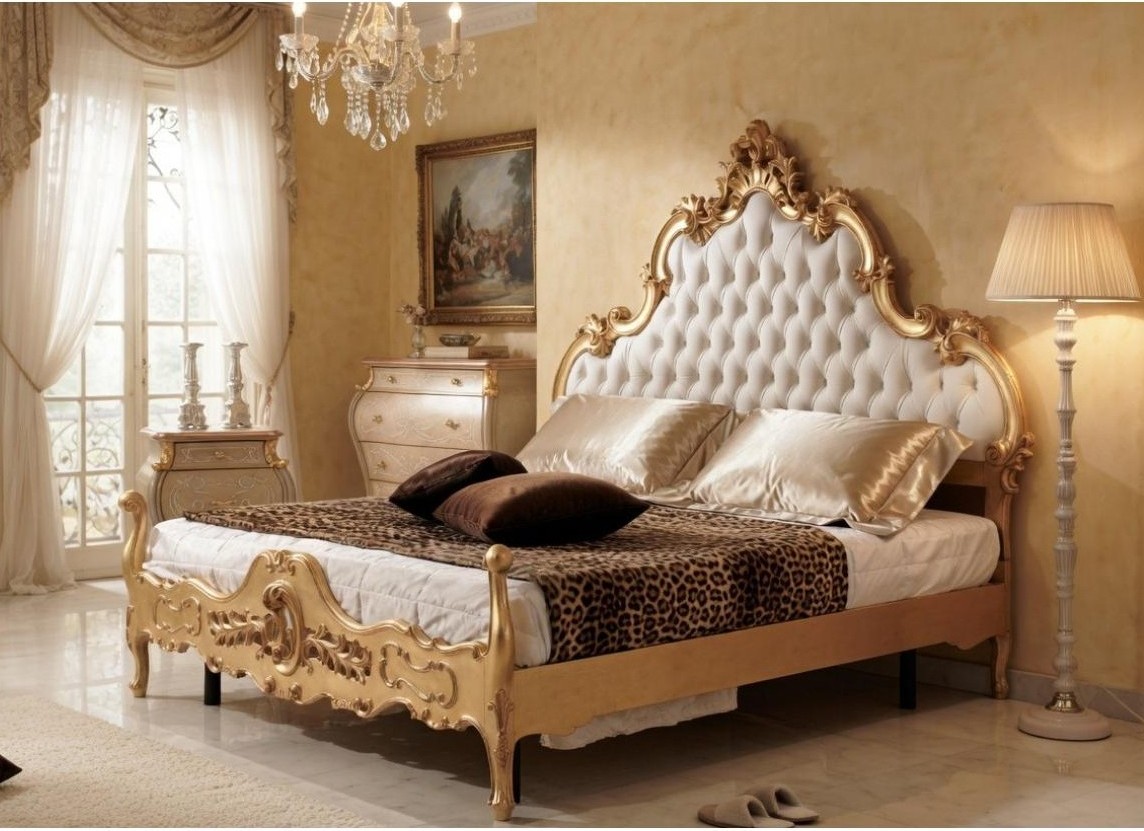
Layer the Bed Like a Luxury Suite
After the frame or headboard, textiles create the greatest transformation. A well-composed baroque bedding set should appear generous, tactile, and layered rather than stiff or excessively matched.
Begin with white, ivory, or warm-neutral linen to establish a fresh hotel foundation. Add a quilted coverlet, velvet throw, or lightly patterned duvet in a deeper accent colour. Burgundy, royal blue, forest green, muted gold, and smoky plum work well, although one dominant shade is usually enough.
Vary the shape and texture of decorative cushions. Combine large European square pillows with standard sleeping pillows, then add two or three smaller cushions in velvet, damask, embroidery, or subtle metallic thread. A single bolster can complete the arrangement without making it feel crowded.
The best baroque bedding set does not reproduce every motif found on the furniture. Instead, it echoes the room through colour, sheen, and texture, creating a collected appearance that feels more sophisticated than a perfectly matching set.
Use Curtains and Lighting to Frame the Bed
Floor-length curtains immediately increase the sense of height and softness in a bedroom. Choose lined drapery in velvet, jacquard, silk-effect fabric, or a dense woven material. Hang it slightly above the window frame and allow it to reach the floor. Pairing heavier side panels with sheer inner curtains adds depth while filtering daylight.
Lighting should be warm, symmetrical, and layered. Matching bedside lamps create order around the baroque bed, while a chandelier or decorative pendant strengthens the room’s central axis. Wall lights are useful when bedside surfaces are limited.
Avoid bright white bulbs. Warm lighting reveals carved details, gilded finishes, velvet textures, and metallic threads while producing the calm atmosphere associated with high-end hotels and private residences.
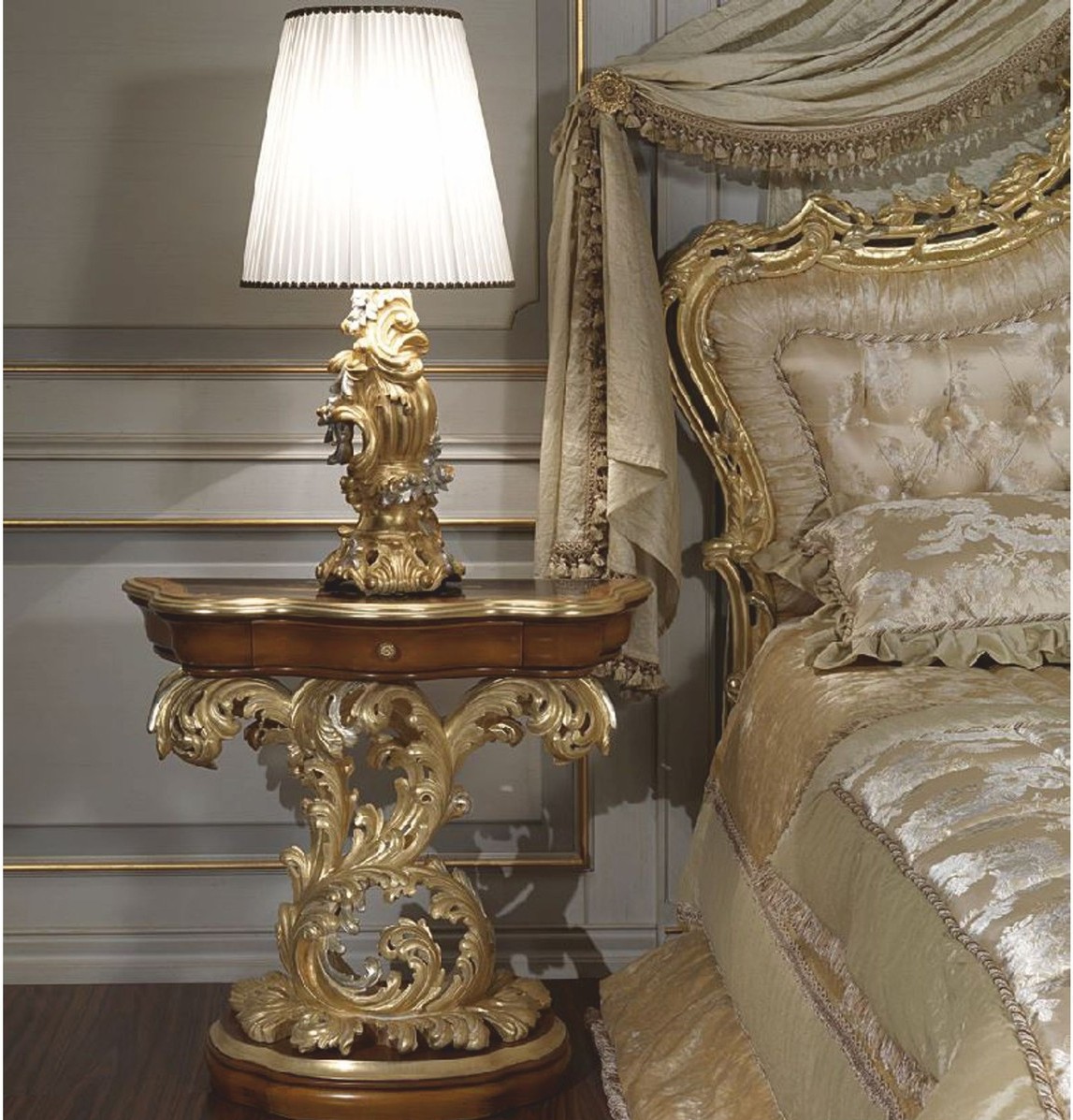
Add One Statement Mirror
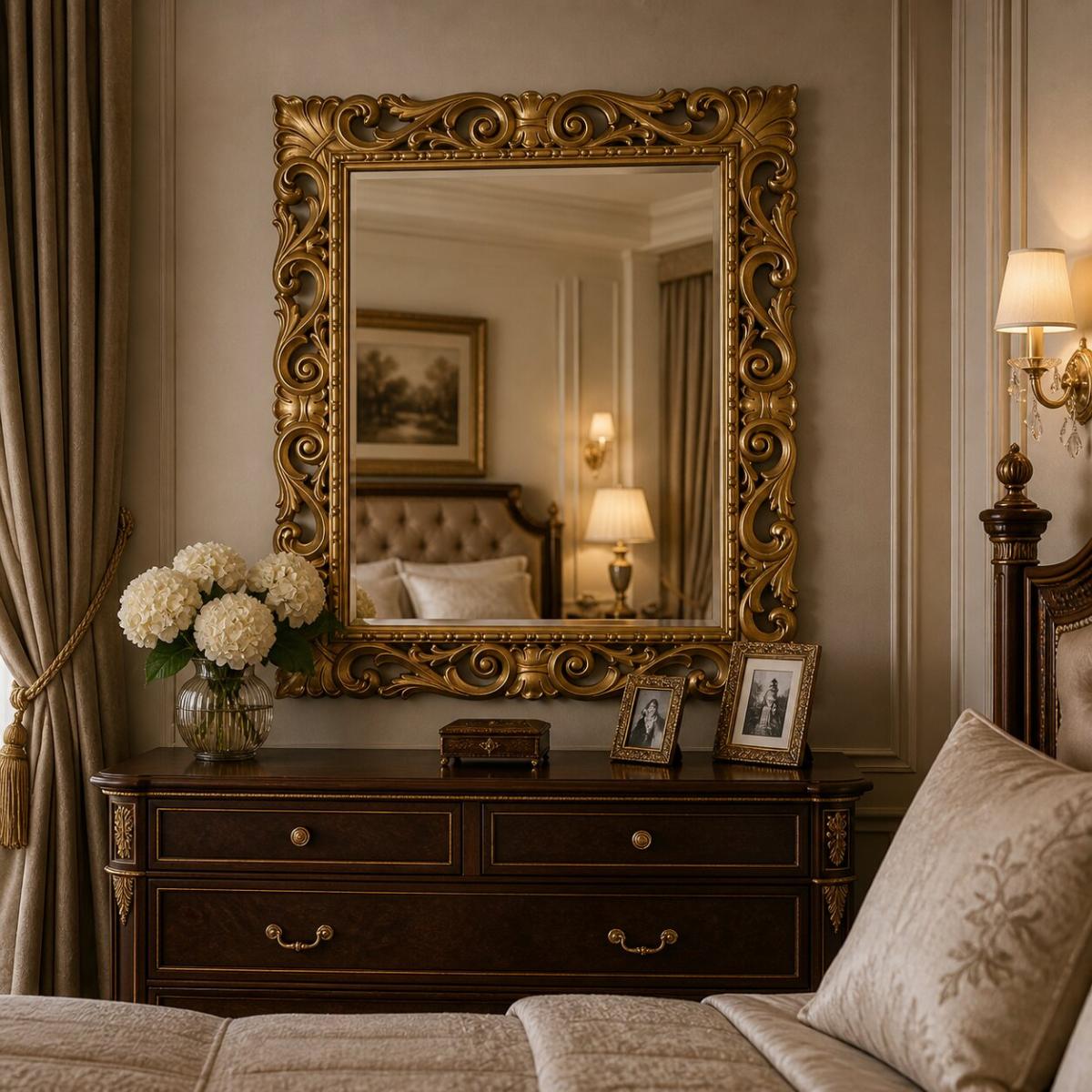
A Baroque bedroom benefits from reflection, but too many ornate pieces can make it feel themed. One statement mirror is usually enough.
Place a carved mirror above a dresser, opposite a window, or on a wall that needs greater height. Gold frames complement warm upholstery and traditional timber, while silver, black, or champagne frames suit a more contemporary baroque style bed.
The mirror should relate to the bed without copying it exactly. A richly carved bed, for example, can be balanced with a mirror featuring a simpler crest and elegant curved frame. This keeps the composition coordinated without appearing overly staged.
Keep the Bedside Area Refined
Baroque style is expressive, but true luxury depends on restraint. Rather than covering bedside tables with ornaments, select one lamp and one decorative object for each side.
Matching tables create strong hotel-inspired symmetry. They do not need elaborate carving; elegant wood, lacquer, marble-topped, or metallic-accented designs can support the ornate bed without competing with it. Keep cables hidden and surfaces clear.
In a larger room, add an upholstered bench at the foot of the bed. Choose a fabric that coordinates with the baroque bedding set or headboard, but keep the pattern quieter to avoid repetition.
Build a Controlled Colour Palette
You can achieve a rich Baroque mood without elaborate wall treatments by using a controlled palette: one light base colour, one deep accent, and one metallic finish.
Ivory, taupe, stone, pale grey, and warm cream make excellent backgrounds. Deep green, burgundy, navy, plum, or charcoal can appear in the bedding, curtains, bench, or cushions. Gold, silver, bronze, or champagne can then be repeated subtly across the baroque headboard, mirror, lamps, or handles.
This formula prevents decorative details from becoming chaotic. It also works well in historical European homes, modern apartments, luxury hotel rooms, and sophisticated residential interiors.
Finish with Five-Star Comfort
The final stage is sensory. Use a large rug beneath the bed to soften the floor and frame the sleeping area. Add crisp bed linen, blackout curtain lining, and a subtle candle or diffuser. Keep accessories minimal, but ensure each piece feels substantial and well made.
For hotel projects, durability is as important as appearance. Upholstery should be easy to maintain, curtains should hang cleanly, and the bed frame should combine visual grandeur with reliable construction. In a luxury home, the same approach creates an indulgent master bedroom that remains comfortable and practical.
A five-star Baroque suite is built around atmosphere rather than excess. Begin with a commanding baroque bed or sculptural headboard, layer it with refined textiles, frame it with elegant curtains, and complete the setting with warm lighting and one chosen mirror.
With these focused changes, your bedroom can gain the drama, comfort, and visual richness of a luxury European suite—without redesigning the whole room.