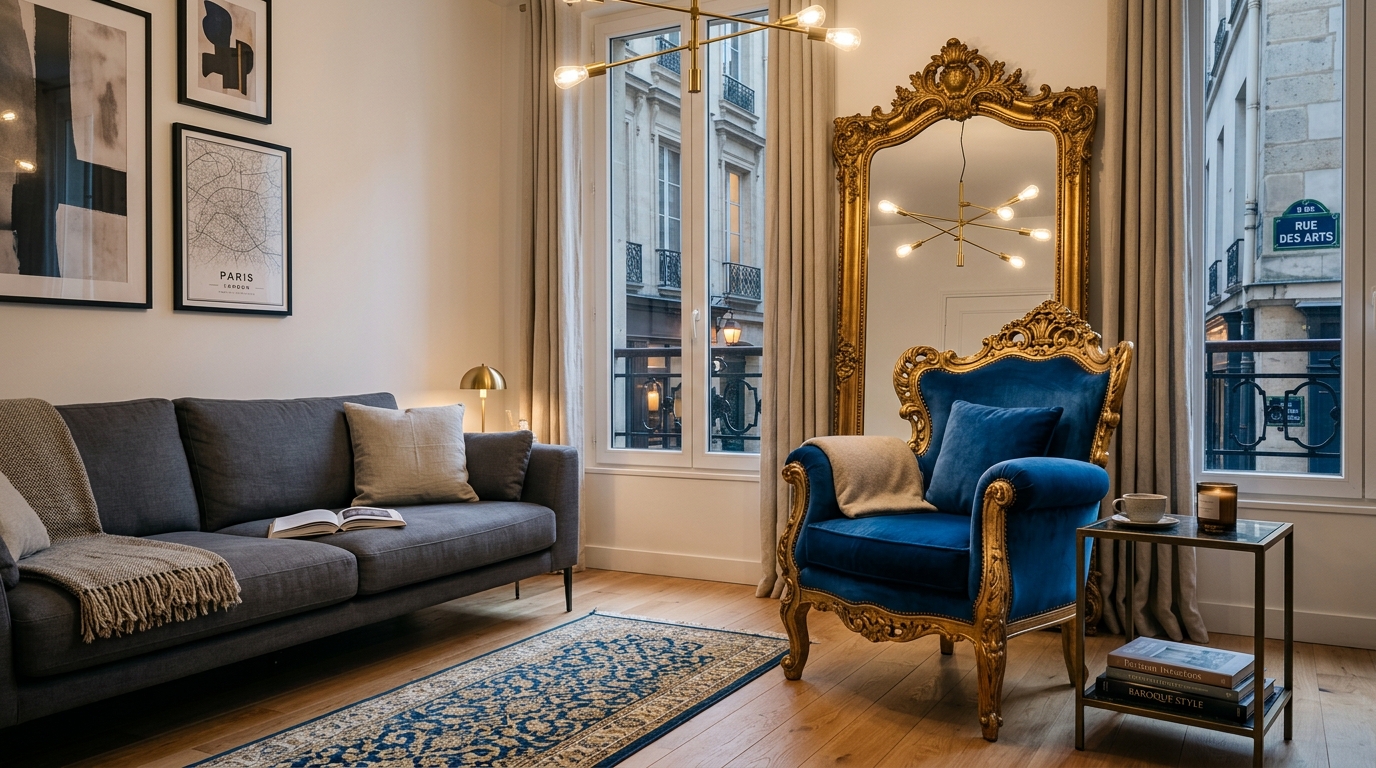
Baroque Furniture for Modern Living: Can Ornate Pieces Work in Small Apartments?
We’ve all been there: scrolling through interior design feeds, pausing on a photograph of a sprawling 17th-century chateau room. You admire the gold-leafed carvings, the dramatic velvet upholstery, and the sheer audacity of a hand-carved cabriole leg. Then, you look around your 45-square-meter flat in Berlin, Paris, or Madrid.
The dream usually dies right there. “Baroque is for palaces,” we tell ourselves. “My apartment is for flat-packs and multi-functional storage cubes.”
But here is a secret the design elite won’t always tell you: Baroque style furniture is actually a secret weapon for small-space living. While it seems counterintuitive to put “extra” furniture in a “limited” space, the right ornate piece can actually make a room feel larger, more intentional, and infinitely more expensive.
If you’re tired of the “soulless beige box” aesthetic, let’s explore how to integrate the drama of the 1600s into your 2026 urban lifestyle.
The Big Myth: “Ornate Equals Oppressive”
The biggest hurdle to enjoying baroque furniture today is the scale-myth. We associate the style with the Hall of Mirrors at Versailles—massive, heavy, and demanding of its own zip code. In reality, the Baroque period was obsessed with theatrics and movement.
In a small apartment, a piece of Baroque furniture acts as a focal point. Without one, a small room can feel like a waiting room. With one, it feels like a curated gallery. The goal isn’t to turn your studio into a museum; it’s to use “Urban Luxury” as a tool to distract from a lack of square footage.
The Strategic “Power Pieces” for Small Flats
You don’t need a 12-piece dining set to capture the essence of the era. For European apartment dwellers, it’s all about the “Hero Object.”
1. The Gilded Mirror: The Ultimate Space-Hacker
If you only buy one piece of baroque style furniture, make it a mirror. Baroque mirrors are famous for their deep, intricate frames—often featuring acanthus leaves, cherubs, or floral scrolls.
- Why it works: In a narrow hallway or a compact bedroom, a large, ornate mirror does double duty. The frame provides the “art,” while the glass reflects light and creates the illusion of a second room.
- Pro Tip: Don’t hang it. Lean a tall, floor-length Baroque mirror against a minimalist white wall. The juxtaposition makes the room feel taller and more effortless.
2. The Petite Baroque Chair (The Slipper Chair)
Massive throne-like chairs are a no-go, but the “slipper chair” or a small Louis XIV-style armchair with exposed wooden legs is perfect.
- The Visual Layout: Because these chairs often feature “open” legs (cabriole legs), you can see the floor underneath them. In interior design, seeing more floor space makes a room feel less cluttered than heavy, “skirted” modern sofas that block the line of sight.
3. The Narrow Console Table
Traditional Baroque consoles were often designed for hallways of grand villas. Luckily, hallways in 17th-century Italy weren’t always that much wider than a modern London corridor.
- The Strategy: A slim Baroque console with a marble top and gilded legs takes up very little physical “footprint” but provides a massive “style-print.” It’s the perfect place for your keys, a single candle, and a stack of books.
The “Modern-Baroque” Comparison
How does the ornate stack up against the minimalist furniture we’re used to?
| Feature | Modern Minimalism | Baroque Style (Urban) |
| Visual Weight | Low (disappears) | High (demands attention) |
| Mood | Functional/Calm | Romantic/Luxurious |
| Space Impact | Practical | Transformative |
| Best Used As | Base layer | Statement piece |
How to Style Baroque Without Looking Like a Ghost Hunter
The fear of Baroque often stems from the “Grandma’s Attic” syndrome. To keep it modern and “European Chic,” follow these three rules:
Rule 1: The 80/20 Balance
Keep 80% of your room clean, modern, and functional. Think sleek sofas, hidden storage, and neutral walls. Use the remaining 20% for your baroque furniture. This contrast is what creates “luxury.” A gold-carved desk paired with a modern ergonomic chair looks like a deliberate design choice; a room full of gold looks like a costume shop.
Rule 2: De-Saturate the Palette
Traditional Baroque is heavy on burgundy, forest green, and gold. In a small apartment, this can feel like the walls are closing in.
- The Solution: Look for Baroque pieces in “non-traditional” finishes. A Baroque chair frame painted in matte black, charcoal, or even a crisp chalk white feels instantly 21st-century. If the upholstery is velvet, go for jewel tones like sapphire or emerald, which add depth without making the room feel “dusty.”
Rule 3: Lighting is Everything
Baroque furniture was designed to be seen by candlelight. In a modern flat, harsh overhead LEDs will make the ornate carvings look plastic and flat. Use warm-toned lamps (2700K) to cast soft shadows across the wood carvings. This adds “soul” to the piece and the room.
“Baroque is the art of the curve. In a world of square apartments and rectangular screens, a single curved furniture leg is an act of rebellion.”
Visual Layout Ideas for Small Rooms
The Entryway “Jewel Box”
Most European flats have a tiny, often windowless entryway.
- The Base: A dark, moody paint color (navy or deep plum).
- The Baroque: A gold-leafed console table.
- The Modern: A sleek, glass table lamp on top.
- Result: You’ve turned a “pass-through” space into a high-end experience the moment you walk through the door.
The Living Room “Dialogue”
- The Base: A low-profile, grey modern sofa.
- The Baroque: Two ornate, velvet-upholstered stools (tabourets) placed opposite the sofa instead of a bulky second armchair.
- The Modern: A simple, round marble coffee table.
- Result: You maintain an open floor plan while adding enough texture to make the room feel “expensive.”
Where to Find Your Pieces
You don’t need to raid an auction house in Vienna to find quality baroque style furniture.
- Flea Markets (Brocantes): Especially in cities like Brussels, Paris, or Arezzo, you can find authentic pieces that just need a bit of “modernizing” (new fabric or a light sanding).
- Modern Reproductions: Many European designers are now creating “Neo-Baroque” pieces made from lightweight polymers or sustainably sourced woods, specifically scaled for apartment living.
- Upcycling: If you find a vintage piece that feels too “heavy,” don’t be afraid to paint the wood. A high-gloss lacquer finish can turn a 100-year-old chair into a piece of contemporary art.
Conclusion: Small Space, Big Personality
Living in a small apartment shouldn’t mean shrinking your personality to fit the floor plan. Baroque furniture offers an escape from the “disposable” culture of modern interiors. These pieces have history, weight (metaphorically speaking), and a sense of craftsmanship that flat-pack furniture simply cannot replicate.
By choosing one or two statement pieces—a mirror that reflects your light, a chair that starts a conversation, or a console that holds your daily life—you transform your apartment from a “unit” into a home.
So, can ornate pieces work in small apartments? Absolutely. In fact, in a world of minimalism, they might be the only thing that makes your small space feel truly grand.