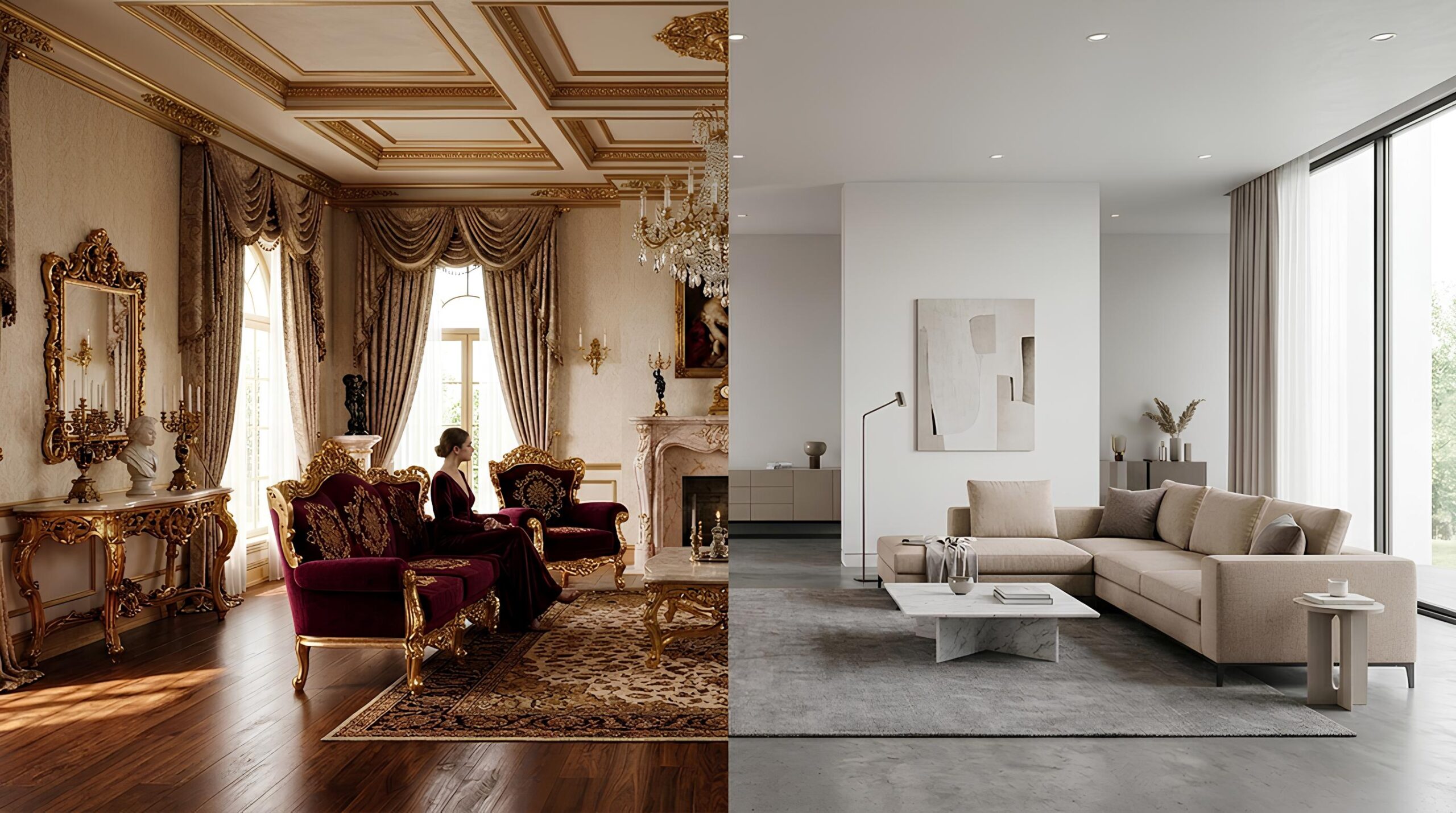
Baroque vs. Minimalism: Which Luxury Style Actually Feels More Timeless?
Luxury design has always evolved with changing cultural tastes, architectural movements, and artistic philosophies. Yet two distinct styles continue to dominate conversations in modern interiors—baroque furniture and modern furniture inspired by minimalism. One represents centuries of ornamentation, carved craftsmanship, and dramatic elegance, while the other celebrates simplicity, clean lines, and restrained sophistication.
Both design approaches are widely used in today’s luxury furniture market, appearing in high-end homes, boutique hotels, and contemporary villas across Europe. But when it comes to timeless luxury, the debate becomes fascinating. Does timelessness lie in elaborate craftsmanship and historical heritage, or in minimal designs that resist decorative trends?
Interior designers and homeowners often find themselves divided on this question. Some believe that the artistic character of baroque-style furniture carries a permanence that transcends trends. Others argue that minimalist modern furniture achieves timelessness through simplicity and adaptability.
Let’s explore both perspectives to understand which luxury style truly feels more timeless.
The Enduring Heritage of Baroque Furniture
Few furniture styles possess the historical depth of baroque furniture. Originating in 17th-century Europe, the Baroque movement celebrated grandeur, artistic expression, and dramatic visual impact. Furniture created during this period reflected the wealth and power of aristocratic courts.
A typical piece of baroque-style furniture features intricate carvings, sculptural silhouettes, and luxurious finishes such as gold leaf or polished wood. These pieces were designed not merely for function but to communicate prestige and artistic craftsmanship.
Key characteristics of baroque furniture include:
• Elaborate carved wood detailing
• Ornamental scrolls and floral motifs
• Dramatic silhouettes and curved forms
• Luxurious finishes such as gilded accents
Furniture historian Alessandro Ricci explains the lasting appeal of the style:
“Baroque furniture carries centuries of artistic tradition. Its craftsmanship connects modern interiors with a heritage that cannot easily be replicated.”
Because of this historical richness, many designers consider baroque-style furniture an expression of timeless luxury. A carved console table or ornate chair can instantly elevate a room, creating an atmosphere reminiscent of European palaces and grand estates.
In luxury homes, hotels, and villas, baroque furniture often acts as a statement piece that anchors the entire interior design.
The Rise of Minimalism and Modern Furniture
While Baroque design celebrates ornamentation, minimalism takes the opposite approach. Modern interior movements of the 20th century introduced modern furniture that prioritized simplicity, functionality, and clean lines.
Minimalist spaces emphasize openness and clarity. Instead of decorative carvings and elaborate finishes, modern furniture relies on geometric shapes, neutral color palettes, and subtle materials such as marble, steel, or natural wood.
Common characteristics of minimalist luxury furniture include:
• Clean architectural lines
• Neutral tones such as white, grey, and beige
• Smooth surfaces with minimal ornamentation
• Functional and uncluttered design
Interior designer Elena Weiss describes why minimalism appeals to contemporary homeowners:
“Modern furniture creates calm interiors. By removing visual noise, minimal design allows architecture and space to become the focal point.”
For many people, this simplicity represents a modern interpretation of timeless luxury. A carefully designed minimalist interior can remain visually relevant for decades because it avoids decorative elements that may feel dated over time.
This adaptability is one reason modern furniture is widely used in luxury apartments, contemporary villas, and high-end urban residences.
Baroque vs. Minimalism: Two Opposite Design Philosophies
The debate between baroque furniture and minimalist modern furniture ultimately reflects two different philosophies of luxury.
Baroque Design Philosophy
Baroque interiors celebrate expressive beauty and craftsmanship. Designers who favor baroque-style furniture often focus on creating dramatic visual experiences.
The advantages of Baroque design include:
• Strong artistic identity
• Historical cultural heritage
• Rich craftsmanship and detailing
• Immediate visual impact
In spaces designed around baroque furniture, each piece contributes to a layered and luxurious atmosphere.
Minimalist Design Philosophy
Minimalism approaches luxury through restraint. Instead of decorative complexity, modern furniture emphasizes balance, proportion, and architectural clarity.
Key advantages of minimalist design include:
• Clean and uncluttered interiors
• Flexible design that adapts to trends
• Emphasis on functionality and comfort
• A calm and spacious atmosphere
For homeowners seeking contemporary luxury furniture, minimalist design offers a refined aesthetic that feels modern and sophisticated.
Which Style Ages Better Over Time?
The question of timelessness often depends on how interiors evolve. Designers note that both baroque furniture and modern furniture can feel timeless when used thoughtfully.
However, each style ages differently.
Baroque-style furniture maintains its appeal through craftsmanship and heritage. Because it represents a historical design tradition, it rarely feels outdated in classic interiors.
Minimalist modern furniture, on the other hand, remains relevant through simplicity. Its clean lines and neutral forms make it easy to adapt to changing décor trends.
Interior architect Claudia Werner summarizes the debate perfectly:
“Baroque furniture is timeless because it celebrates art and heritage. Modern furniture is timeless because it removes unnecessary decoration. Both approaches achieve luxury in different ways.”
This perspective suggests that timelessness is not defined by style alone but by the quality of the design and materials used.
The Emerging Trend: Blending Both Styles
Interestingly, many contemporary designers are no longer choosing one style over the other. Instead, they are combining baroque-style furniture with minimalist architecture to create interiors that balance history and modernity.
Examples of this approach include:
• A sculptural baroque furniture console placed in a minimalist hallway
• Ornate carved chairs paired with modern marble dining tables
• Classical mirrors used within contemporary living spaces
This combination allows homeowners to enjoy the heritage of baroque furniture while maintaining the clarity of modern interiors.
According to designer Marco Bellini:
“The most exciting luxury homes today mix design eras. A single baroque piece inside a modern space creates a powerful visual contrast.”
This hybrid approach is becoming increasingly popular in luxury villas and boutique hotels across Europe.
What Defines Timeless Luxury Today?
In the end, the concept of timeless luxury goes beyond choosing between Baroque and minimalism. Instead, it comes down to three essential factors:
• Craftsmanship – High-quality luxury furniture lasts longer and retains its beauty.
• Design integrity – Well-balanced interiors remain appealing regardless of trends.
• Personal expression – Spaces that reflect personality feel authentic and enduring.
Both baroque-style furniture and modern furniture can embody these qualities when used thoughtfully.
The real key to timeless interiors is not simply the style itself but the intention behind the design.
Conclusion: Which Style Feels More Timeless?
So which style truly defines timeless luxury—baroque furniture or minimalist modern furniture?
Baroque interiors offer artistic richness, historical heritage, and dramatic craftsmanship that have inspired designers for centuries. Minimalist spaces, meanwhile, create calm environments through simplicity and architectural clarity.
Rather than a clear winner, the debate reveals something more interesting: both styles contribute to the evolving definition of timeless luxury.
Some interiors feel timeless because of ornate craftsmanship. Others achieve the same effect through elegant simplicity.
Now we want to hear your opinion.
Which style feels more timeless to you—Baroque elegance or minimalist modern design?
Share your thoughts and vote in the comments, and let’s see which luxury style truly wins the debate.