Design Story: How Baroque Dining Chairs Evolved from Palace Grandeur to Modern EU Homes
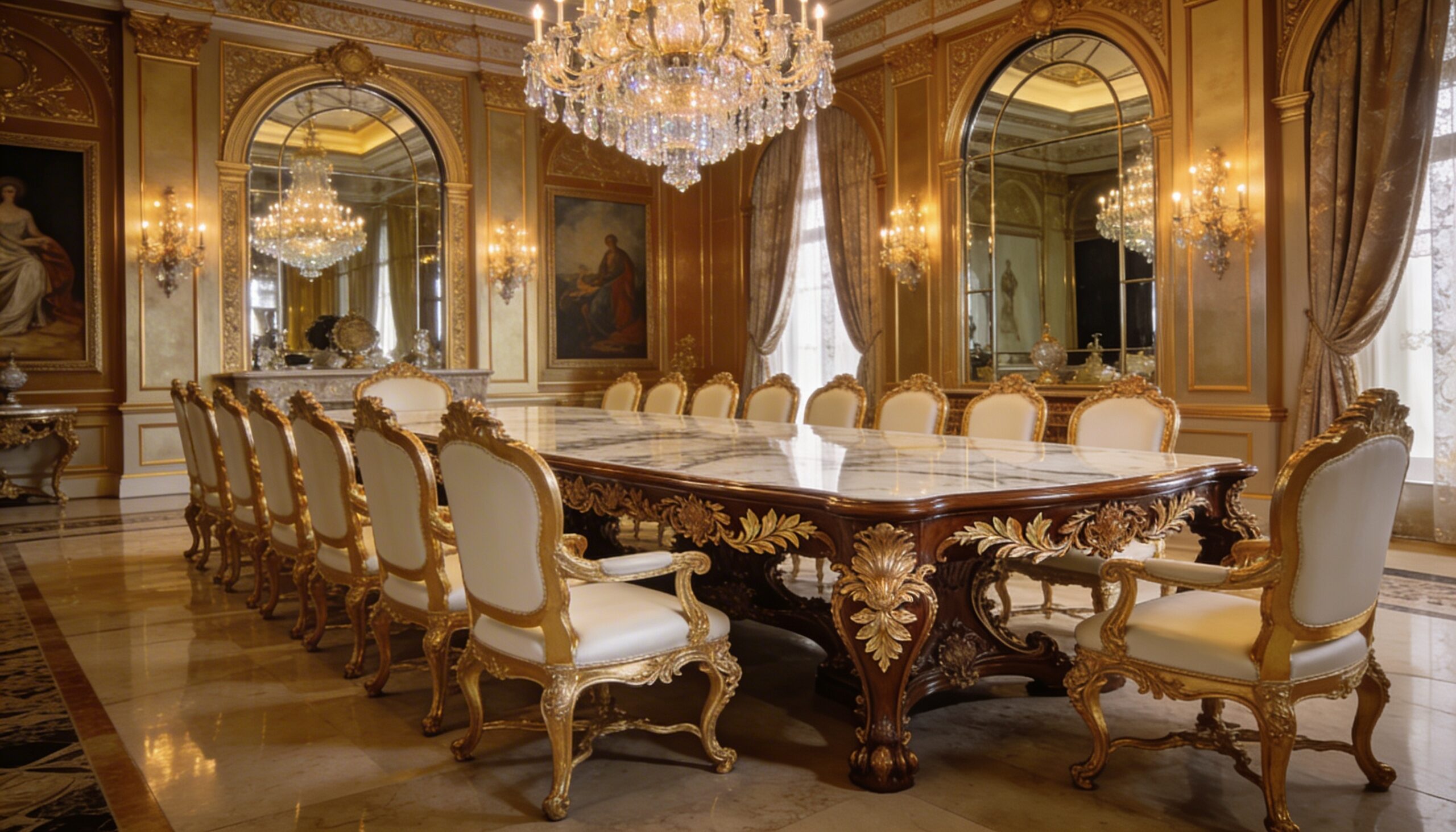
When you picture a Baroque palace—think Versailles or Schönbrunn—you likely imagine dripping chandeliers, marble floors, and chairs that look too ornate to sit on. Yet today, baroque style dining chairs are finding a surprising second life in modern apartments across Europe. How did these sculptural seats make the leap from royal courts to cozy dining nooks? Let’s trace the evolution.
The Birth of Baroque: Drama and Power
The Baroque period (17th–early 18th century) was born in Italy and spread across Catholic Europe as a tool of persuasion. The church and monarchy wanted to overwhelm the senses—and dining chairs were no exception.
Early baroque dining chairs were not designed for comfort but for status. Made from solid walnut or oak, they featured:
- Lavish carvings (acanthus leaves, scrolls, shells)
- Upholstered seats in velvet or damask
- Gilded or silvered finishes
- High, imposing backs
These chairs were never pushed under a table. Instead, they lined banquet hall walls, only brought out for feasts that lasted hours. The message was clear: power sits heavily, and beautifully.
The Rococo Detour: Lighter, but Still Luxurious
By the mid-18th century, Baroque softened into Rococo. While purists distinguish the two, many baroque chairs from this era adopted curvier legs, asymmetrical shells, and pastel upholstery. The silhouette became more intimate—suitable for private salons rather than throne rooms.
However, by the late 1700s, Neoclassicism arrived with a strict “back to Greece and Rome” attitude. Baroque was suddenly deemed excessive. Many chairs were discarded, stored in attics, or stripped of their gilding. For nearly a century, baroque style dining chairs fell out of fashion entirely.
The 19th Century Revival: Historicism and Bourgeois Taste
The Victorian era brought a revival of all things historical. Wealthy European families, particularly in France, Germany, and Austria, commissioned reproductions of 17th-century baroque dining chairs. New manufacturing techniques (steam bending, machine carving) made ornate shapes more affordable.
This period marked the first time baroque chairs entered not just palaces but upper-middle-class homes. The difference? Scale. Revival chairs were slightly smaller, with lower backs and more practical upholstery (cotton or wool blends instead of fragile silk). They were still showpieces, but they could now fit into a standard dining room.
The 20th Century: From Museum Piece to Eclectic Statement
Mid-century modernism declared war on ornament. For decades, baroque style dining chairs were seen as kitsch or outdated. Only antique collectors kept them alive.
Then came the 1980s and 1990s postmodern rebellion. Designers like Ettore Sottsass and Alessandro Mendini began quoting historical styles ironically. Suddenly, a single baroque chair painted matte black—or even neon pink—felt fresh. The rule became: one dramatic Baroque chair at a modern table creates contrast, not clutter.
Today: Baroque in Modern EU Homes
Fast-forward to 2026. Walk into a Copenhagen loft, a Milan apartment, or a Berlin townhouse. You might see a minimalist oak table surrounded by six baroque dining chairs—but with a twist.
Today’s evolution includes:
- Silhouette retention, material substitution – Chairs keep the curved legs and scalloped aprons but use sustainable beech, ash, or even recycled plastic.
- Neutral palettes – Gone is the red velvet. Instead, baroque chairs appear in linen, bouclé, or undyed wool in shades of sand, charcoal, or sage green.
- Mixed seating – Many EU homes pair two Baroque-style host chairs at the head of a table with four industrial or Scandinavian chairs on the sides.
- Compact proportions – Modern baroque style dining chairs have lower back heights (85–95 cm instead of 120 cm) to fit under standard 75 cm dining tables.
Brands like Lema, Porada, and even IKEA’s limited-edition collections have released Baroque-inspired pieces that are fully upholstered, easy to clean, and stackable. Yes, stackable Baroque.
Why the Enduring Appeal?
Baroque speaks to something we still crave: ceremony. In an age of remote work and fast meals, pulling up a baroque dining chair transforms dinner into an event. The carved wood and gentle curve of the back ask you to sit upright, to linger, to converse.
Moreover, European homes today are smaller but more design-conscious. A single well-placed baroque chair adds texture, history, and warmth—without requiring a palace.
Final Takeaway
From Louis XIV’s Hall of Mirrors to a Sunday pasta dinner in a Roman flat, baroque style dining chairs have survived ridicule, revival, and reinvention. They no longer shout power. Instead, they whisper story.
So next time you see a baroque chair in a modern showroom, don’t mistake it for a relic. It’s a survivor—and it might just be the most interesting seat at your table.