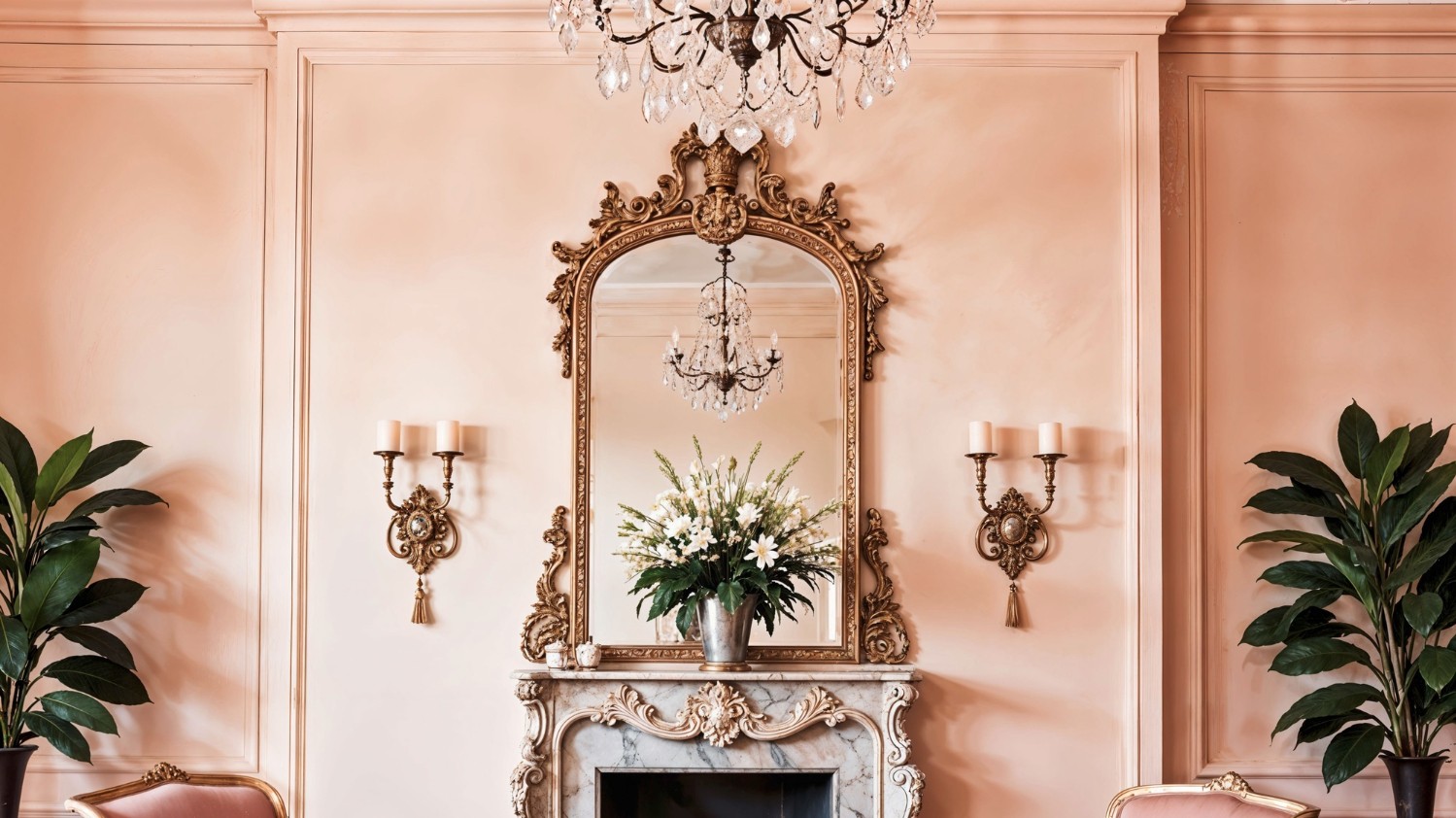
Hand-Carved Baroque Mirrors: A Masterpiece of Traditional European Craftsmanship
Somewhere between a painting and a portal, a hand-carved baroque mirror does something no modern fixture ever could — it holds time still. Long before luxury became a marketing term, European master craftsmen were quietly perfecting an art form that would outlast empires. These were not decorative afterthoughts; they were statements of culture, power, and singular beauty. Today, as discerning homeowners and hospitality designers across Europe seek spaces that whisper of history rather than shout of trend, the baroque mirror has returned — not as a revival, but as a recognition that true artistry never truly left.
The Art of Hand-Carving: Where Wood Tells a Story
Every carved wood mirror begins as a block of timber — lime wood, walnut, or gilded beech — selected by artisans who understand that the material itself has character. Using chisels and gouges unchanged in design for centuries, master carvers coax intricate scrollwork, acanthus leaves, cherubs, and floral garlands from raw grain. No two pieces are identical. A slight variation in depth, a curl of foliage that catches light differently — these are not imperfections. They are signatures.
The carving process alone can take several weeks for a single frame. Artisans work layer by layer, first roughing out the broad composition, then refining details with increasingly fine tools until the motifs emerge with a depth and dimensionality that machine production simply cannot replicate. It is slow, intentional work — the antithesis of mass manufacturing, and precisely what luxury demands.
Heritage Techniques Passed Through Generations
The Baroque period — spanning the 17th and early 18th centuries — gave birth to an aesthetic of grandeur that swept through the courts of France, Italy, Austria, and Spain. Craftsmen working under royal patronage developed techniques in wood gilding, gesso application, and relief carving that became the hallmark of European luxury interiors. An antique carved mirror from this tradition was never simply functional; it was an architectural element, a centrepiece that commanded an entire room.
Today’s finest baroque mirrors are crafted in workshops that honour these very same methods. Artisans apply multiple layers of traditional gesso — a chalk and glue mixture — to the carved wood before burnishing gold leaf by hand using agate tools. The result is a finish of extraordinary warmth and depth; one that ages beautifully rather than deteriorating, gaining character with every passing decade.
Where These Mirrors Belong: Spaces Worthy of a Masterpiece
A baroque mirror is not merely décor — it is a defining presence. In luxury hotels, a grand carved wood mirror in the lobby creates an immediate sense of arrival, signalling to guests that they have stepped into a space where quality and history are taken seriously. In private residences, it transforms a drawing room, master bedroom, or entrance hall into something that feels curated across centuries rather than assembled in an afternoon.
For interior designers working on high-end European properties, an antique carved mirror — whether a genuine period piece or a faithful handcrafted reproduction — serves as an anchor around which the entire room can be designed. Its scale, its gilding, and its elaborate wood detailing draw the eye and establish tone in a way no other single object can.
Choosing Authenticity in a World of Imitation
When investing in a baroque mirror of genuine quality, the markers of authenticity are clear to those who know where to look. The weight of solid wood versus hollow resin composites. The subtle irregularity of hand-gilded surfaces versus the uniform flatness of spray-applied finishes. The crispness of hand-tooled acanthus leaves versus the rounded softness of moulded plastic replicas. These distinctions matter — not merely aesthetically, but in terms of longevity and enduring value.
A hand-carved mirror of true baroque heritage is an heirloom. It appreciates. It tells a story that enriches every space it inhabits.
Old-world luxury is not nostalgia — it is a standard. Hand-carved baroque mirrors represent the very pinnacle of that standard, offering a connection to European artistic heritage that no contemporary piece can replicate. For those who demand the finest in their homes, hotels, and private spaces, there is simply no substitute for the real thing: timber, chisel, gold leaf, and centuries of unbroken craft.