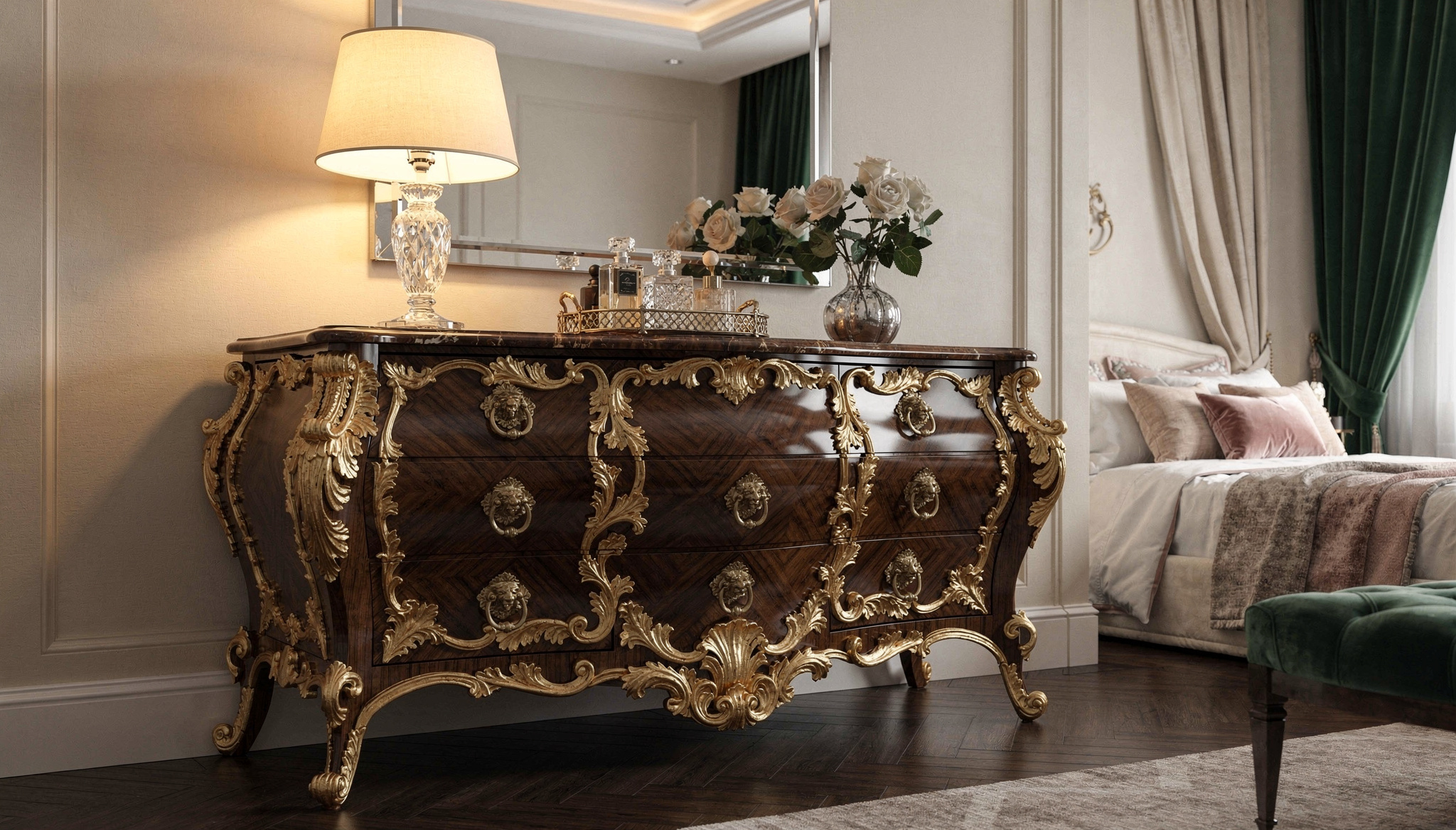
The bedroom often feels nice but forgettable—clean lines, neutral tones, functional pieces, yet it lacks that wow factor that makes you linger. You step in and it’s comfortable, but it doesn’t spark joy or a sense of indulgence. The secret to transforming an ordinary space into a luxurious retreat? One bold statement piece that commands attention and elevates everything around it.
Enter the Baroque style dresser. This isn’t just furniture; it’s a slice of 17th-century opulence reborn for modern homes. With its dramatic curves, intricate carvings, and gilded accents, a Baroque dresser infuses centuries of royal design genius into your bedroom. Interior designers frequently turn to this style when they want instant drama without overhauling the entire room.
By the end of this guide, you’ll understand exactly why Baroque dressers remain a go-to for creating luxurious bedrooms—and you’ll know precisely where to source the perfect one for your space.
What Is a Baroque Style Dresser?
Baroque style emerged in the 17th century across European royal courts, particularly in France, Italy, and Spain. It was born during a time of Catholic Counter-Reformation and absolute monarchy, where art and design aimed to inspire awe, power, and divine grandeur. Furniture like dressers (or commodes) became symbols of wealth, commissioned for palaces.
Key design elements define a Baroque dresser:
- Ornate carvings and gilded finishes — Elaborate motifs like acanthus leaves, scrolls, shells, and floral details, often highlighted with gold leaf for shimmering luxury.
- Cabriole legs and curved silhouettes — Serpentine fronts, bombé (swelled) shapes, and S-curved legs that create movement and fluidity.
- Rich materials — Solid woods such as walnut, mahogany, or oak, paired with veneers, inlays, and authentic gilding.
- Dramatic hardware — Ornate brass drop pulls, lion-head motifs, keyhole escutcheons, and elaborate knobs that add theatrical flair.
Baroque differs from similar styles:
- Vs. Rococo — Baroque is bold, symmetrical, and dramatic with heavy gilding and structured ornamentation; Rococo is lighter, asymmetrical, playful, with shell motifs and pastel palettes.
- Vs. Victorian — Victorian is eclectic and revivalist, blending Gothic, Renaissance, and machine-made details; Baroque feels more theatrical and handcrafted.
- Vs. Renaissance — Renaissance emphasizes classical symmetry, proportion, and restraint; Baroque breaks rules for dynamic, emotional impact.
Why Baroque Dressers Make Bedrooms Feel Luxurious
A Baroque dresser instantly becomes the room’s focal point. Its scale, curves, and detailing draw the eye away from plain walls or basic bedding, anchoring the space with purpose and drama. Unlike flat, minimalist pieces, the deep carvings create shadows and highlights that add texture and dimension—light dances across gilded surfaces, making the room feel alive and layered.
Psychologically, ornate design signals opulence and status. Humans associate elaborate craftsmanship with quality, exclusivity, and care—think royal palaces versus simple cottages. Curves evoke safety and comfort, while symmetry conveys order and authority. This combination triggers feelings of indulgence and emotional elevation, turning a bedroom into a personal sanctuary of luxury.
Baroque’s timelessness seals the deal. While trends come and go, this style has endured for centuries because it transcends fashion—it’s rooted in enduring ideas of grandeur. Ornate pieces like these evoke nostalgia, warmth, and a sense of curated heritage, making your space feel both personal and prestigious.
In short, a Baroque dresser doesn’t just store clothes; it communicates that your bedroom is a place of refined indulgence.
Baroque Dressers in Modern Bedroom Styles
Worried a Baroque dresser won’t fit your aesthetic? Think again—its versatility shines in mixed styles through smart contrast.
In maximalist rooms, pair it with mirrors, chandeliers, and layered patterns for full-on opulence.
For modern-classic mixes, place the ornate dresser against neutral walls with clean bedding and simple linens—the contrast lets the piece pop without overwhelming.
Eclectic or bohemian spaces love it with mixed metals, textured rugs, and global accents for an artistic, layered vibe.
In glam interiors, combine with velvet upholstery, gold hardware, and marble surfaces for dramatic flair.
The key tip: Use “contrast styling.” Let the Baroque dresser be the star—keep surrounding elements minimal, like sleek mirrors or understated lamps, to highlight its details without clashing.
How to Style a Baroque Dresser in Your Bedroom
Styling starts on top: Use a decorative tray for perfumes, jewelry, or candles. Add fresh flowers in a vase for softness, or a small sculpture for personality.
Mirror pairings matter—an ornate framed mirror echoes the dresser’s drama, while a sleek modern one creates striking contrast.
Lighting elevates: Flank with table lamps in gold or crystal, add wall sconces for ambiance, or install subtle LED strips underneath for a glowing pedestal effect.
Color palettes that complement: Ivory or cream bases with deep navy, emerald green, blush pink, or warm gold accents. These tones enhance the gilding without competing.
Avoid overcrowding—limit items to 3-5 curated pieces—and steer clear of clashing busy patterns. Keep it balanced for effortless luxury.
What to Look for When Buying a Baroque Dresser
Prioritize solid wood over MDF with veneer for durability and authentic feel. Check weight—heavier pieces indicate quality construction.
Examine drawers: Dovetail joints signal craftsmanship; smooth gliding is essential.
Gilding should be authentic gold leaf, not cheap paint that flakes.
Size wisely: Measure your room—a dresser should fit the wall without dominating (typically 50-70% of wall width for balance).
New reproductions offer affordability; antiques or vintage add character but require inspection for wear.
Where to Find Baroque Style Dressers
Look for high-end luxury furniture boutiques and antique stores for premium pieces.
Online marketplaces offer handcrafted, restored, or reproduction options, as well as authentic antiques and more affordable inspired designs.
Visit local antique markets or fairs to discover unique gems—focus on patina, solid construction, and authentic details.
For a perfect fit, consider custom furniture makers who can adapt the style to your exact specifications.
Pro tip: Use search terms like “baroque style dresser,” “ornate dresser,” “antique style dresser,” “baroque cabinet,” “gilded commode,” or “carved dresser with gold leaf” to find the best results.
Price Range Guide
- Budget-friendly reproductions — $300 – $800
- Mid-range quality pieces — $800 – $2,500
- High-end / designer — $2,500 – $8,000+
- Authentic antiques — $5,000 – $25,000+
Conclusion + CTA
A Baroque dresser isn’t mere storage—it’s a design statement that infuses your bedroom with timeless luxury, depth, and personality. One piece can shift “nice but forgettable” to “utterly indulgent.”
Ready to transform your space? Start browsing today—save this guide, pin your favorites, and envision your upgraded bedroom.
Explore Baroque dresser options now and begin your bedroom transformation. Your luxurious retreat awaits!
FAQ
What is a Baroque dresser?
An ornate, curved dresser inspired by 17th-century designs, featuring carvings, gilding, and cabriole legs.
Can Baroque fit modern bedrooms?
Yes—pair with neutrals or minimal elements for beautiful contrast.
How much does a Baroque dresser cost?
Ranges from $300 for reproductions to $25,000+ for antiques.
Is Baroque the same as Rococo?
No—Baroque is bolder and more symmetrical; Rococo is lighter and asymmetrical.