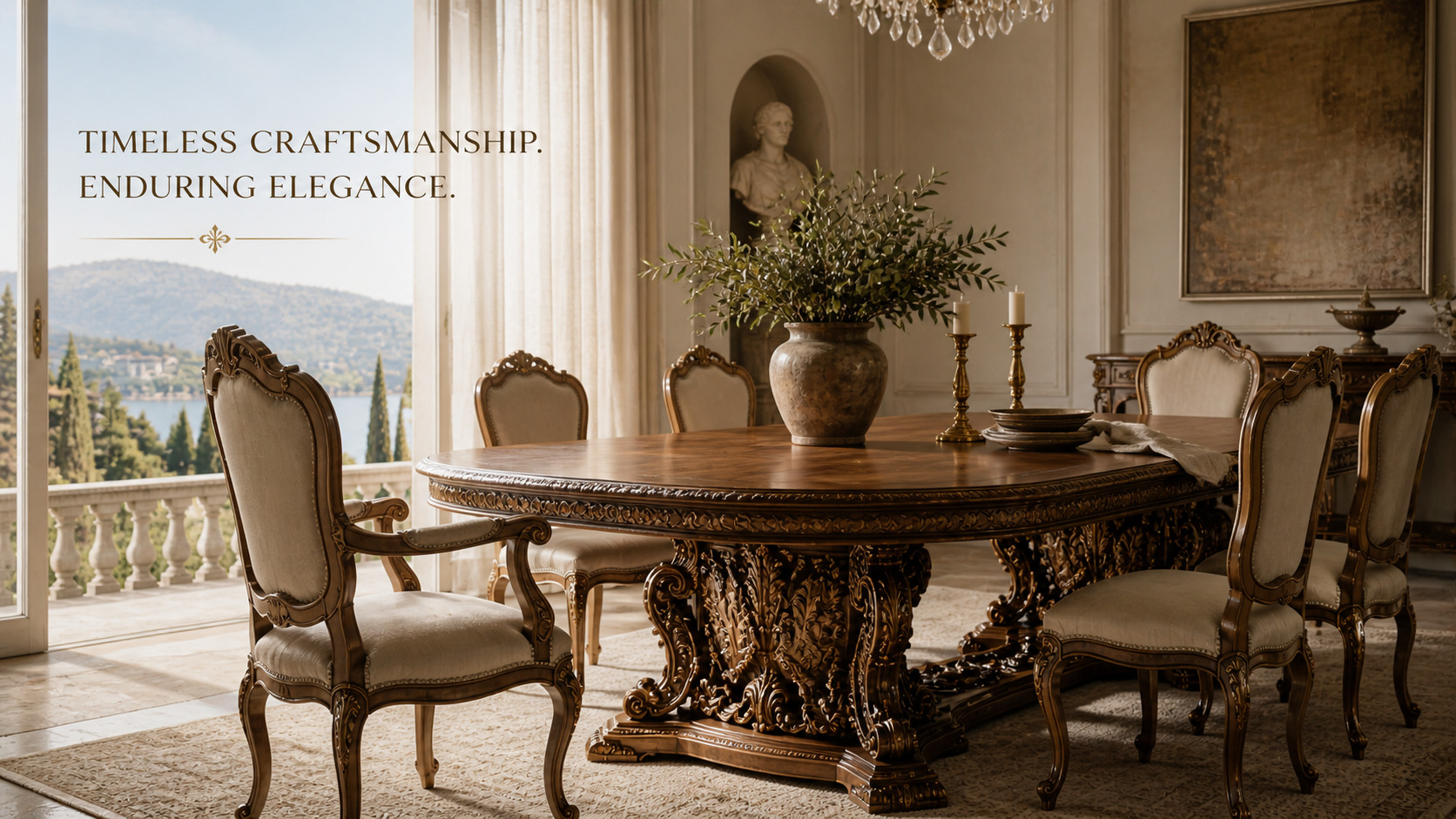
Craftsmanship Beyond Trends: Timeless Carved Wood Dining Tables for Modern Classic Homes

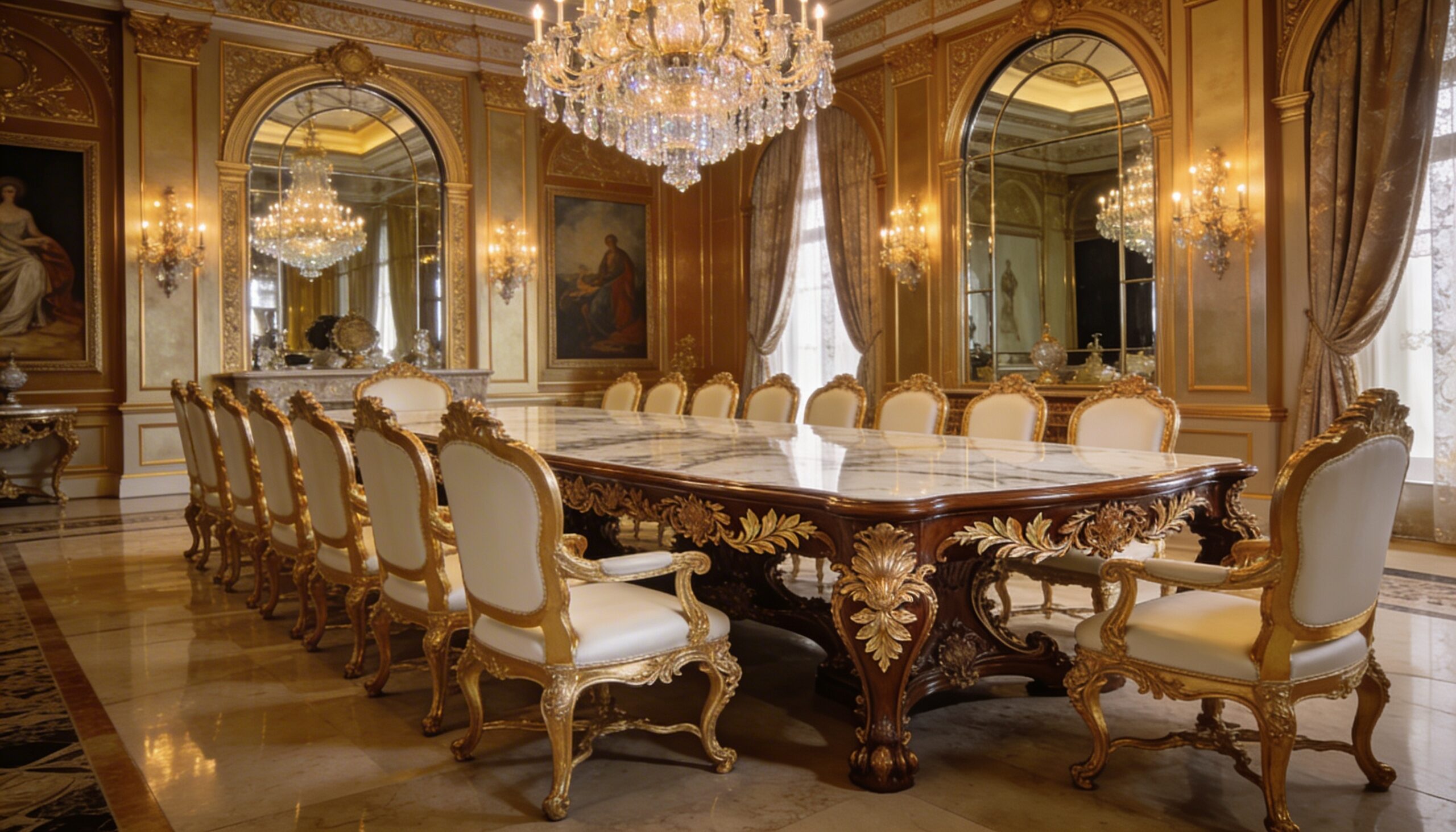
In today’s world of fast-changing interior trends, true luxury lies in permanence. A carved wood dining table is more than a piece of furniture—it’s a testament to artistry, heritage, and enduring design. Across Europe’s most refined homes, from Parisian apartments to Tuscan villas, these tables are reclaiming their place as the centerpiece of modern classic interiors.

This blog explores how baroque dining table designs and artisan craftsmanship are shaping timeless dining spaces—and how you can curate one that feels both sophisticated and relevant.


Why Carved Dining Tables Are Making a Strong Comeback


The resurgence of the baroque style dining table is not about nostalgia—it’s about depth. In an era dominated by minimalism, homeowners and designers are seeking pieces with soul and story.

What makes carved tables stand out:

  • Hand-finished details that reflect true craftsmanship
  • Sculptural bases that double as artistic statements
  • A sense of permanence that outlasts fleeting trends

Unlike mass-produced furniture, a carved wood dining table carries individuality—each curve, motif, and finish tells a story of skilled hands and heritage techniques.


The Art of Craftsmanship: What Sets These Tables Apart


At the heart of every exceptional baroque dining table is craftsmanship that cannot be replicated by machines.

Key Elements of True Artisan Work:

  1. Hand-Carved Detailing
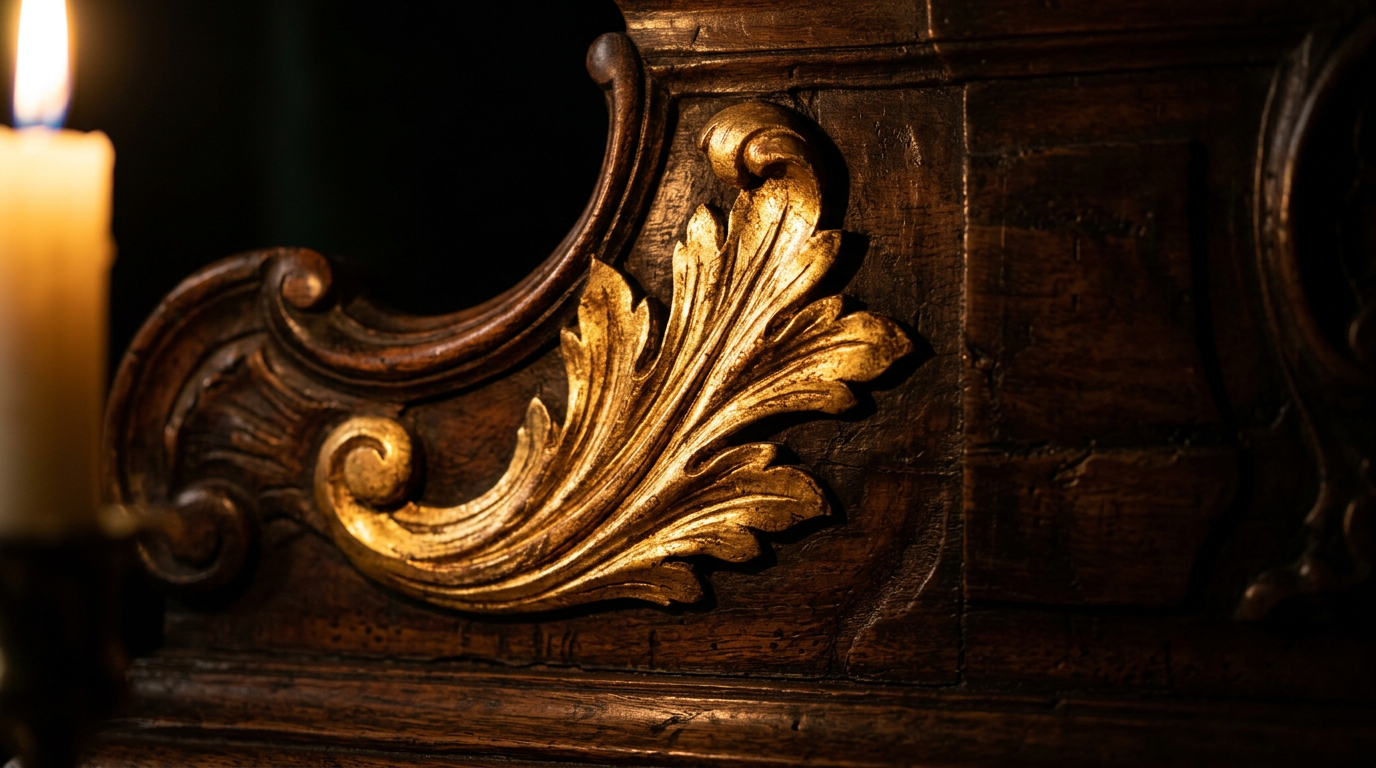
    Motifs such as acanthus leaves, scrolls, and floral patterns are meticulously carved, giving depth and texture that evolves beautifully over time.
  2. Solid Wood Construction
    Premium materials like walnut, oak, or beech ensure durability and structural integrity for generations.
  3. Layered Finishes
    From antique gold leaf accents to hand-polished stains, finishes are applied in layers to create richness and character.

This level of detailing transforms a baroque style dining table into a functional sculpture—one that elevates the entire room.


Designing Modern Classic Interiors Around Carved Tables


The beauty of a carved wood dining table lies in its versatility. While rooted in classical design, it integrates seamlessly into modern classic interiors.

How to Style It Effectively:

  • Balance with Simplicity
    Pair ornate tables with clean-lined chairs or understated upholstery to avoid visual overload.
  • Use a Neutral Palette
    Soft tones like ivory, taupe, and warm greys allow the craftsmanship to stand out.
  • Layer with Texture
    Incorporate linen drapes, wool rugs, and ceramic accents to create a tactile, inviting atmosphere.

The goal is contrast—letting the table remain the focal point while the surrounding elements support its presence.


Choosing the Right Table for Your Space


Selecting the perfect baroque dining table goes beyond aesthetics—it’s about proportion, function, and flow.

Consider These Factors:

  1. Size & Scale
  • Large villas benefit from grand rectangular or oval tables
  • Smaller spaces may suit round carved designs for better circulation
  1. Base Design
  • Pedestal bases create openness and flexibility
  • Ornate leg designs add drama and architectural presence
  1. Finish & Tone
  • Light finishes work well in coastal homes
  • Dark woods add warmth in alpine or traditional settings

Choosing the right baroque style dining table ensures harmony between the table and its environment.


Coastal vs Alpine Styling: A European Perspective


Coastal Homes (Mediterranean, South of France, Spain)

  • Opt for lighter woods or whitewashed finishes
  • Pair with airy fabrics and natural light
  • Keep carvings elegant but less heavy

Alpine Homes (Switzerland, Austria, Northern Italy)

  • Choose darker woods like walnut or oak
  • Embrace deeper carvings and richer finishes
  • Layer with warm textiles and ambient lighting

A carved wood dining table adapts beautifully to both settings—it’s all about how you style it.


Investment Value: Why Craftsmanship Always Wins


In luxury interiors, value isn’t just about price—it’s about longevity.

A high-quality baroque dining table offers:

  • Decades (or even generations) of use
  • Timeless appeal that resists trend cycles
  • Increased aesthetic value as materials age gracefully

Unlike disposable furniture, a baroque style dining table becomes part of a home’s legacy—an heirloom that evolves with time.


Final Thoughts: Designing for Timeless Living


A carved wood dining table represents more than design—it represents intention. It reflects a shift away from fast trends toward meaningful, lasting interiors.

To create a truly refined dining space:

  • Invest in craftsmanship over convenience
  • Balance ornate detailing with modern simplicity
  • Choose pieces that tell a story and stand the test of time

In modern classic homes across Europe, the dining table is no longer just where meals happen—it’s where art, heritage, and everyday living come together beautifully.
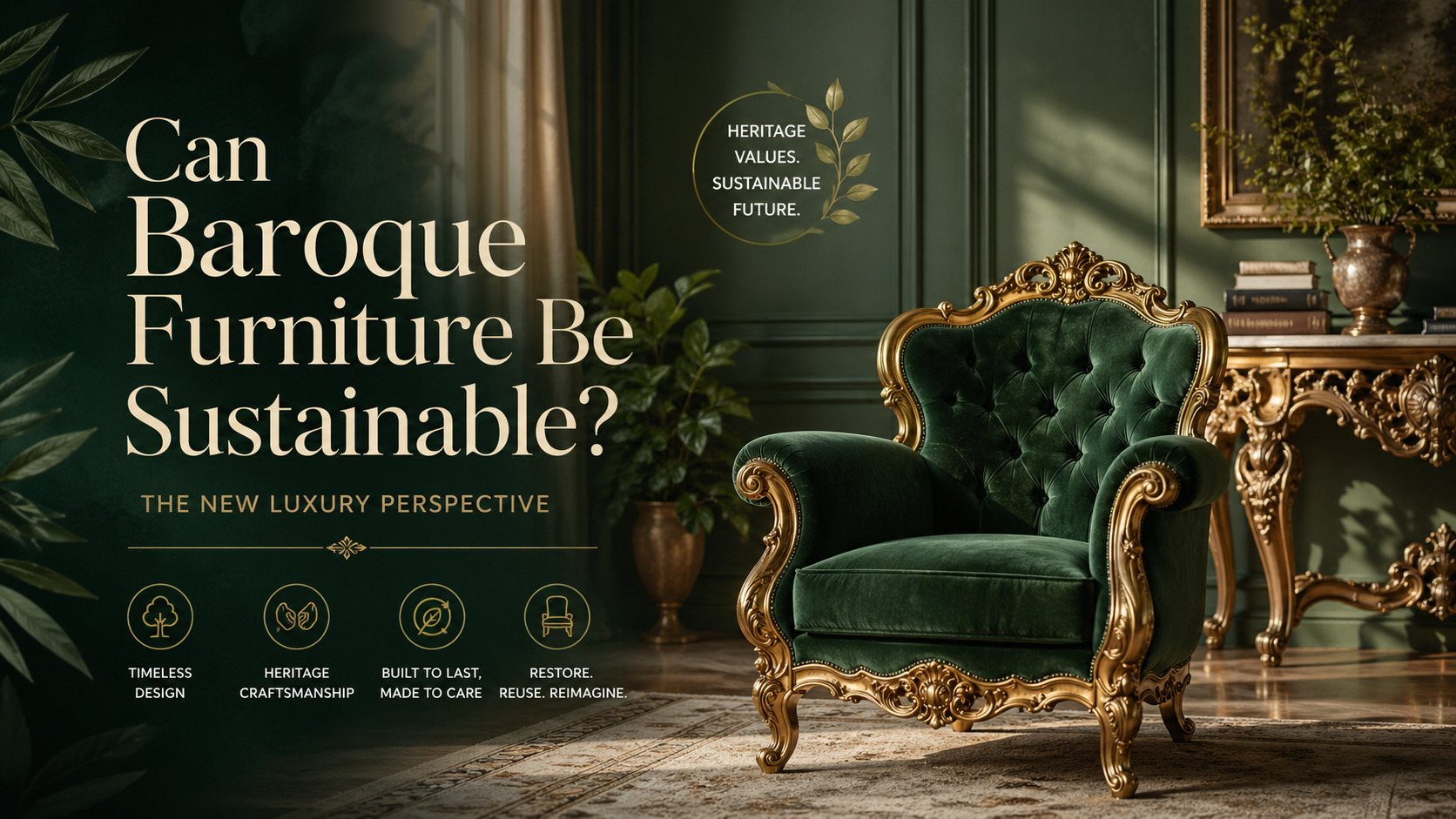
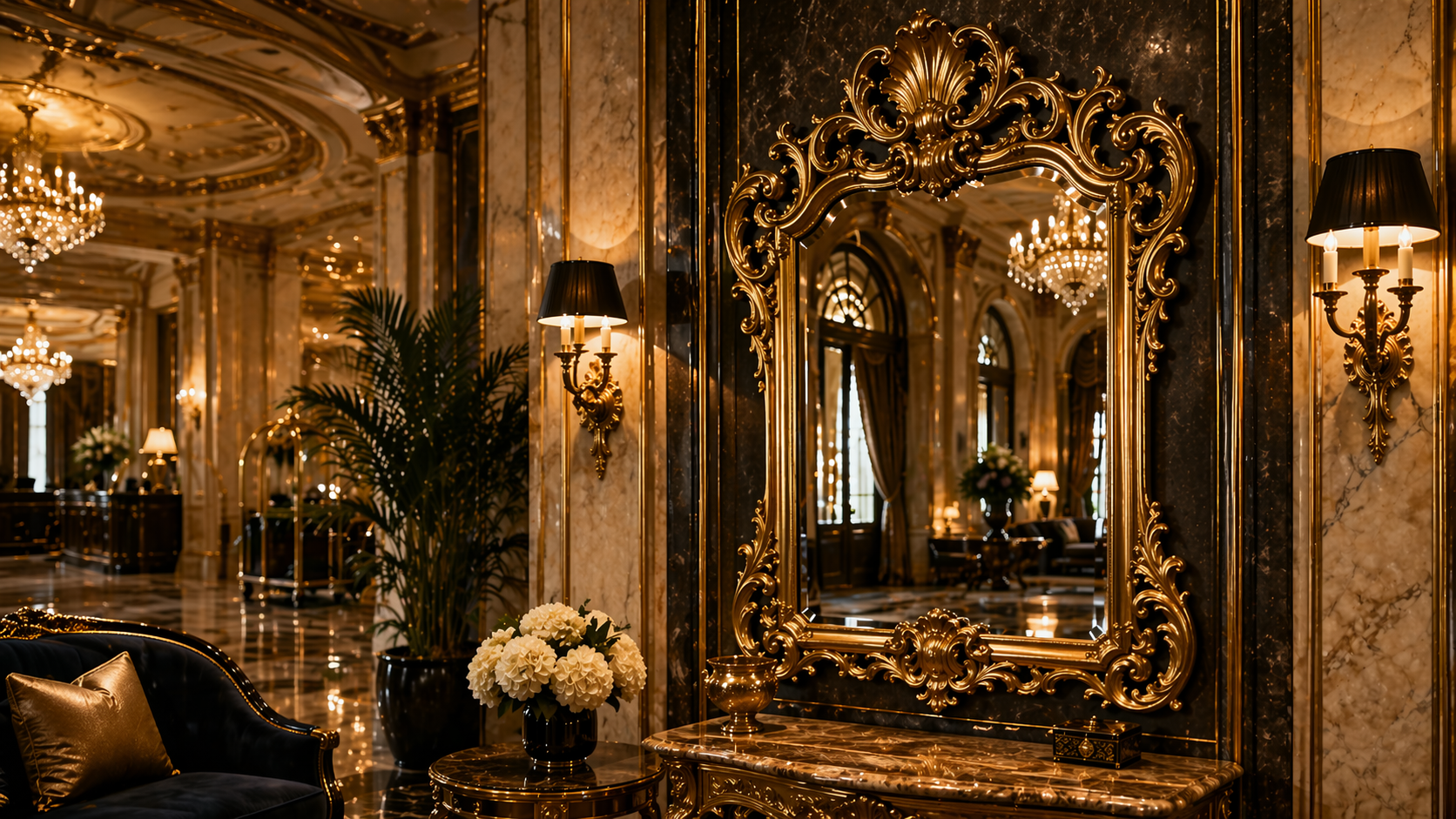
Can Baroque Furniture Be Sustainable? The New Luxury Perspective

Luxury has long been associated with excess—rare materials, intricate craftsmanship, and statement pieces designed to impress. Yet, in today’s world, the definition of luxury is shifting. It is no longer just about how something looks, but also about how it is made, how long it lasts, and the values it represents. This shift raises an intriguing question: can Baroque furniture truly be sustainable?

At first glance, the ornate detailing and rich materials of Baroque furniture might seem at odds with modern sustainability ideals. However, when viewed through the lens of longevity, craftsmanship, and conscious consumption, baroque style furniture reveals itself as a surprisingly aligned player in the evolving “slow luxury” movement.


Rethinking Sustainability in Luxury Interiors


Sustainability is often misunderstood as minimalism—clean lines, simple materials, and reduced ornamentation. But true sustainability is not about aesthetic restraint; it is about responsibility. It asks deeper questions:

  • How long will this piece last?
  • Can it be repaired or restored?
  • Does it reduce the need for frequent replacement?

In this context, Baroque furniture stands apart. Unlike mass-produced furniture designed for short life cycles, baroque pieces are created with permanence in mind. Their very essence challenges the disposable culture that dominates modern interiors.


Longevity: The Core of Sustainable Luxury


One of the strongest arguments for the sustainability of baroque style furniture lies in its longevity. These pieces are not designed for trends—they are designed for generations.

A well-crafted Baroque cabinet or dining table can last decades, even centuries, with proper care. This durability significantly reduces environmental impact by eliminating the need for constant replacements.

Think about it this way:
Buying one exceptional piece that lasts 50 years is far more sustainable than replacing lower-quality furniture every 5–7 years.

This long lifespan transforms Baroque furniture into an investment—not just financially, but environmentally.


Craftsmanship Over Mass Production


Modern furniture production often prioritizes speed and cost efficiency. This leads to the use of synthetic materials, low-grade wood, and assembly-line manufacturing processes.

In contrast, baroque style furniture is rooted in craftsmanship. Each piece is typically handcrafted, with careful attention to detail—from carved wood motifs to hand-applied finishes.

This approach offers several sustainability advantages:

  • Reduced waste due to precision crafting
  • Higher quality materials that age gracefully
  • Lower carbon footprint compared to large-scale industrial production

More importantly, craftsmanship fosters emotional value. When people connect with an object, they are far less likely to discard it.


Restoration: Extending the Life Cycle


Another powerful sustainability factor is the ability to restore and refurbish. Unlike modern flat-pack furniture, which is often difficult (or impossible) to repair, Baroque furniture is inherently restorable.

Scratches can be refinished. Upholstery can be replaced. Wood structures can be reinforced.

This means a single piece of baroque style furniture can evolve over time rather than being discarded. Restoration not only preserves resources but also adds character—each mark and repair becomes part of the piece’s story.

In fact, antique Baroque furniture already demonstrates this principle. Many pieces in use today have survived centuries, proving that sustainability is not a new concept—it is simply being rediscovered.


The Slow Luxury Philosophy


The rise of “slow luxury” is redefining how we approach interiors. It encourages thoughtful purchasing, timeless design, and a deeper appreciation for quality over quantity.


Baroque furniture fits naturally into this philosophy.

Rather than filling a space with multiple temporary items, slow luxury focuses on fewer, more meaningful pieces. A single statement console or intricately carved armchair can define an entire room.

This shift has multiple benefits:

  • Less consumption overall
  • Reduced waste generation
  • Greater appreciation for craftsmanship

In this sense, baroque style furniture becomes more than décor—it becomes a conscious choice aligned with modern values.


Materials: A Balanced Perspective


It would be unrealistic to claim that all Baroque furniture is automatically sustainable. The materials used—such as hardwoods and decorative finishes—must be sourced responsibly to align with contemporary environmental standards.

However, the industry is evolving. Many manufacturers and luxury brands are now:

  • Using certified sustainable wood sources
  • Adopting eco-friendly finishes and coatings
  • Reducing harmful chemicals in production

When these practices are combined with the inherent durability of baroque style furniture, the result is a product that bridges tradition and sustainability.


Emotional Durability: The Hidden Factor


Sustainability is not just physical—it is emotional.

Mass-produced furniture often lacks personality, making it easy to replace when trends change. In contrast, Baroque furniture carries a strong visual identity. Its ornate carvings, dramatic silhouettes, and historical references create a lasting emotional connection.

This concept, known as emotional durability, plays a crucial role in sustainability. When people love what they own, they keep it longer.

A statement Baroque piece does not fade into the background—it becomes a focal point, a conversation starter, and often a cherished possession.


Blending Baroque with Modern Living


A common misconception is that baroque style furniture only suits traditional interiors. In reality, it can be seamlessly integrated into modern spaces.

Designers today are pairing Baroque elements with minimalist settings to create striking contrasts. For example:

  • A carved Baroque console in a clean, neutral hallway
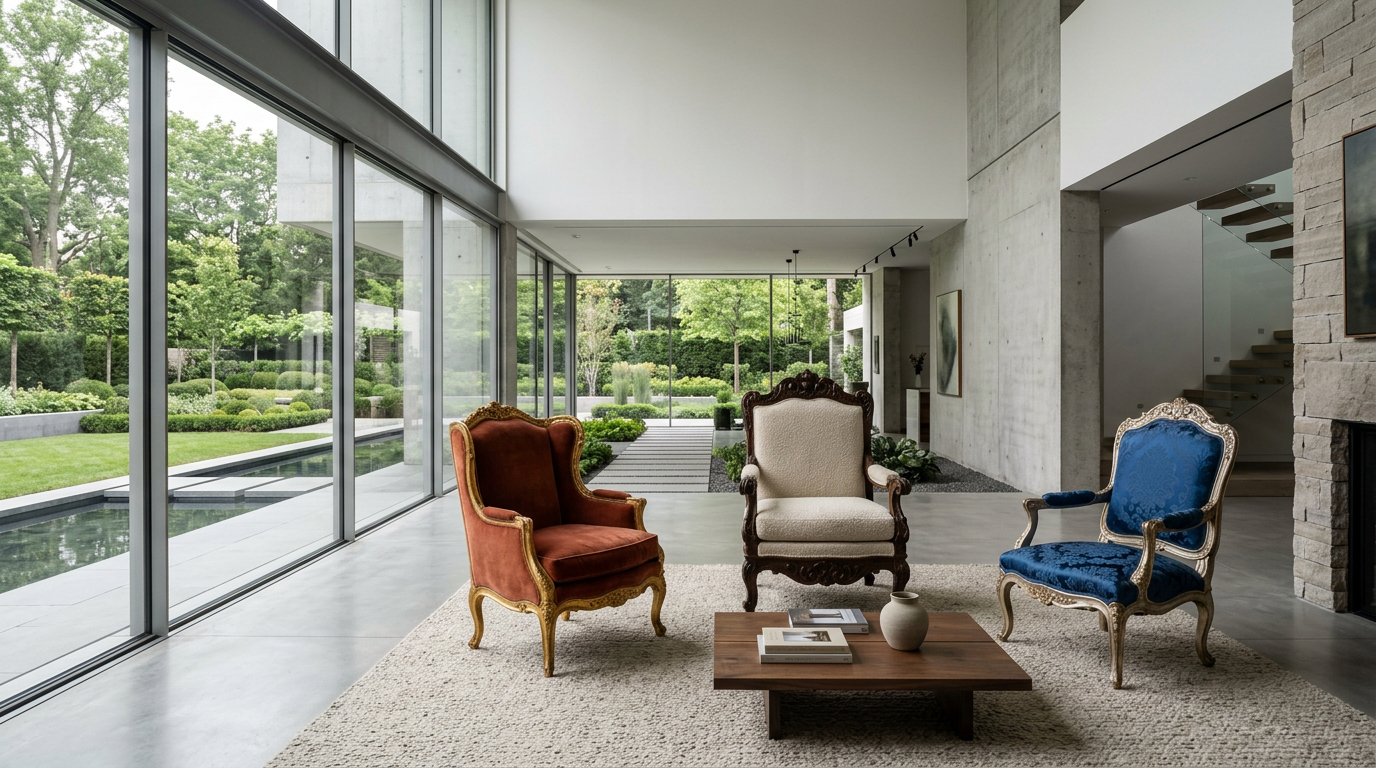
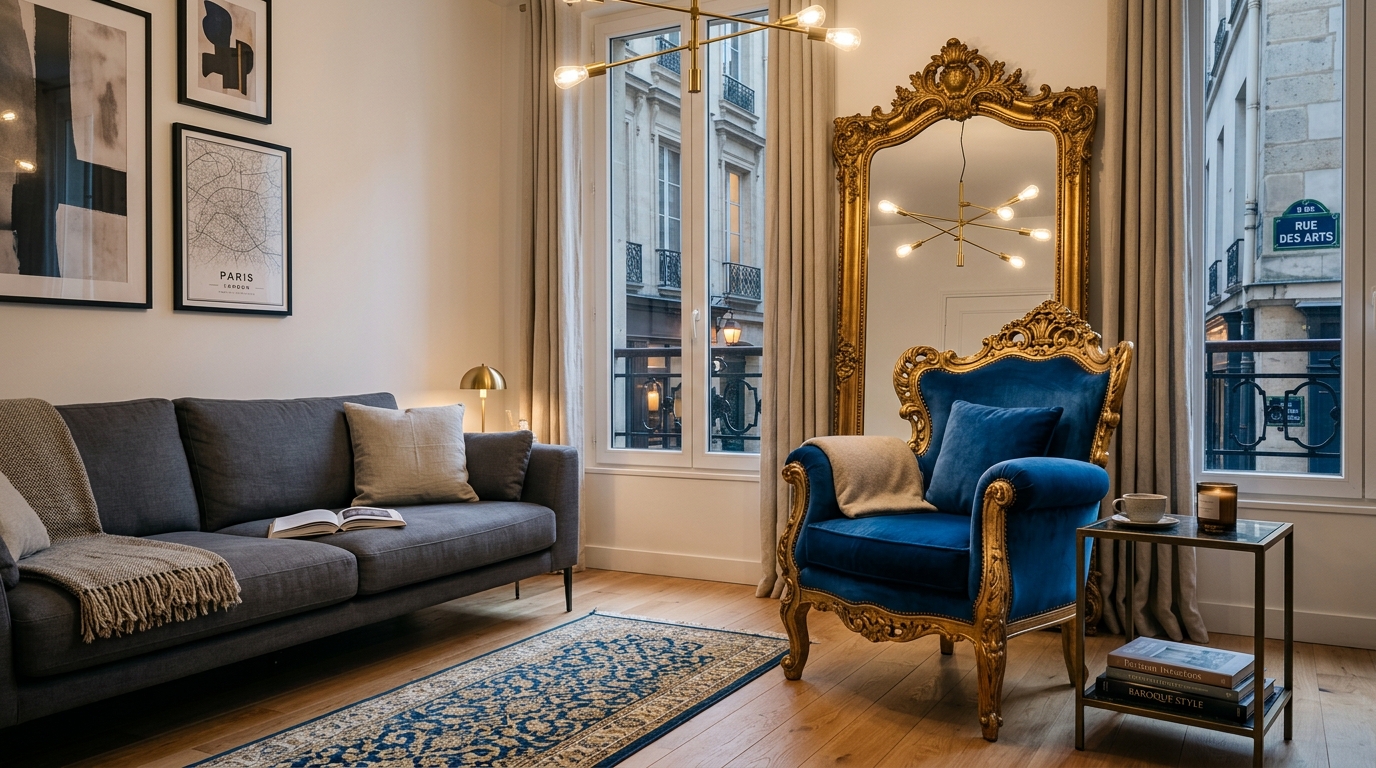
  • An ornate armchair in a contemporary living room
  • A decorative Baroque mirror against a modern wall

This fusion extends the relevance of Baroque furniture, ensuring it remains timeless rather than trend-bound—another key aspect of sustainability.


A New Definition of Luxury


The perception of luxury is changing. It is no longer about abundance; it is about intention.

Today’s luxury consumers are asking:

  • Is this piece responsibly made?
  • Will it stand the test of time?
  • Does it align with my values?

Baroque furniture answers these questions in a unique way. Its emphasis on craftsmanship, longevity, and artistic value positions it as a form of sustainable luxury—provided it is sourced and produced responsibly.


Conclusion: Tradition Meets Responsibility


So, can Baroque furniture be sustainable?

The answer is yes—but not in the conventional sense of minimalism or modern eco-design. Instead, its sustainability lies in a deeper philosophy:

  • Longevity over disposability
  • Craftsmanship over mass production
  • Restoration over replacement
  • Meaning over excess

In a world increasingly driven by fast consumption, baroque style furniture offers a refreshing alternative. It invites us to slow down, invest wisely, and surround ourselves with pieces that endure—not just physically, but emotionally.

This is the new luxury perspective: one where heritage meets responsibility, and where timeless beauty becomes a sustainable choice.

The Gilded Reflection: Why Baroque Style Mirrors Are Essential for Luxury Hotel Design

In the competitive landscape of European high-end hospitality, a hotel is no longer just a place to rest; it is a curated sensory experience. Designers are increasingly moving away from the sterile minimalism of the last decade, favoring “maximalist elegance” that tells a story of heritage and grandeur. At the heart of this aesthetic revival is a single, transformative element: the Baroque style mirror.

For a luxury hotel, a mirror is never just a functional object for checking one’s reflection. It is a portal to an era of opulence. Whether it’s a sprawling boutique hotel in the heart of Paris or a restored palazzo on the Venetian Grand Canal, the Baroque style mirror serves as the definitive anchor of luxury interior design.


The Art of First Impressions: Grandeur in the Lobby


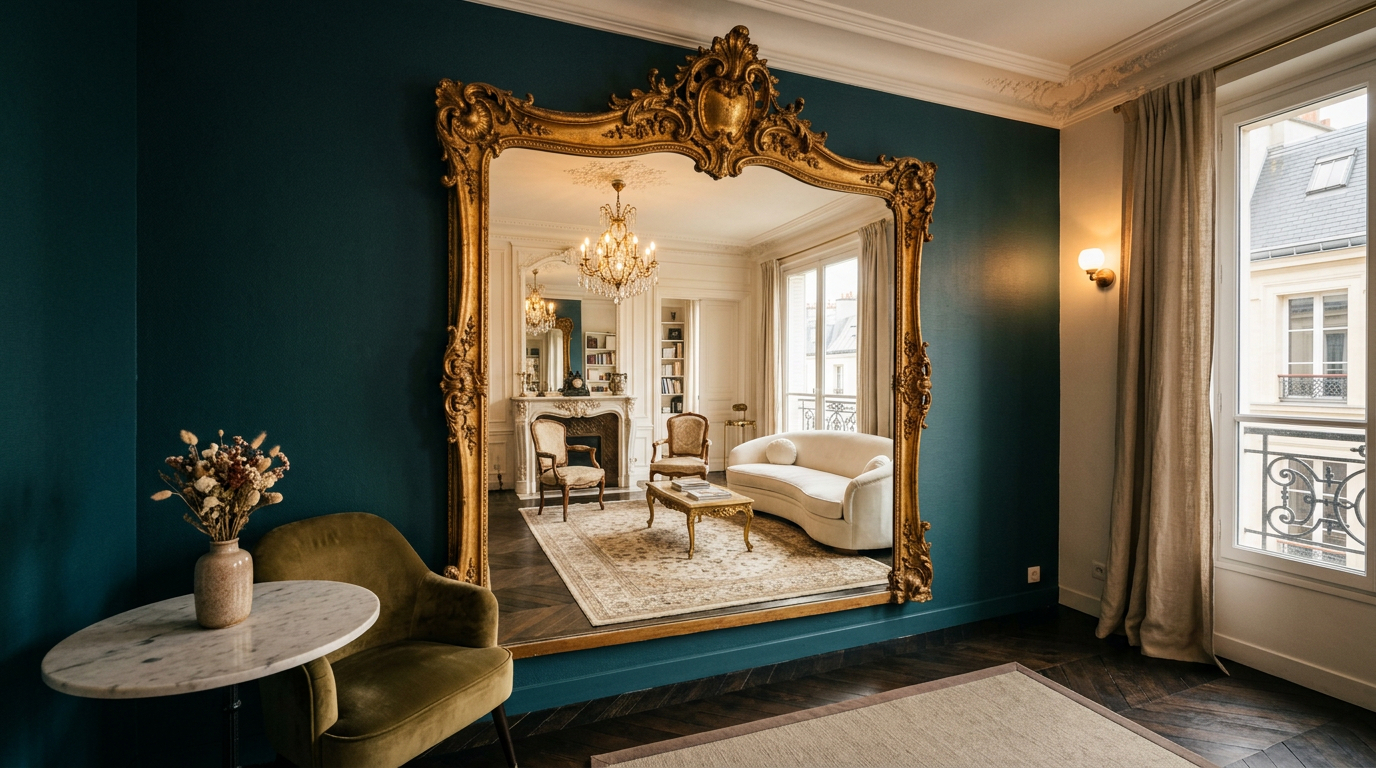
The lobby of a luxury hotel is its thesis statement. It’s where the guest transitions from the mundane world into a realm of curated excellence. A large, floor-to-ceiling Baroque style mirror—with its signature scrolling foliage, cherubs, and intricate gilding—commands immediate attention.

These mirrors do more than occupy space; they manipulate it. By utilizing a Baroque vintage mirror in a grand entrance, designers can:

  • Amplify Natural Light: The deep, ornate frames catch and refract light, brightening even the most cavernous halls.
  • Create Visual Depth: In historic European buildings where space can sometimes be narrow, a strategically placed mirror provides an illusion of infinite luxury.
  • Establish Authority: The sheer weight and craftsmanship of a Baroque frame signal to the guest that they are in a space of significant investment and historical appreciation.


Elevating the Guest Suite: The Private Sanctuary


While the lobby impresses, the guest suite must enchant. The modern luxury shopper—particularly those frequenting five-star establishments in London, Milan, or Vienna—expects a room that feels like a private place of royalty.

Integrating a Baroque style mirror into the suite design bridges the gap between modern comfort and classical beauty. A Baroque vintage mirror placed above a marble vanity or a mahogany desk transforms a standard piece of furniture into a focal point. It adds a layer of “lived-in” history, making the hotel feel less like a commercial space and more like a refined luxury home.

Design Tip: Pair a gold-leafed Baroque mirror with contemporary, sleek lighting. The contrast between the hyper-detailed carvings and the clean lines of modern fixtures creates a “New Classic” look that is currently trending across European design boutiques.


Why the “Baroque” Aesthetic Resonates with Luxury Shoppers


The term “Baroque” originates from the Portuguese barroco, meaning an irregular pearl. It is defined by movement, exuberance, and drama. For the luxury hospitality sector, this aesthetic is essential because it evokes an emotional response.

  1. Craftsmanship as a Status Symbol: In an age of mass production, the complex curves of a Baroque style mirror represent artisanal skill. Luxury guests value the “human touch” behind the decor.
  2. Timelessness: Trends like “Industrial Chic” or “Mid-Century Modern” fluctuate in popularity. However, the Baroque influence has remained a staple of European nobility for centuries. Investing in a Baroque vintage mirror ensures the hotel design remains relevant for decades.
  3. The “Instagrammable” Moment: Let’s be practical—modern luxury marketing relies on social media. The intricate frame of a Baroque style mirror provides the perfect backdrop for guest photos, turning every “mirror selfie” into a high-end advertisement for the hotel’s aesthetic.


Technical Integration: Beyond Aesthetics


From a development perspective, incorporating these mirrors requires an understanding of balance. To maintain an upscale feel without veering into “clutter,” designers should consider the following:


Feature Luxury Hotel Application Private Place / Home Application
Frame Material Solid wood with gold or silver leafing for durability. Aged brass or hand-painted resins for a bespoke feel.
Glass Quality Beveled edges to add a diamond-like shimmer under hotel lighting. Antique-foxed glass for an authentic “vintage” soul.
Placement High-traffic areas (Lobbies, Elevator Banks). Intimate settings (Bedrooms, Powder Rooms).


Creating a Narrative of Opulence


Luxury hotel design is about storytelling. When a guest sees a Baroque style mirror, they aren’t just looking at glass and wood; they are looking at a legacy. This style of mirror evokes the Hall of Mirrors in Versailles or the regal apartments of the Habsburgs.

For property developers and interior architects, choosing a Baroque vintage mirror is a strategic move. It fills the “visual void” that often haunts large rooms. Where a painting might require specific art knowledge to appreciate, a Baroque mirror is universally recognized as a symbol of wealth and sophisticated taste.


Conclusion: The Essential Finishing Touch


Whether you are designing a high-end luxury hotel, a secluded private place, or a grand luxury home, the mirror you choose dictates the room’s soul. The Baroque style mirror is not a mere accessory; it is an architectural tool that brings warmth, light, and a sense of history to a space.

By opting for a Baroque vintage mirror, you aren’t just decorating a wall—you are reflecting a standard of excellence that the world’s most discerning travelers have come to expect. In the realm of luxury, the reflection should always be as beautiful as the room itself.


Transform Your Space: Gold Baroque Mirrors That Make Small Rooms Look Twice as Big

We’ve all been there—standing in a room that feels more like a shoebox than a sanctuary. You want the drama of a Parisian flat, but you’re working with a studio apartment floor plan. Before you start knocking down walls or eyeing that “minimalist” (read: boring) furniture, let’s talk about the ultimate interior design cheat code: the gold baroque mirror.

A baroque mirror isn’t just a piece of decor; it’s an architectural intervention. With its ornate flourishes and commanding presence, it creates a “window” where there wasn’t one. Today, we’re diving into the gold mirror hack that designers use to cheat the eye and make even the tiniest rooms feel palatial.


The Science of the Mirror Illusion: Why Baroque Works


Why choose a gold baroque mirror for a small room over a simple, frameless one? It comes down to the mirror illusion baroque style provides.

  • Depth through Detail: The intricate, three-dimensional carvings of a baroque frame create a sense of physical depth. Your eye doesn’t just stop at the wall; it gets lost in the texture of the gold leaf.
  • The Focal Point Effect: In a small room, your eye often flits around, noticing how close the walls are. A massive gold mirror gives the eye a place to “land,” drawing attention away from the cramped corners.
  • Warmth and Reflection: Gold finishes catch light differently than silver or wood. They glow, diffusing light back into the room with a warm, expensive-looking hue that eliminates dingy shadows.


Master the “Mirror Magic” Placement Map


Where you hang your mirror is just as important as the mirror itself. Follow this placement map to maximize your space enlarging baroque mirror potential:


Room Type Primary Placement Why it Works
Living Room Above the Sofa Expands the “seating area” perception.
Dining Nook Opposite the Entryway Creates an immediate sense of “grand arrival.”
Bedroom Leaning against the far corner Adds vertical height and creates a “portal” effect.
Hallway End of the corridor Doubling the perceived length of the hall.


Development Tip: The Angle & Window Secret


If you want to truly master the gold mirror hack, you need to think about the “Source and Bounce.”

  1. The “Opposite Window” Rule: To make a room look twice as big, you need to trick the brain into thinking there’s another window. Place your gold baroque mirror directly opposite your largest natural light source. This captures the view from outside and pulls it into the room. If you see trees or sky in the reflection, the room feels infinitely more open.
  2. The 5-Degree Tilt: Don’t always hang your mirror perfectly flat against the wall. If you have a floor-standing baroque mirror, lean it at a slight upward angle. This reflects more of the ceiling and the upper half of the room, which makes the “vertical volume” of the space feel much larger than it actually is.

📸 Reader “Mirror Magic” Showcase


We asked our community to send in their best gold baroque mirror small room transformations. Here are our top three favorites that prove you don’t need a mansion to live like royalty:

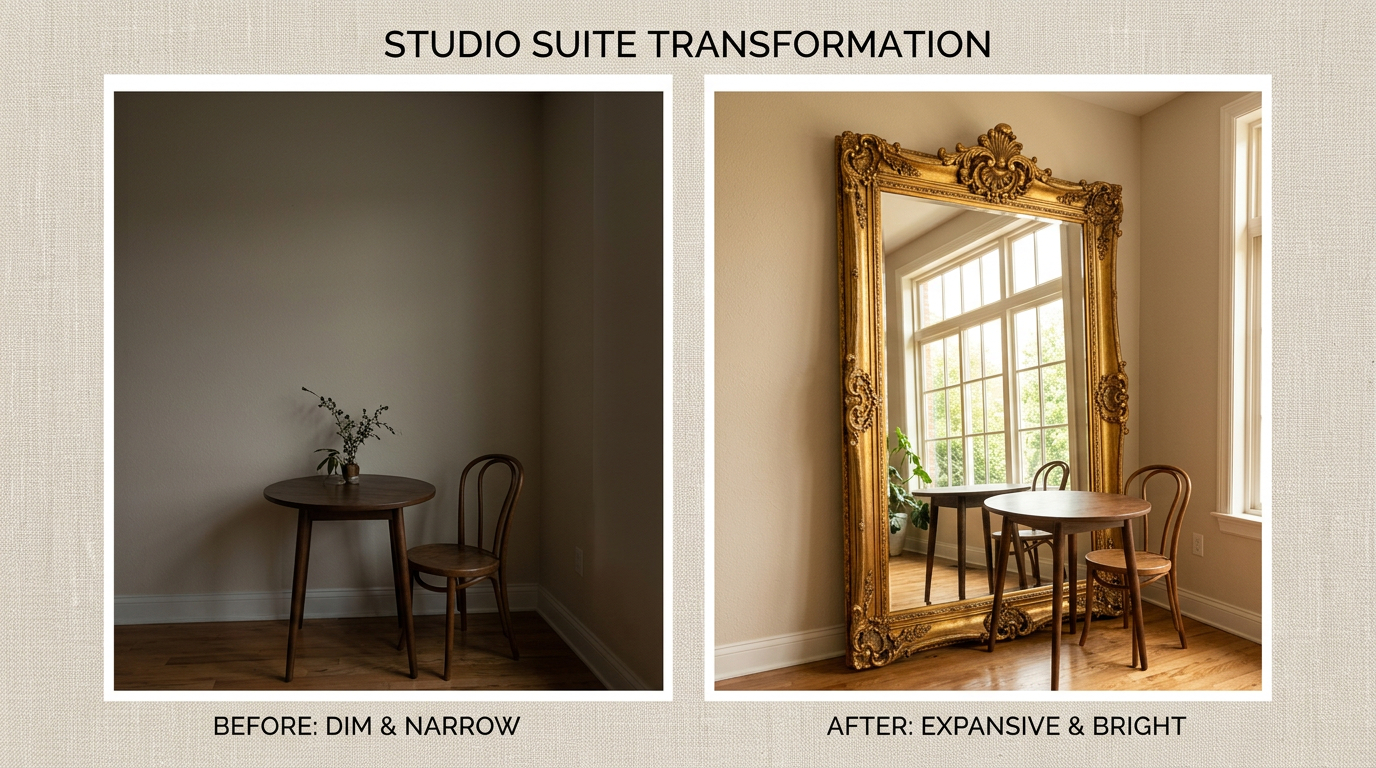
The “Studio Suite” Transformation“I lived in a 300sq ft studio and felt claustrophobic. I added a 6-foot gold baroque mirror behind my small dining table. Now, when I eat breakfast, I feel like I’m in a grand café. It literally doubled the light in my apartment!”Elena, Chicago

Baroque-mirror-demo

The Dark Hallway Fix“My hallway had zero windows and felt like a cave. I hung a medium-sized ornate baroque mirror and placed a lamp in front of it. The gold frame glows at night, and the reflection makes the hallway look like it goes on forever.”Marcus, London


Styling Your Gold Baroque Mirror


Once you’ve found your perfect piece, how do you style it so it doesn’t look like a “relic” in a modern room?

  • Contrast is Key: If you have modern, clean-lined furniture, a baroque mirror provides the perfect “maximalist” contrast. It adds soul to a room that might otherwise feel too sterile.
  • The “Double Up” Trick: In very narrow rooms, try hanging two identical gold mirrors side-by-side. This creates a rhythmic, gallery-like feel that expands the wall horizontally.
  • Layering: Don’t be afraid to overlap. Place a tall plant or a sleek chair slightly in front of the mirror’s edge. This adds layers of depth, making the reflected “room” feel even more real and accessible.


Is It Worth the Investment?


You might be tempted to go with a cheaper, plastic-framed alternative. However, the weight and “gleam” of a high-quality gold baroque mirror are what make the space enlarging baroque mirror effect actually work. Real wood or resin with gold leaf finishes has a refractive index that mimics the sun, whereas cheap gold paint can look flat—and a flat mirror won’t give you that “magic” depth you’re looking for.


Final Thoughts


Living in a small space doesn’t mean you have to think small. By utilizing a gold mirror hack, you are essentially “hacking” your brain’s perception of square footage. Whether it’s a full-length floor piece or a statement mantle mirror, the baroque mirror remains the undisputed king of interior illusions.

Ready to try it? Measure that empty wall, find a window to reflect, and watch your room grow before your eyes!


The Throne of the Modern Manor: 10 Must-Have Baroque Style Armchairs for Luxury Homes

There is a specific kind of magic that happens when you place a piece of 17th-century drama into a 21st-century room. It’s the “Baroque effect”—an instant infusion of history, weight, and unapologetic opulence. While minimalism has had its decade in the sun, 2026 is seeing a massive return to maximalist soul. Luxury homeowners are no longer looking for furniture that “blends in”; they are looking for furniture that commands a standing ovation.

The Baroque armchair is the undisputed heavy hitter of this movement. With its signature “cabriole” legs, hand-carved wood, and “scrollwork” flourishes, it transforms a simple corner into a curated gallery. Whether you’re styling a sprawling estate in the hills or a high-ceilinged urban penthouse, these ten Baroque style armchair picks represent the pinnacle of current luxury interior trends.


1. The Gilded Throne: Louis XV Royal Bergère


The Bergère is the “gold standard” of Baroque comfort. Unlike open-sided chairs, the Bergère features upholstered sides that “embrace” the sitter.


  • The Look: Deep-seated, with a massive curved backrest and gold-leaf finish.
  • Luxury Tip: Look for 2026’s “Thyme Green” or “Deep Terracotta” velvet upholstery. These earthy tones modernize the high-shine gold frame, grounding the piece in “Quiet Luxury.”


2. The Gothic Baroque: Obsidian & Silver Medallion


For those who prefer their luxury with a side of mystery, the black-on-silver Baroque chair is a masterclass in mood.

  • The Look: A frame carved from solid mahogany, finished in a high-gloss black lacquer or matte silver, paired with black tufted leather.
  • Why it works: It acts as a perfect “anchor” in a bright, modern room, providing a sharp, architectural silhouette that feels both ancient and avant-garde.


3. The “Collaged” Accent: Mixed-Material Baroque


One of the top trends for 2026 is “Collaging”—the intentional use of multiple fabrics on a single piece of furniture.

  • The Look: A traditional Baroque style armchair frame where the exterior is a rough, tactile linen and the interior seating is a buttery-soft silk or mohair.
  • Engagement Angle: This is the ultimate “bespoke” piece. It tells your guests that this chair wasn’t bought off a shelf; it was commissioned.


4. The Italian Showstopper: The Vimercati Classic


Italian Baroque is known for being more exuberant and “vocal” than its French counterparts.

  • The Look: Incredible vertical height, with backrests that often feature “crown” carvings at the peak.
  • Placement: These are best used in pairs. Place them at the end of a long dining table or flanking a grand fireplace to create a sense of symmetry and power.


5. The “Rococo Lite”: The White & Champagne Armchair


If a full-gold chair feels too heavy for your aesthetic, the Rococo-influenced Baroque style is your best friend.

  • The Look: A white-washed or “pickled” wood frame with subtle champagne-gold accents on the flourishes.
  • Vibe: This is perfect for “Coastal Luxury” or “Modern Farmhouse” interiors that need a touch of femininity and light.


Comparison: Why Choose Baroque Over Modern?


Feature Baroque Armchair Modern Minimalist Chair
Visual Impact High (Statement Piece) Low (Functional Blend)
Detailing Hand-Carved Scrollwork Clean Lines/Angles
Material Feel Tactile (Velvet, Silk, Gold Leaf) Smooth (Leather, Metal, Plastic)
Atmosphere Formal, Regal, Artistic Relaxed, Industrial, Simple


6. The Throne-Back: Tall-Back King Chairs


Nothing says “luxury” like a chair that literally rises above the rest of the furniture.

  • The Look: An exaggeratedly tall backrest, often reaching five feet in height, featuring “Capitonne” (deep button-tufting).
  • Designer Secret: Use this as a “Solitaire” piece. It doesn’t need a matching set; it’s a sculptural work of art that stands alone in a foyer or a library corner.


7. The Sculptural Silhouette: The Swan-Neck Armchair


In 2026, organic shapes are trending. The Baroque style, with its naturalistic carvings of acanthus leaves and animals, fits this perfectly.

  • The Look: Armrests that terminate in carved swan heads or lion paws.
  • Tactile Appeal: This appeals to our desire for “high-touch” environments. Running your hand over a hand-carved lion’s mane is a sensory experience you won’t get from a flat-pack chair.


8. The Modern Mirror-Finish: Chrome & Velvet


For a penthouse look, look for designers who are reimagining the Baroque style armchair in modern metals.

  • The Look: The classic 17th-century shape, but cast in polished chrome or brushed bronze rather than wood.
  • Luxury Tip: Pair chrome frames with jewel-toned velvets like Sapphire or Emerald to create a high-contrast, “Electric Baroque” aesthetic.


9. The Provincial Baroque: Walnut & Tapestry


Not all luxury is shiny. Sometimes, the most expensive look is the one that looks the oldest.

  • The Look: Natural walnut or rosewood frames with a satin oil finish (no shine). The upholstery is a heavy-weave, modern tapestry featuring biophilic (nature-inspired) patterns.
  • Why it’s a must-have: It perfectly captures the “Biophilic Design 2.0” trend—bringing the complexity of nature indoors through artisanal craftsmanship.


10. The Bouclé Baroque: Texture Overload


Combining the trendiest fabric of the decade (bouclé) with the oldest silhouette (Baroque).

  • The Look: A heavily carved, dark wood frame paired with chunky, nubby white bouclé fabric.
  • The Result: The “Soft Revolution.” It’s an armchair that looks like a museum piece but feels like a cloud. It’s the ultimate “Quiet Luxury” statement.


Development Tip: How to Style Baroque in a Modern Home


The biggest fear homeowners have with a Baroque armchair is that it will make their home look like a dusty museum. Here is how to keep it fresh:

  1. The 80/20 Rule: Keep 80% of your room modern and sleek (clean-lined sofas, neutral walls, hidden tech). Let the remaining 20% be your Baroque statement pieces. This contrast makes the armchair look like a deliberate art choice.
  2. Mind the Scale: Baroque chairs can be “heavy.” Ensure you have enough negative space around the chair. Don’t crowd it with side tables or lamps; let its silhouette breathe.
  3. Lighting is Everything: Because these chairs feature intricate carvings, use layered lighting. A warm floor lamp positioned to hit the gold leaf from the side will create shadows that make the carvings pop, giving you that 3D “architectural intervention” look.


Final Thoughts: Investing in Art


A high-quality Baroque armchair is more than just a place to sit; it is a legacy investment. In a world of fast furniture and disposable trends, these pieces celebrate the human hand. They represent a time when furniture was built to convey status and tell a story.

By choosing a piece that balances 17th-century grandeur with 2026’s earthy palettes and tactile fabrics, you aren’t just decorating a room—you’re crowning it.

Which style speaks to your home’s personality? Are you leaning toward the “Electric Baroque” of chrome and velvet, or the “Quiet Luxury” of satin-finish walnut? Let us know in the comments!

Design Story: How Baroque Dining Chairs Evolved from Palace Grandeur to Modern EU Homes

When you picture a Baroque palace—think Versailles or Schönbrunn—you likely imagine dripping chandeliers, marble floors, and chairs that look too ornate to sit on. Yet today, baroque style dining chairs are finding a surprising second life in modern apartments across Europe. How did these sculptural seats make the leap from royal courts to cozy dining nooks? Let’s trace the evolution.


The Birth of Baroque: Drama and Power

The Baroque period (17th–early 18th century) was born in Italy and spread across Catholic Europe as a tool of persuasion. The church and monarchy wanted to overwhelm the senses—and dining chairs were no exception.

Early baroque dining chairs were not designed for comfort but for status. Made from solid walnut or oak, they featured:

  • Lavish carvings (acanthus leaves, scrolls, shells)
  • Upholstered seats in velvet or damask
  • Gilded or silvered finishes
  • High, imposing backs

These chairs were never pushed under a table. Instead, they lined banquet hall walls, only brought out for feasts that lasted hours. The message was clear: power sits heavily, and beautifully.


The Rococo Detour: Lighter, but Still Luxurious

By the mid-18th century, Baroque softened into Rococo. While purists distinguish the two, many baroque chairs from this era adopted curvier legs, asymmetrical shells, and pastel upholstery. The silhouette became more intimate—suitable for private salons rather than throne rooms.

However, by the late 1700s, Neoclassicism arrived with a strict “back to Greece and Rome” attitude. Baroque was suddenly deemed excessive. Many chairs were discarded, stored in attics, or stripped of their gilding. For nearly a century, baroque style dining chairs fell out of fashion entirely.


The 19th Century Revival: Historicism and Bourgeois Taste

The Victorian era brought a revival of all things historical. Wealthy European families, particularly in France, Germany, and Austria, commissioned reproductions of 17th-century baroque dining chairs. New manufacturing techniques (steam bending, machine carving) made ornate shapes more affordable.

This period marked the first time baroque chairs entered not just palaces but upper-middle-class homes. The difference? Scale. Revival chairs were slightly smaller, with lower backs and more practical upholstery (cotton or wool blends instead of fragile silk). They were still showpieces, but they could now fit into a standard dining room.


The 20th Century: From Museum Piece to Eclectic Statement

Mid-century modernism declared war on ornament. For decades, baroque style dining chairs were seen as kitsch or outdated. Only antique collectors kept them alive.

Then came the 1980s and 1990s postmodern rebellion. Designers like Ettore Sottsass and Alessandro Mendini began quoting historical styles ironically. Suddenly, a single baroque chair painted matte black—or even neon pink—felt fresh. The rule became: one dramatic Baroque chair at a modern table creates contrast, not clutter.


Today: Baroque in Modern EU Homes

Fast-forward to 2026. Walk into a Copenhagen loft, a Milan apartment, or a Berlin townhouse. You might see a minimalist oak table surrounded by six baroque dining chairs—but with a twist.

Today’s evolution includes:

  • Silhouette retention, material substitution – Chairs keep the curved legs and scalloped aprons but use sustainable beech, ash, or even recycled plastic.
  • Neutral palettes – Gone is the red velvet. Instead, baroque chairs appear in linen, bouclé, or undyed wool in shades of sand, charcoal, or sage green.
  • Mixed seating – Many EU homes pair two Baroque-style host chairs at the head of a table with four industrial or Scandinavian chairs on the sides.
  • Compact proportions – Modern baroque style dining chairs have lower back heights (85–95 cm instead of 120 cm) to fit under standard 75 cm dining tables.

Brands like Lema, Porada, and even IKEA’s limited-edition collections have released Baroque-inspired pieces that are fully upholstered, easy to clean, and stackable. Yes, stackable Baroque.


Why the Enduring Appeal?

Baroque speaks to something we still crave: ceremony. In an age of remote work and fast meals, pulling up a baroque dining chair transforms dinner into an event. The carved wood and gentle curve of the back ask you to sit upright, to linger, to converse.

Moreover, European homes today are smaller but more design-conscious. A single well-placed baroque chair adds texture, history, and warmth—without requiring a palace.


Final Takeaway

From Louis XIV’s Hall of Mirrors to a Sunday pasta dinner in a Roman flat, baroque style dining chairs have survived ridicule, revival, and reinvention. They no longer shout power. Instead, they whisper story.

So next time you see a baroque chair in a modern showroom, don’t mistake it for a relic. It’s a survivor—and it might just be the most interesting seat at your table.

Baroque Headboards: Artistry in Comfort – Why Luxury Suites Are Embracing Ornate Sleep

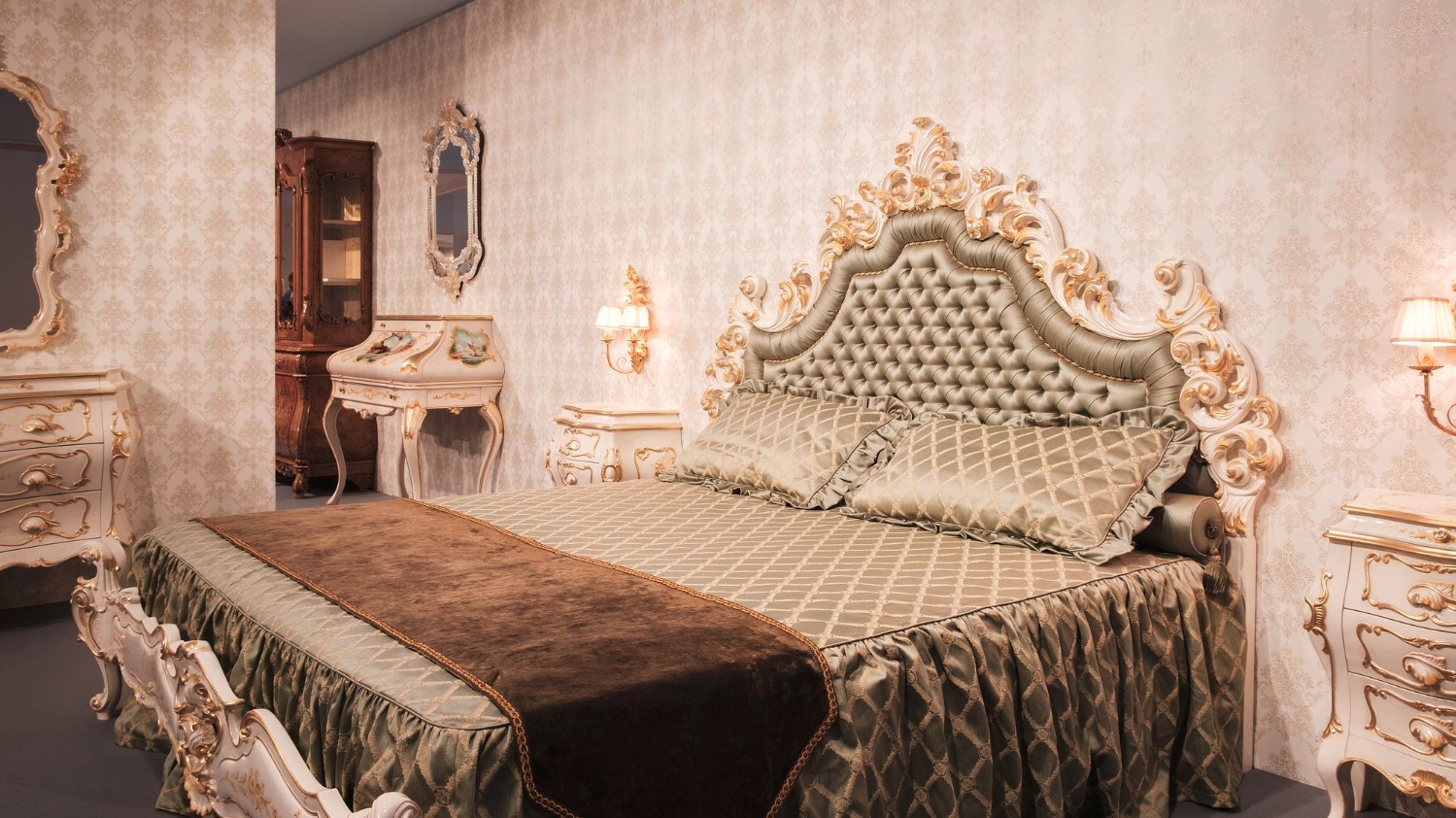
In an age of flat-pack furniture and sterile minimalism, one design movement refuses to fade: the baroque headboard. It is not merely a piece of bedroom furniture. It is a statement, a hand-carved promise that comfort and artistry can coexist. Walk into any five-star hotel suite in Paris, Vienna, or Rome, and you will likely see one. But what makes the baroque style bed so irresistible to luxury designers and homeowners alike? The answer lies in three things: craftsmanship, tufted depth, and unapologetic drama.

This blog explores how the baroque headboard evolved from palace chambers into today’s most coveted bedroom centerpiece—and why you might want one above your own bed.


Part 1: What Exactly Is a Baroque Headboard?


Before diving into styling, let’s define the term. A baroque headboard draws from the 17th-century European Baroque period—think Louis XIV, Versailles, and theatrical grandeur. Key characteristics include:

  • Ornate wood carving (acanthus leaves, scrolls, floral motifs)

  • High, imposing silhouette (often 150–180 cm tall)

  • Gilded, silvered, or dark lacquered finishes

  • Tufted or buttoned upholstery (velvet, silk, or high-end linen)

  • Crowned or arched top (sometimes with a central crest)


Unlike a standard bed, a baroque style bed commands the room. It is the first thing you see when you enter and the last thing you touch before sleep.

“A baroque headboard is to a bedroom what a chandelier is to a dining hall—it defines the entire atmosphere.” — Elena Rossi, luxury interior designer, Milan


Part 2: The Craftsmanship Behind the Curves


Mass production cannot replicate a true baroque bed frame. Here is why craftsmanship matters.


Hand-Carved Wood vs. Moulded Polyurethane

Authentic baroque headboards begin with solid wood—walnut, mahogany, or oak. Master carvers spend 40 to 80 hours hand-sculpting each scroll and leaf. Modern replicas use polyurethane moulds, but the difference is visible: real carving catches light differently, creating shadows that change throughout the day.


The Art of Tufted Headboard Styling

Tufting is not decorative—it is structural. In a baroque headboard, deep button tufting (often diamond or biscuit pattern) serves two purposes:

  1. Acoustic comfort – The padded surface absorbs sound, making a large bedroom feel quieter.

  2. Visual rhythm – Rows of buttons break up the massive scale, preventing the headboard from feeling overwhelming.

High-end luxury suites use hand-tufted velvet with brass or crystal buttons. Each button is individually attached through layers of foam and batting—a process that can take two days for a king-sized piece.


Finish Options for Modern Tastes

While traditional baroque style beds featured heavy gilding, contemporary versions offer:

  • Matte black (dramatic but modern)

  • White or cream lacquer (palace-core without the weight)

  • Silver leaf (cooler than gold, works with grey bedrooms)

  • Dark walnut (old-world masculine)


Part 3: Why Tufted Headboard Styling Defines Luxury Suites


Have you noticed that high-end hotels rarely use flat, plain headboards? There is a psychological reason. Tufted baroque headboards trigger a sense of enclosure and safety—like being inside a jewel box.


The Psychology of Deep Buttoning

When you lean against a deeply tufted baroque headboard, the surface yields gently but does not flatten completely. That resistance mimics the feeling of being held. Hotel designers exploit this to make guests fall asleep faster and feel more pampered.


Case Study: The St. Regis Rome

The St. Regis Rome’s Imperial Suite features a custom baroque bed frame in burgundy velvet with over 300 crystal-tipped tufts. According to their design notes, the headboard alone cost €18,000 and took six artisans three weeks to complete. Guest reviews consistently mention “the most comfortable headboard I have ever leaned against.”


Part 4: How to Style a Baroque Headboard in Your Own Bedroom


You do not need a palace to enjoy a baroque style bed. Here is a practical guide for modern homes.


1. Scale Matters Most

A baroque headboard needs height to breathe. Do not place it under a low ceiling. Ideal ceiling height: 2.7 meters or more. For standard 2.4-meter ceilings, choose a headboard no taller than 1.4 meters.


2. Balance with Minimal Bedding

Let the baroque headboard be the star. Use plain white or cream duvets, matte cotton sheets, and no more than two throw pillows. Patterns compete with the headboard’s carving and tufting.


3. Lighting is Critical

Install wall sconces on either side of the baroque bed frame rather than table lamps. Sconces highlight the vertical lines and cast dramatic shadows on the tufting. Avoid overhead spotlights—they flatten the depth.


4. Color Palettes That Work

  • Classic: Burgundy velvet + gold leaf + cream walls

  • Modern: Charcoal grey tufting + silver leaf + dusty pink accents

  • Bold: Emerald green velvet + dark walnut frame + brass hardware

  • Minimalist: White lacquered carving + natural linen tufting + beige walls


5. Pair with the Right Bed Frame

The baroque headboard is often attached to a simpler baroque bed frame—typically a low-profile wooden base with curved legs. Avoid sleigh beds or overly ornate footboards, or the room becomes a museum.


Part 5: Baroque vs. Rococo vs. Neoclassical – Know the Difference


Many people confuse baroque style beds with later movements. Here is a quick cheat sheet:

Feature Baroque Rococo Neoclassical
Headboard shape High, arched, heavy Asymmetrical, shell-topped Rectangular, straight
Tufting pattern Deep diamond Loose, shallow buttons Minimal or none
Wood finish Gilt or dark lacquer White and pastel Polished mahogany
Best for Masculine, dramatic suites Feminine, whimsical rooms Symmetrical, orderly spaces


For a true baroque headboard, always choose deep carving, a tall silhouette, and rich, saturated upholstery.


Part 6: Where to Buy or Commission a Baroque Headboard


Because true baroque bed frames require craftsmanship, avoid mass-market retailers. Instead:

  • Antique dealers – France, Italy, and Belgium have the best stock. Expect to restore upholstery.

  • Reproduction workshops – Companies like Casa Padrino, Luxury Group International create custom pieces.

  • Local woodcarvers – Commission a headboard from a theater-set carpenter or architectural woodcarver. Surprisingly affordable outside major cities.


Budget guide:

  • Mass-produced polyurethane replica: €600 – €1,500

  • Hand-carved wood + machine-tufted: €2,500 – €5,000

  • Fully hand-carved + hand-tufted velvet + gold leaf: €8,000 – €20,000+


Part 7: Caring for Your Baroque Headboard


Tufted baroque headboards require specific care:

  • Vacuum tufts monthly using a soft brush attachment (dust collects in button crevices)

  • Rotate your mattress without pulling on the headboard’s lower edge

  • Avoid leaning with wet hair (moisture stains velvet permanently)

  • Every two years – Hire an upholstery cleaner to deep-clean between buttons

For carved wood sections, dust weekly with a microfiber cloth. Apply beeswax polish twice a year—never silicone spray.


Conclusion: More Than a Headboard, an Heirloom


A baroque headboard is not a trend. It is an investment in daily pleasure. Every night, as you prop yourself against deep tufting and run your hand over carved scrolls, you participate in a 400-year-old conversation between comfort and art. Luxury suites understand this. Now, your bedroom can too.

So go ahead. Ignore the minimalist rulebook. Choose the baroque style bed that makes your heart beat faster. After all, you spend one-third of your life in bed. Why not spend it inside a masterpiece?

Baroque Furniture for Modern Living: Can Ornate Pieces Work in Small Apartments?

We’ve all been there: scrolling through interior design feeds, pausing on a photograph of a sprawling 17th-century chateau room. You admire the gold-leafed carvings, the dramatic velvet upholstery, and the sheer audacity of a hand-carved cabriole leg. Then, you look around your 45-square-meter flat in Berlin, Paris, or Madrid.

The dream usually dies right there. “Baroque is for palaces,” we tell ourselves. “My apartment is for flat-packs and multi-functional storage cubes.”

But here is a secret the design elite won’t always tell you: Baroque style furniture is actually a secret weapon for small-space living. While it seems counterintuitive to put “extra” furniture in a “limited” space, the right ornate piece can actually make a room feel larger, more intentional, and infinitely more expensive.

If you’re tired of the “soulless beige box” aesthetic, let’s explore how to integrate the drama of the 1600s into your 2026 urban lifestyle.


The Big Myth: “Ornate Equals Oppressive”

The biggest hurdle to enjoying baroque furniture today is the scale-myth. We associate the style with the Hall of Mirrors at Versailles—massive, heavy, and demanding of its own zip code. In reality, the Baroque period was obsessed with theatrics and movement.

In a small apartment, a piece of Baroque furniture acts as a focal point. Without one, a small room can feel like a waiting room. With one, it feels like a curated gallery. The goal isn’t to turn your studio into a museum; it’s to use “Urban Luxury” as a tool to distract from a lack of square footage.


The Strategic “Power Pieces” for Small Flats

You don’t need a 12-piece dining set to capture the essence of the era. For European apartment dwellers, it’s all about the “Hero Object.”


1. The Gilded Mirror: The Ultimate Space-Hacker

If you only buy one piece of baroque style furniture, make it a mirror. Baroque mirrors are famous for their deep, intricate frames—often featuring acanthus leaves, cherubs, or floral scrolls.

  • Why it works: In a narrow hallway or a compact bedroom, a large, ornate mirror does double duty. The frame provides the “art,” while the glass reflects light and creates the illusion of a second room.
  • Pro Tip: Don’t hang it. Lean a tall, floor-length Baroque mirror against a minimalist white wall. The juxtaposition makes the room feel taller and more effortless.


2. The Petite Baroque Chair (The Slipper Chair)

Massive throne-like chairs are a no-go, but the “slipper chair” or a small Louis XIV-style armchair with exposed wooden legs is perfect.

  • The Visual Layout: Because these chairs often feature “open” legs (cabriole legs), you can see the floor underneath them. In interior design, seeing more floor space makes a room feel less cluttered than heavy, “skirted” modern sofas that block the line of sight.


3. The Narrow Console Table

Traditional Baroque consoles were often designed for hallways of grand villas. Luckily, hallways in 17th-century Italy weren’t always that much wider than a modern London corridor.

  • The Strategy: A slim Baroque console with a marble top and gilded legs takes up very little physical “footprint” but provides a massive “style-print.” It’s the perfect place for your keys, a single candle, and a stack of books.


The “Modern-Baroque” Comparison

How does the ornate stack up against the minimalist furniture we’re used to?


Feature Modern Minimalism Baroque Style (Urban)
Visual Weight Low (disappears) High (demands attention)
Mood Functional/Calm Romantic/Luxurious
Space Impact Practical Transformative
Best Used As Base layer Statement piece


How to Style Baroque Without Looking Like a Ghost Hunter

The fear of Baroque often stems from the “Grandma’s Attic” syndrome. To keep it modern and “European Chic,” follow these three rules:


Rule 1: The 80/20 Balance

Keep 80% of your room clean, modern, and functional. Think sleek sofas, hidden storage, and neutral walls. Use the remaining 20% for your baroque furniture. This contrast is what creates “luxury.” A gold-carved desk paired with a modern ergonomic chair looks like a deliberate design choice; a room full of gold looks like a costume shop.


Rule 2: De-Saturate the Palette

Traditional Baroque is heavy on burgundy, forest green, and gold. In a small apartment, this can feel like the walls are closing in.

  • The Solution: Look for Baroque pieces in “non-traditional” finishes. A Baroque chair frame painted in matte black, charcoal, or even a crisp chalk white feels instantly 21st-century. If the upholstery is velvet, go for jewel tones like sapphire or emerald, which add depth without making the room feel “dusty.”


Rule 3: Lighting is Everything

Baroque furniture was designed to be seen by candlelight. In a modern flat, harsh overhead LEDs will make the ornate carvings look plastic and flat. Use warm-toned lamps (2700K) to cast soft shadows across the wood carvings. This adds “soul” to the piece and the room.

“Baroque is the art of the curve. In a world of square apartments and rectangular screens, a single curved furniture leg is an act of rebellion.”


Visual Layout Ideas for Small Rooms

The Entryway “Jewel Box”

Most European flats have a tiny, often windowless entryway.

  1. The Base: A dark, moody paint color (navy or deep plum).
  2. The Baroque: A gold-leafed console table.
  3. The Modern: A sleek, glass table lamp on top.
  • Result: You’ve turned a “pass-through” space into a high-end experience the moment you walk through the door.


The Living Room “Dialogue”

  1. The Base: A low-profile, grey modern sofa.
  2. The Baroque: Two ornate, velvet-upholstered stools (tabourets) placed opposite the sofa instead of a bulky second armchair.
  3. The Modern: A simple, round marble coffee table.
  • Result: You maintain an open floor plan while adding enough texture to make the room feel “expensive.”


Where to Find Your Pieces

You don’t need to raid an auction house in Vienna to find quality baroque style furniture.

  • Flea Markets (Brocantes): Especially in cities like Brussels, Paris, or Arezzo, you can find authentic pieces that just need a bit of “modernizing” (new fabric or a light sanding).
  • Modern Reproductions: Many European designers are now creating “Neo-Baroque” pieces made from lightweight polymers or sustainably sourced woods, specifically scaled for apartment living.
  • Upcycling: If you find a vintage piece that feels too “heavy,” don’t be afraid to paint the wood. A high-gloss lacquer finish can turn a 100-year-old chair into a piece of contemporary art.


Conclusion: Small Space, Big Personality

Living in a small apartment shouldn’t mean shrinking your personality to fit the floor plan. Baroque furniture offers an escape from the “disposable” culture of modern interiors. These pieces have history, weight (metaphorically speaking), and a sense of craftsmanship that flat-pack furniture simply cannot replicate.

By choosing one or two statement pieces—a mirror that reflects your light, a chair that starts a conversation, or a console that holds your daily life—you transform your apartment from a “unit” into a home.

So, can ornate pieces work in small apartments? Absolutely. In fact, in a world of minimalism, they might be the only thing that makes your small space feel truly grand.

Gold, Carvings, and Drama: The Design Elements That Define True Luxury Baroque Furniture

When you walk into a room furnished with authentic Baroque pieces, you feel it immediately—the weight of history, the audacity of design, the sheer theatricality that makes contemporary furniture feel almost apologetic by comparison. But here’s the challenge: in today’s market, “Baroque style furniture” gets slapped on everything from genuine 17th-century treasures to mass-produced MDF monstrosities with plastic gold trim.
As a collector or discerning buyer, how do you separate museum-quality craftsmanship from clever marketing? This guide breaks down the four definitive elements that distinguish authentic luxury Baroque furniture from the pretenders.

1. The Gilding: More Than Just Gold Paint

The Authentic Standard: True Baroque gilding isn’t a surface treatment—it’s a metallurgical process. Master craftsmen applied genuine gold leaf (typically 23-karat) over a substrate of gesso (a mixture of plaster and glue) built up in dozens of thin layers. This creates a dimensional, luminous quality that catches light differently from every angle.
Look for:
  • Subtle imperfections: Hand-applied leaf shows slight variations in thickness and overlap
  • Aged patina: Authentic pieces develop a warm, mellow glow rather than harsh yellow shine
  • Burnished highlights: Areas of high relief where the gold has been polished to a mirror finish
The Replica Red Flag: Modern “gold finish” furniture uses spray paint, metallic foils, or gold-toned varnishes. These create a flat, uniform appearance that looks almost plastic under close inspection. Run your finger across the surface—authentic gilding has texture; fakes feel like smooth laminate.
Collector’s Tip: The French term “dorure” refers specifically to this traditional water-gilding technique. When examining a piece, ask about the gilding method. Sellers of authentic Baroque furniture should be able to explain the water-gilding process in detail.

2. Hand Carving: The Human Imperfection Test

Baroque furniture emerged when master carvers were the rock stars of the design world. Names like André Charles Boulle and Jean Bérain weren’t just designers—they were virtuosos who understood how wood flows, how grain affects detail, and how light plays across three-dimensional surfaces.
What to Look For:
Authentic Carving Mass Production
Tool marks visible under magnification Perfectly uniform surfaces
Slight asymmetries in paired elements Mirror-perfect symmetry (CNC-machined)
Deep undercutting creating dramatic shadows Shallow relief, afraid of breakage
Wood grain that follows the form Grain that ignores the carving’s movement
The Telltale Details:
Authentic Baroque carvings feature acanthus leaves that seem to unfurl in real time, shell motifs with deeply drilled recesses, and scrollwork that appears to twist in space. The carver wasn’t afraid to create fragile-looking elements because they understood wood structure.
Modern reproductions often sand away the sharp edges that give Baroque furniture its energy. They play it safe, and it shows.
The Undercut Test: Look at carved elements from below. Authentic pieces show extensive undercutting—areas where the carver removed wood from underneath to create floating, three-dimensional effects. This is nearly impossible to replicate with modern routing equipment.

3. Upholstery: The Forgotten Art

While we obsess over frames, Baroque upholstery was equally revolutionary. This era saw the introduction of stuffing techniques that transformed seating from rigid perches into luxurious comfort.
Authentic Baroque Upholstery Elements:
  • Horsehair stuffing: The gold standard, providing resilience and structure
  • Eight-way hand-tied springs: A technique developed in this period that creates even, lasting support
  • Silk damask or velvet: Patterns woven directly into the fabric, not printed
  • Brass nailhead trim: Individually hammered, often in decorative patterns
The Modern Compromise: Today’s “Baroque style furniture” typically uses foam padding (which degrades within years), printed polyester fabrics, and plastic nailhead strips applied by the yard. The comfort is immediate but fleeting; the appearance is superficially correct but lacks depth.
The Frame Connection: Here’s what many buyers miss—authentic Baroque upholstery was designed to be removed and replaced. The frames feature webbing, tacks, and attachment methods that allow for periodic reupholstering every few decades. Cheap reproductions often upholster directly onto plywood or staple fabric to inaccessible frames, making future restoration impossible.

4. Proportions: The Drama of Scale

Baroque design rejected the balanced, rational proportions of the Renaissance in favor of movement, tension, and theatrical scale. Understanding these proportional choices helps identify authentic pieces.
Key Proportional Principles:
Exaggerated Verticality Cabinetry and case pieces often stretch upward with broken pediments, finials, and superstructures that draw the eye heavenward. A genuine Baroque armoire doesn’t just store clothing—it commands attention through sheer vertical presence.
Asymmetrical Balance While the overall composition achieves balance, Baroque designers loved contrapposto—the sense of movement created by opposing forces. A cabinet might feature heavy carving on the left side balanced by gilded bronze mounts on the right, creating visual tension.
Human-Scale Grandeur Baroque furniture is never petite. Even “small” pieces like side chairs have substantial presence. The legs are robust, the arms generous, the seats deep. This furniture was designed for aristocratic spaces where it held its own against tapestries, gilded moldings, and massive chandeliers.
The Replica Problem: Mass-market Baroque furniture often scales down these proportions to fit modern homes and shipping containers. The result loses the very essence of Baroque—its unapologetic grandeur. When a “Baroque” dining chair looks like it could be lifted by one person, it’s not authentic to the period’s spirit.

The Investment Perspective: Why Authenticity Matters

Beyond aesthetics, understanding these elements protects your investment. The market for genuine Baroque furniture has remained remarkably stable because:
  • Irreplaceable craftsmanship: The skills required for authentic gilding, carving, and joinery are nearly extinct
  • Material integrity: Solid walnut, oak, and gilt bronze age gracefully; MDF and plastic do not
  • Historical significance: Documented provenance adds exponential value
When you purchase authentic Baroque pieces, you’re not just buying furniture—you’re preserving a chapter of design history that mass production cannot replicate.

Final Thoughts: Developing Your Eye

The best way to train your eye for authentic Baroque furniture is exposure. Visit museums, attend high-end auctions, and handle genuine pieces when possible. The difference between authentic luxury and clever reproduction becomes visceral—you’ll feel it in the weight of a drawer, the crispness of a carving, the warmth of genuine gold leaf.
Mass-produced Baroque style furniture serves a purpose—it makes dramatic design accessible. But for those seeking the real thing, understanding these four elements transforms you from a buyer into a connoisseur. And in the world of Baroque, that distinction makes all the difference.

Looking to start or expand your collection? Focus on one element at a time. Master the identification of authentic gilding before moving to carving analysis. Building expertise is itself a luxury—one that pays dividends with every acquisition.

Modern Homes Are Embracing Baroque Consoles Again — Here’s Why

For the past decade, the “less is more” philosophy has reigned supreme. We’ve lived through the era of “Sad Beige” and the clinical perfection of Scandi-minimalism. But as we move further into 2026, a clear shift is occurring in the European design landscape. Homeowners and top-tier designers are reclaiming personality, and the comeback star of this movement is the baroque console.

No longer reserved for the gilded hallways of Versailles or the velvet-roped rooms of historical estates, the baroque console table is being reintroduced as the ultimate focal accent for the modern urban home. From Milan to London, this revival isn’t just about nostalgia; it’s about a desire for architectural presence in an increasingly standardized world.


The Cultural Shift: Why “Maximalism-Lite” is Winning

Interior design in 2026 is defined by a rejection of the “assembled” look. People no longer want their living rooms to look like a page from a mass-market catalog. Instead, there is a growing demand for luxury furniture that tells a story.

According to recent trend reports from Milan Design Week 2026, the industry is seeing a resurgence in material authenticity. We are moving away from disposable, flat-pack silhouettes toward pieces that offer weight, history, and craftsmanship. The baroque console—with its dramatic curves and hand-carved details—provides an immediate “anchor” for a room, transforming a generic hallway into a curated gallery space.


A Quick History: More Than Just a Table

To understand why this piece works so well today, we have to look at its pedigree. The word “Baroque” originates from the Portuguese barroco, meaning an “irregularly shaped pearl.” This essence of imperfect, organic beauty is exactly what modern homes lack.

Era Key Features Modern Application
Early Baroque (17th C) Massive, gilded, fixed to walls. Use as a stationary entryway “statement.”
Regency/Louis XV S-shaped “cabriole” legs, openwork carvings. Pairs perfectly with sleek, modern mirrors.
Napoleon III Heavier, often featuring caryatids or cast iron. Works as a high-contrast piece in industrial lofts.

Originally, the baroque console table was purely decorative—a stage for sculptures and clocks. In 2026, it maintains this “theatrical” purpose but serves as a functional bridge between classical architecture and contemporary living.


How Designers Are Reintroducing Baroque in 2026

Designers like Sophie Paterson and Kelly Wearstler have been instrumental in this revival. A standout moment of 2026 was Wearstler’s collaboration unveiled at the Palazzo Acerbi during Milan Design Week. The installation showcased a “dialogue between past and present,” placing bold, modular furniture alongside the opulent frescoes and soaring columns of the Baroque era.

The Focal Accent Strategy

Modern designers aren’t filling rooms with gold; they are using one singular baroque console to create a high-contrast “moment.”

  1. The Entryway Handshake: A console is the first thing a guest sees. By placing a hand-carved, gilded console against a moody, matte-painted wall (think deep navy or charcoal), you create an immediate sense of luxury without overwhelming the space.
  2. The Living Room Anchor: Designers are placing slim Baroque consoles behind modern, low-profile sofas. The ornate carvings peeking over the back of a clean-lined sofa add a layer of “permanent architectural jewelry” to the room.
  3. The Dining Room Sideboard: Replacing a bulky modern buffet with a tall, slender baroque console table allows for a more open, airy feel while providing a sophisticated surface for hosting.

Verified Details: What to Look for in 2026

If you are looking to invest in a baroque console table for modern homes, look for these specific “Modern-Baroque” characteristics that are trending this year:

  • Warm Wood Tones: While gold leaf is classic, 2026 is leaning toward natural, hand-waxed walnut and oak. This brings the “Old World” charm but keeps the vibe grounded and organic.
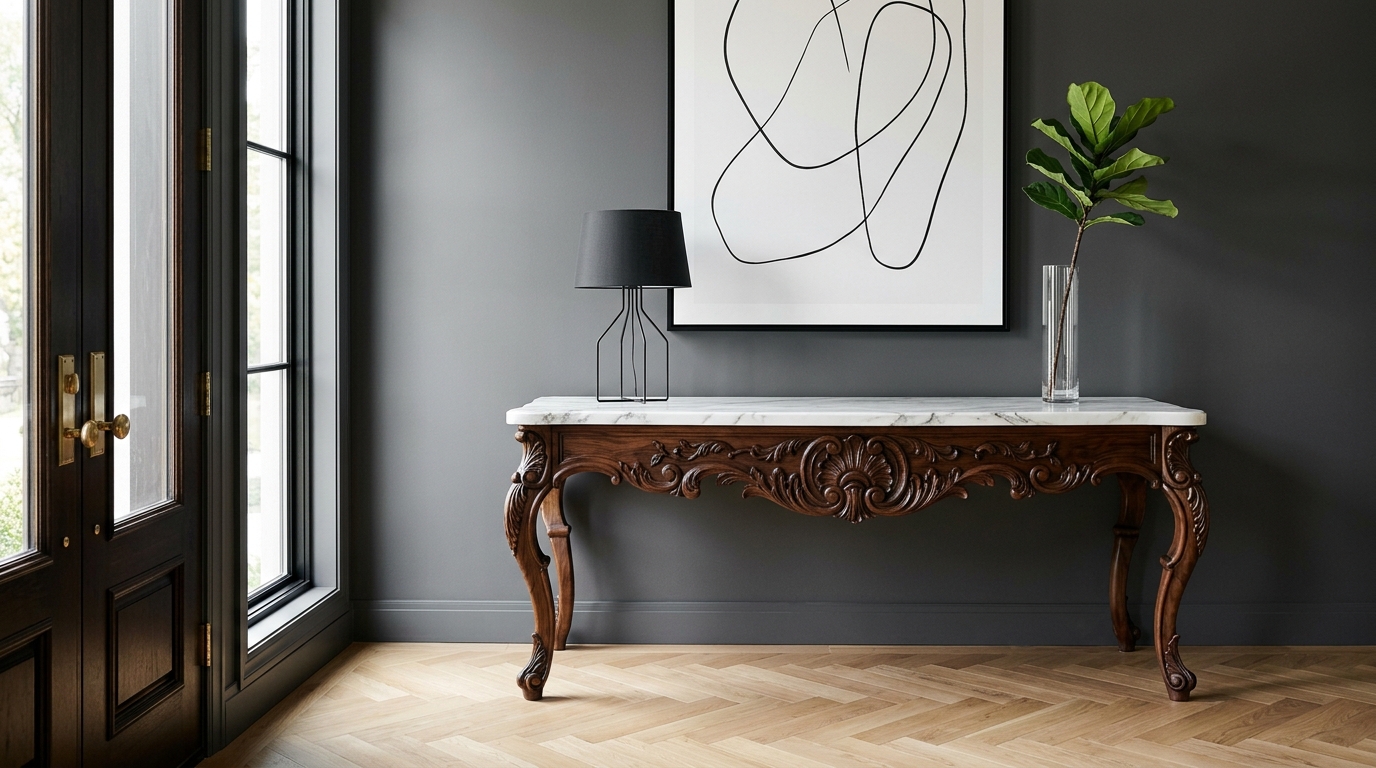
  • Mixed Media Tops: Look for consoles that pair an ornate wooden base with a modern marble or tempered glass top. This blend of textures makes the piece feel intentional rather than like an antique shop find.
  • The 3-Element Styling Formula: To keep your console looking modern, follow the 2026 styling rule: One Tall, One Medium, One Low. Pair your Baroque piece with a tall, minimalist branch arrangement, a medium stack of art books, and a low, sculptural tray for keys.

“Baroque furniture in 2026 does not represent a return to excess. It reflects a desire for permanence and expressive design. It’s about choosing identity over uniformity.”

Extract from the 2026 Luxury Interiors Report

Styling Tips for the Modern European Home

To ensure your baroque console doesn’t make your home look like a museum, keep the surrounding elements “quiet.”

  • The Wall Behind: Use large-scale, minimalist art above the console. A single, quiet abstract canvas balances the “noise” of the ornate carvings.
  • Lighting: Avoid harsh overhead lights. Use a modern, architectural table lamp on one side of the console. The warm glow will create soft shadows in the wood carvings, highlighting the craftsmanship.
  • Flooring: Baroque pieces look exceptional on herringbone parquet or polished concrete. The contrast between the intricate furniture and the clean floor lines is the hallmark of 2026 luxury furniture styling.

Conclusion: An Investment in Identity

The return of the baroque console is a celebration of the “irregular pearl” in all of us. It is a rebellion against the soulless, mass-produced interiors of the early 2020s. By introducing a piece that values curves over straight lines and craftsmanship over convenience, you aren’t just buying a table—you are defining the character of your home.

Whether you find a vintage piece in a Parisian brocante or purchase a high-end modern reproduction, the baroque console table is a timeless investment that proves that true luxury never really goes out of style.