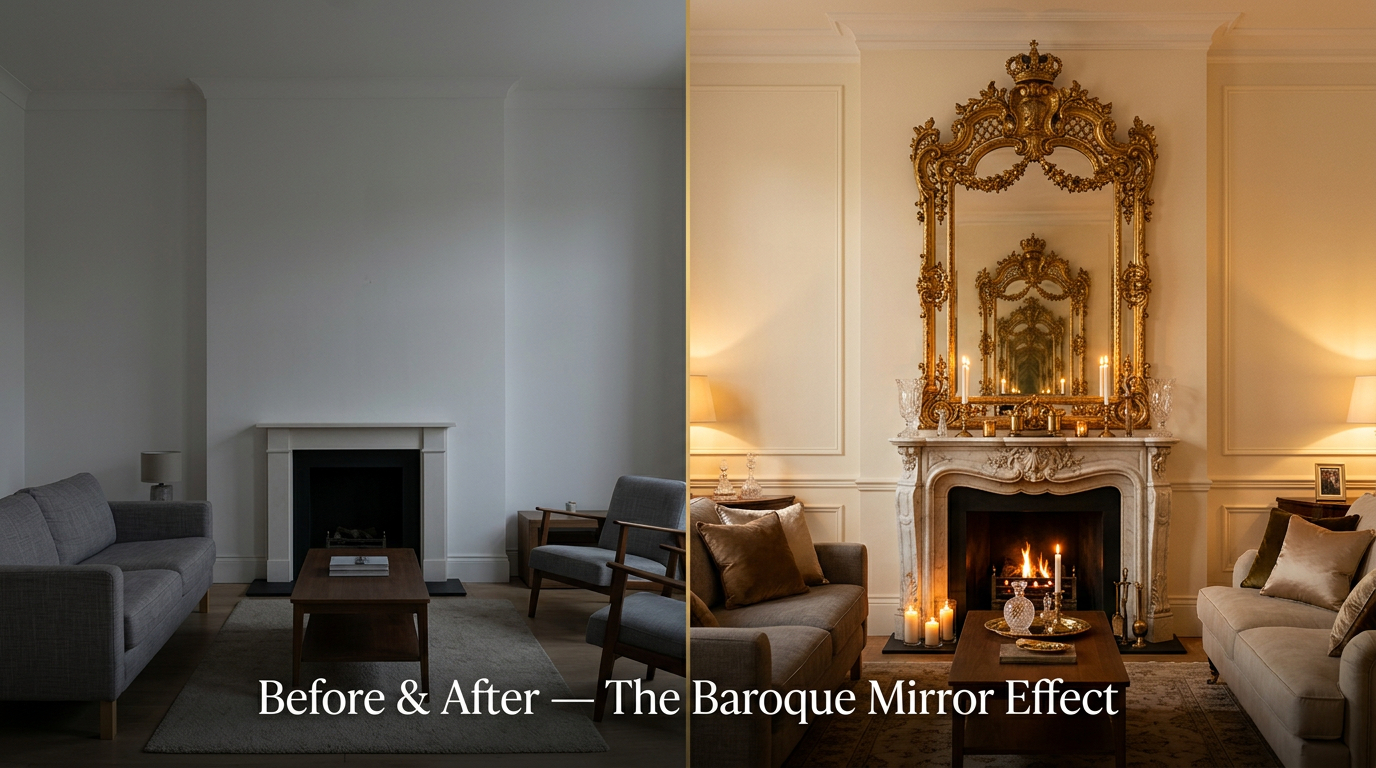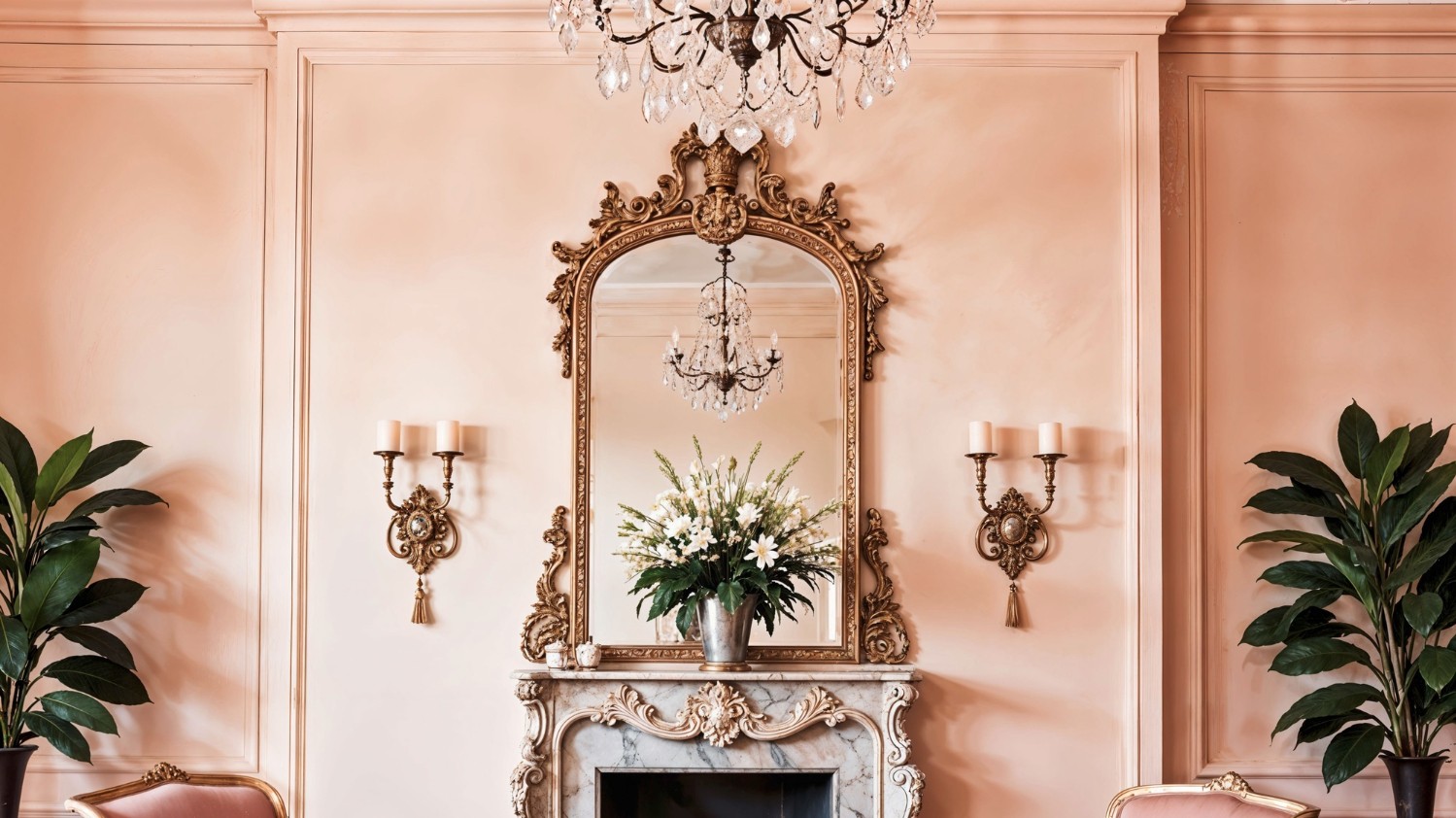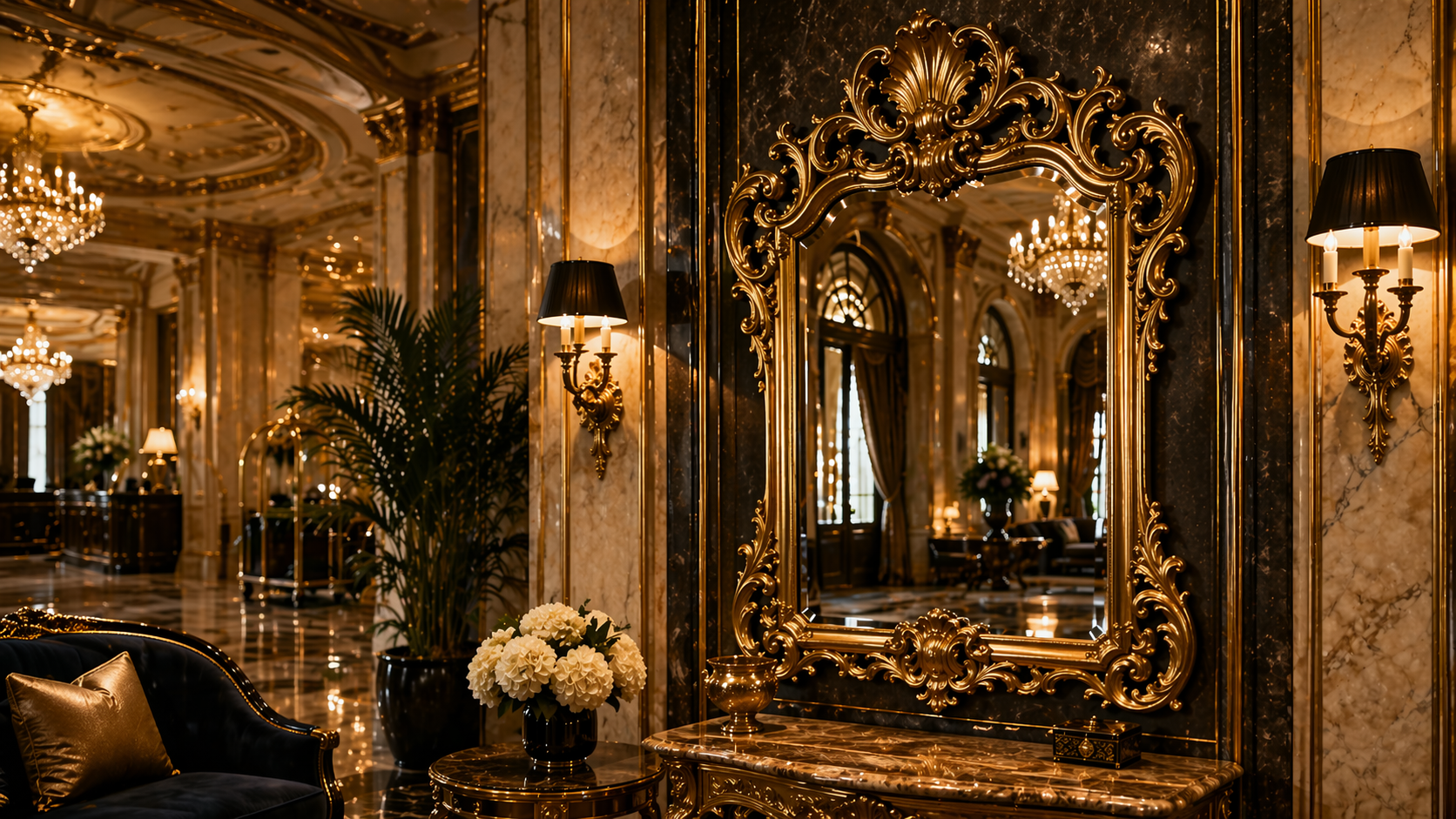
The Gilded Reflection: Why Baroque Style Mirrors Are Essential for Luxury Hotel Design

In the competitive landscape of European high-end hospitality, a hotel is no longer just a place to rest; it is a curated sensory experience. Designers are increasingly moving away from the sterile minimalism of the last decade, favoring “maximalist elegance” that tells a story of heritage and grandeur. At the heart of this aesthetic revival is a single, transformative element: the Baroque style mirror.

For a luxury hotel, a mirror is never just a functional object for checking one’s reflection. It is a portal to an era of opulence. Whether it’s a sprawling boutique hotel in the heart of Paris or a restored palazzo on the Venetian Grand Canal, the Baroque style mirror serves as the definitive anchor of luxury interior design.


The Art of First Impressions: Grandeur in the Lobby


The lobby of a luxury hotel is its thesis statement. It’s where the guest transitions from the mundane world into a realm of curated excellence. A large, floor-to-ceiling Baroque style mirror—with its signature scrolling foliage, cherubs, and intricate gilding—commands immediate attention.

These mirrors do more than occupy space; they manipulate it. By utilizing a Baroque vintage mirror in a grand entrance, designers can:

  • Amplify Natural Light: The deep, ornate frames catch and refract light, brightening even the most cavernous halls.
  • Create Visual Depth: In historic European buildings where space can sometimes be narrow, a strategically placed mirror provides an illusion of infinite luxury.
  • Establish Authority: The sheer weight and craftsmanship of a Baroque frame signal to the guest that they are in a space of significant investment and historical appreciation.


Elevating the Guest Suite: The Private Sanctuary


While the lobby impresses, the guest suite must enchant. The modern luxury shopper—particularly those frequenting five-star establishments in London, Milan, or Vienna—expects a room that feels like a private place of royalty.

Integrating a Baroque style mirror into the suite design bridges the gap between modern comfort and classical beauty. A Baroque vintage mirror placed above a marble vanity or a mahogany desk transforms a standard piece of furniture into a focal point. It adds a layer of “lived-in” history, making the hotel feel less like a commercial space and more like a refined luxury home.

Design Tip: Pair a gold-leafed Baroque mirror with contemporary, sleek lighting. The contrast between the hyper-detailed carvings and the clean lines of modern fixtures creates a “New Classic” look that is currently trending across European design boutiques.


Why the “Baroque” Aesthetic Resonates with Luxury Shoppers


The term “Baroque” originates from the Portuguese barroco, meaning an irregular pearl. It is defined by movement, exuberance, and drama. For the luxury hospitality sector, this aesthetic is essential because it evokes an emotional response.

  1. Craftsmanship as a Status Symbol: In an age of mass production, the complex curves of a Baroque style mirror represent artisanal skill. Luxury guests value the “human touch” behind the decor.
  2. Timelessness: Trends like “Industrial Chic” or “Mid-Century Modern” fluctuate in popularity. However, the Baroque influence has remained a staple of European nobility for centuries. Investing in a Baroque vintage mirror ensures the hotel design remains relevant for decades.
  3. The “Instagrammable” Moment: Let’s be practical—modern luxury marketing relies on social media. The intricate frame of a Baroque style mirror provides the perfect backdrop for guest photos, turning every “mirror selfie” into a high-end advertisement for the hotel’s aesthetic.


Technical Integration: Beyond Aesthetics


From a development perspective, incorporating these mirrors requires an understanding of balance. To maintain an upscale feel without veering into “clutter,” designers should consider the following:


Feature Luxury Hotel Application Private Place / Home Application
Frame Material Solid wood with gold or silver leafing for durability. Aged brass or hand-painted resins for a bespoke feel.
Glass Quality Beveled edges to add a diamond-like shimmer under hotel lighting. Antique-foxed glass for an authentic “vintage” soul.
Placement High-traffic areas (Lobbies, Elevator Banks). Intimate settings (Bedrooms, Powder Rooms).


Creating a Narrative of Opulence


Luxury hotel design is about storytelling. When a guest sees a Baroque style mirror, they aren’t just looking at glass and wood; they are looking at a legacy. This style of mirror evokes the Hall of Mirrors in Versailles or the regal apartments of the Habsburgs.

For property developers and interior architects, choosing a Baroque vintage mirror is a strategic move. It fills the “visual void” that often haunts large rooms. Where a painting might require specific art knowledge to appreciate, a Baroque mirror is universally recognized as a symbol of wealth and sophisticated taste.


Conclusion: The Essential Finishing Touch


Whether you are designing a high-end luxury hotel, a secluded private place, or a grand luxury home, the mirror you choose dictates the room’s soul. The Baroque style mirror is not a mere accessory; it is an architectural tool that brings warmth, light, and a sense of history to a space.

By opting for a Baroque vintage mirror, you aren’t just decorating a wall—you are reflecting a standard of excellence that the world’s most discerning travelers have come to expect. In the realm of luxury, the reflection should always be as beautiful as the room itself.
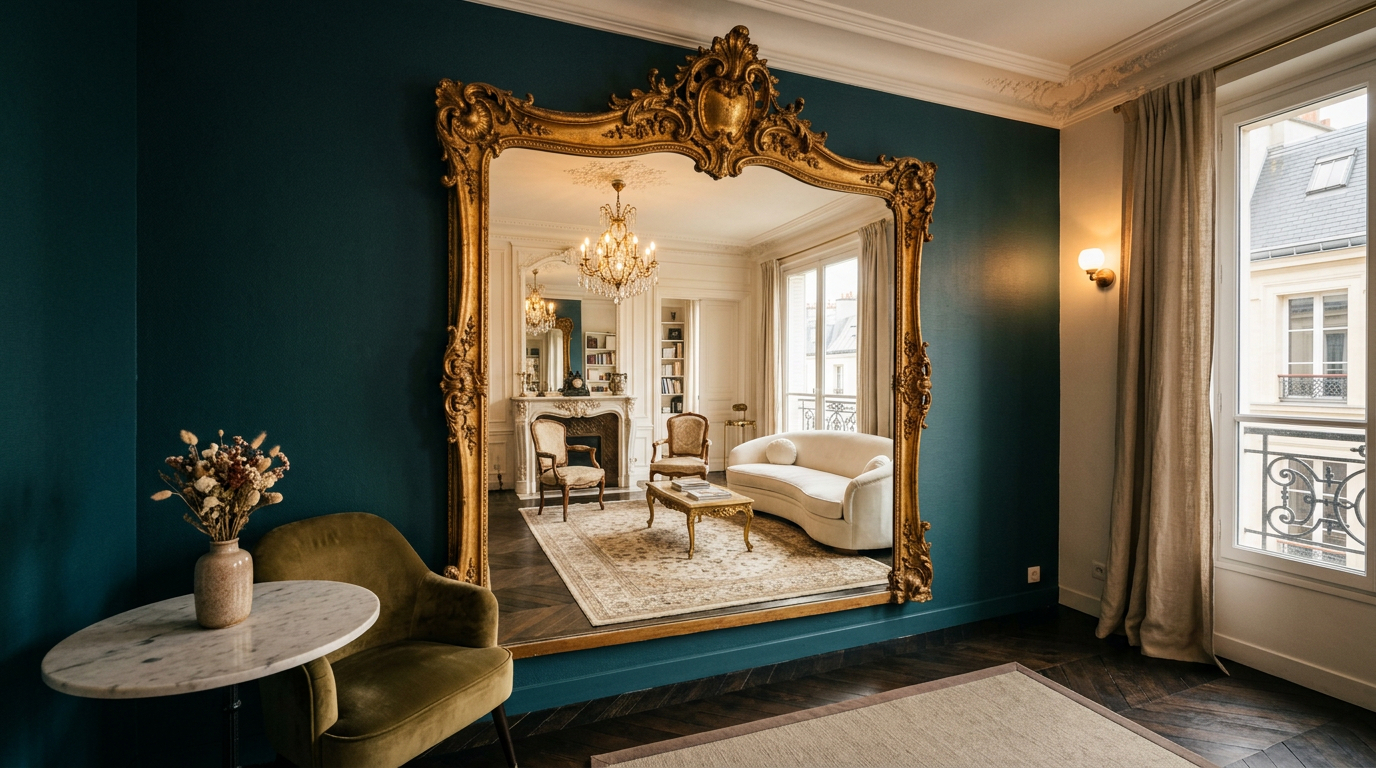
 

Transform Your Space: Gold Baroque Mirrors That Make Small Rooms Look Twice as Big

We’ve all been there—standing in a room that feels more like a shoebox than a sanctuary. You want the drama of a Parisian flat, but you’re working with a studio apartment floor plan. Before you start knocking down walls or eyeing that “minimalist” (read: boring) furniture, let’s talk about the ultimate interior design cheat code: the gold baroque mirror.

A baroque mirror isn’t just a piece of decor; it’s an architectural intervention. With its ornate flourishes and commanding presence, it creates a “window” where there wasn’t one. Today, we’re diving into the gold mirror hack that designers use to cheat the eye and make even the tiniest rooms feel palatial.


The Science of the Mirror Illusion: Why Baroque Works


Why choose a gold baroque mirror for a small room over a simple, frameless one? It comes down to the mirror illusion baroque style provides.

  • Depth through Detail: The intricate, three-dimensional carvings of a baroque frame create a sense of physical depth. Your eye doesn’t just stop at the wall; it gets lost in the texture of the gold leaf.
  • The Focal Point Effect: In a small room, your eye often flits around, noticing how close the walls are. A massive gold mirror gives the eye a place to “land,” drawing attention away from the cramped corners.
  • Warmth and Reflection: Gold finishes catch light differently than silver or wood. They glow, diffusing light back into the room with a warm, expensive-looking hue that eliminates dingy shadows.


Master the “Mirror Magic” Placement Map


Where you hang your mirror is just as important as the mirror itself. Follow this placement map to maximize your space enlarging baroque mirror potential:


Room Type Primary Placement Why it Works
Living Room Above the Sofa Expands the “seating area” perception.
Dining Nook Opposite the Entryway Creates an immediate sense of “grand arrival.”
Bedroom Leaning against the far corner Adds vertical height and creates a “portal” effect.
Hallway End of the corridor Doubling the perceived length of the hall.


Development Tip: The Angle & Window Secret


If you want to truly master the gold mirror hack, you need to think about the “Source and Bounce.”

  1. The “Opposite Window” Rule: To make a room look twice as big, you need to trick the brain into thinking there’s another window. Place your gold baroque mirror directly opposite your largest natural light source. This captures the view from outside and pulls it into the room. If you see trees or sky in the reflection, the room feels infinitely more open.
  2. The 5-Degree Tilt: Don’t always hang your mirror perfectly flat against the wall. If you have a floor-standing baroque mirror, lean it at a slight upward angle. This reflects more of the ceiling and the upper half of the room, which makes the “vertical volume” of the space feel much larger than it actually is.

📸 Reader “Mirror Magic” Showcase


We asked our community to send in their best gold baroque mirror small room transformations. Here are our top three favorites that prove you don’t need a mansion to live like royalty:

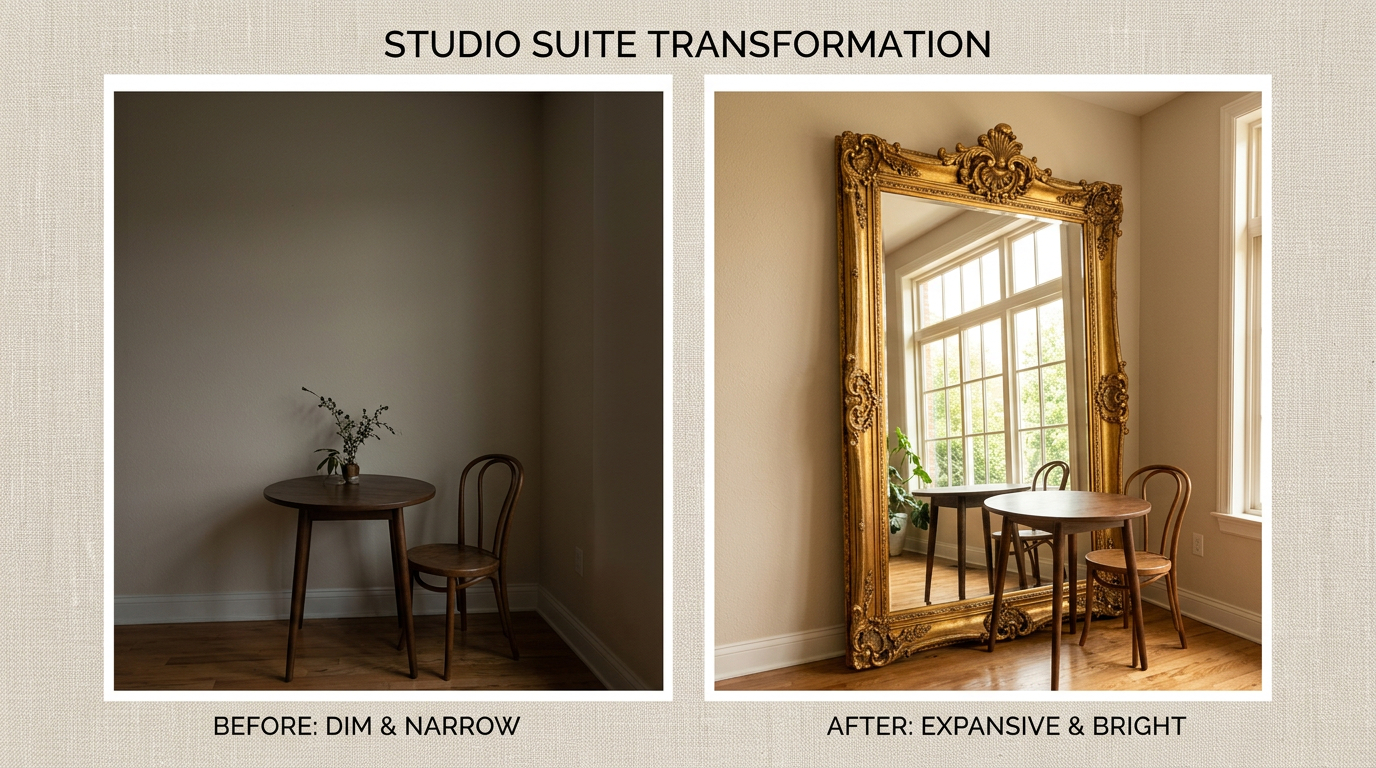
The “Studio Suite” Transformation“I lived in a 300sq ft studio and felt claustrophobic. I added a 6-foot gold baroque mirror behind my small dining table. Now, when I eat breakfast, I feel like I’m in a grand café. It literally doubled the light in my apartment!”Elena, Chicago

Baroque-mirror-demo

The Dark Hallway Fix“My hallway had zero windows and felt like a cave. I hung a medium-sized ornate baroque mirror and placed a lamp in front of it. The gold frame glows at night, and the reflection makes the hallway look like it goes on forever.”Marcus, London


Styling Your Gold Baroque Mirror


Once you’ve found your perfect piece, how do you style it so it doesn’t look like a “relic” in a modern room?

  • Contrast is Key: If you have modern, clean-lined furniture, a baroque mirror provides the perfect “maximalist” contrast. It adds soul to a room that might otherwise feel too sterile.
  • The “Double Up” Trick: In very narrow rooms, try hanging two identical gold mirrors side-by-side. This creates a rhythmic, gallery-like feel that expands the wall horizontally.
  • Layering: Don’t be afraid to overlap. Place a tall plant or a sleek chair slightly in front of the mirror’s edge. This adds layers of depth, making the reflected “room” feel even more real and accessible.


Is It Worth the Investment?


You might be tempted to go with a cheaper, plastic-framed alternative. However, the weight and “gleam” of a high-quality gold baroque mirror are what make the space enlarging baroque mirror effect actually work. Real wood or resin with gold leaf finishes has a refractive index that mimics the sun, whereas cheap gold paint can look flat—and a flat mirror won’t give you that “magic” depth you’re looking for.


Final Thoughts


Living in a small space doesn’t mean you have to think small. By utilizing a gold mirror hack, you are essentially “hacking” your brain’s perception of square footage. Whether it’s a full-length floor piece or a statement mantle mirror, the baroque mirror remains the undisputed king of interior illusions.

Ready to try it? Measure that empty wall, find a window to reflect, and watch your room grow before your eyes!


Why Baroque Mirrors Make Every Room Look More Expensive (+ How to Choose the Right One

There is a reason why the world’s most prestigious hotels, from the Ritz in Paris to the Savoy in London, rely on the Baroque style mirror to define their interiors. It isn’t just about the reflection; it’s about the “weight” of the room. A baroque mirror acts as an architectural anchor, a piece of functional art that suggests history, legacy, and, above all, a high-end lifestyle.

In the modern European home, where space is often at a premium—whether it’s a chic Berlin flat or a classic Victorian terrace in the UK—a luxury mirror is the ultimate “cheat code” for interior design. It instantly elevates the perceived value of your furniture and multiplies the natural light.

But how do you transition from a simple wall hanging to a curated Baroque vintage mirror that looks like an heirloom rather than an afterthought? This guide will walk you through why these pieces are the gold standard for expensive-looking interiors and how to choose the right one for your specific space.

The “Baroque Effect”: Why It Signals Luxury

The Baroque movement (roughly 1600–1750) was designed to awe. It was the era of the “Grand Style,” where every curve was dramatic and every surface was a canvas for intricate carvings. When you hang a Baroque style mirror, you are borrowing that historical gravity.

  1. Complexity Equals Value: In a world of flat-pack, minimalist furniture, the high-relief carvings of a luxury mirror—think acanthus leaves, scrolling vines, and ornate cherubs—signal craftsmanship. Human eyes are naturally drawn to detail; the more there is to look at, the “more expensive” the item feels.
  2. Light Multiplication: Because a baroque mirror often features a wide, gilded frame, it catches light from multiple angles, not just from the glass itself. This creates a glow that illuminates dark corners in traditional European apartments.
  3. Scale and Proportion: A Baroque vintage mirror is often larger and bolder than modern alternatives. This “oversized” look is a classic interior design trick used to make small rooms feel like grand halls.

1. The Entryway: The “First Impression” Luxury Mirror

In the UK and Germany, entryways are often functional but narrow. To make this transition space look expensive, you need a Baroque style mirror that draws the eye upward.

How to Choose:

  • The Shape: Look for a “Pier Mirror”—a tall, slender baroque mirror designed to sit between two windows or doors.
  • The Finish: In a London townhouse, a deep, burnished gold finish feels authentic. In a modern Munich apartment, a silver-leaf luxury mirror provides a cooler, more contemporary “expensive” vibe.
  • The Placement: Hang it opposite a light source. The intricate frame will break up the reflection, preventing a “glare” while still doubling the brightness of the hall.

2. The Living Room: The Power of the Overmantel

In France and Spain, the fireplace is the soul of the home. Replacing a standard mirror with a Baroque vintage mirror above the mantel is the quickest way to increase the “room’s IQ.”

How to Choose:

  • The Crest: To make the room look taller, choose a Baroque style mirror with a high “crown” or crest in the center. This draws the eye toward the ceiling.
  • The Width: An expensive-looking setup requires balance. Your luxury mirror should be approximately 70-80% of the width of the mantelpiece. If it is too small, it looks timid; if it is too wide, it feels cluttered.
  • The Tone: For a truly high-end Spanish look, consider a dark wood frame with gold-leaf accents. It feels grounded, historic, and incredibly sophisticated.

3. The Dining Room: Doubling the Drama

Dining rooms in Italy and France are built for long evenings and candlelight. A baroque mirror in this setting isn’t for checking your appearance; it’s for reflecting the “vibe.”

How to Choose:

  • The “Window” Effect: Use a massive, floor-length Baroque style mirror leaning against the main wall. This makes the dining table feel twice as long and the guest list twice as large.
  • The Glass Quality: For a truly expensive look, ensure your luxury mirror features beveled edges. The angled cut on the glass periphery catches light like a diamond, adding a subtle sparkle that flat glass lacks.

4. The Bedroom: The Romantic Luxury Mirror

The bedroom is where you can move away from the “bold” gold and toward the “soft” luxury of a Baroque vintage mirror.

How to Choose:

  • Oval Frames: While rectangular frames are dominant in living areas, an oval Baroque style mirror feels more intimate and feminine. It softens the hard lines of wardrobes and bed frames.
  • Distressed Finishes: In a French-inspired bedroom, a “white-washed” or “distressed” baroque mirror looks like a find from a Parisian flea market. This “shabby chic” luxury suggests you have the taste to appreciate the beauty of age.

5. The Bathroom: The “Boutique Hotel” Upgrade

Nothing says “expensive” like an ornate Baroque style mirror in a bathroom. It creates a stark, beautiful contrast against modern white tiles or dark marble.

How to Choose:

  • Size Matters: Don’t be afraid to go slightly larger than your vanity unit. A slightly oversized baroque mirror creates a “designer” look that feels custom-made for the space.
  • Moisture Protection: If you are placing a luxury mirror in a high-humidity area like a bathroom in rainy Manchester or humid Barcelona, ensure the back is properly sealed to prevent the “silvering” on the glass from peeling over time.

Buying Guide: How to Spot a High-End Baroque Mirror

If you want your home to look expensive, you must avoid “cheap” imitations that look like molded plastic. Here is what to look for when shopping for a Baroque style mirror:

Feature The “Expensive” Choice The “Cheap” Alternative
Frame Material Solid wood or high-density resin Lightweight, thin plastic
Detailing “High Relief” (deep, 3D carvings) Flat, stamped patterns
Finish Gold/Silver Leaf (textured) Uniform spray paint
Glass Beveled edges (4-5mm thick) Thin, flat-edge glass
Style Authentic Baroque vintage mirror Generic “scroll” pattern

Regional Style Tips for European Buyers

  • UK: Mix your Baroque style mirror with deep navy or hunter green walls. The contrast between the dark paint and the gold frame is a classic “Old Money” aesthetic.
  • Germany (DE): Keep the room minimalist. A single, massive luxury mirror in an otherwise white, clean room creates a “Gallery” effect that is very popular in Berlin.
  • Italy (IT): Go for the “Glossy” look. A black-framed baroque mirror with gold highlights fits perfectly in a high-fashion Milanese apartment.
  • Spain/France (SP/FR): Embrace the patina. A Baroque vintage mirror with slightly tarnished gilding looks more expensive because it implies the piece has a story to tell.

Maintenance: Keeping the Luxury Alive

An expensive-looking home is a well-maintained home. Because a Baroque style mirror has so many nooks and crannies, dust can dull its shine.

  • The Frame: Use a soft-bristled makeup brush to dust the intricate carvings of your luxury mirror. This reaches where cloths cannot.
  • The Glass: Never spray cleaner directly onto the mirror; it can seep into the frame and cause rot. Spray a microfiber cloth first, then wipe.

Conclusion: A Reflective Investment

Investing in a Baroque style mirror is the most cost-effective way to transform a room from “standard” to “stunning.” It is a piece that transcends trends, offering a sense of permanence and prestige that few other decor items can match. Whether it’s a Baroque vintage mirror in the hallway or a grand luxury mirror in the lounge, you are choosing a style that has defined elegance for over 300 years.

Hand-Carved Baroque Mirrors: A Masterpiece of Traditional European Craftsmanship

Somewhere between a painting and a portal, a hand-carved baroque mirror does something no modern fixture ever could — it holds time still. Long before luxury became a marketing term, European master craftsmen were quietly perfecting an art form that would outlast empires. These were not decorative afterthoughts; they were statements of culture, power, and singular beauty. Today, as discerning homeowners and hospitality designers across Europe seek spaces that whisper of history rather than shout of trend, the baroque mirror has returned — not as a revival, but as a recognition that true artistry never truly left.


The Art of Hand-Carving: Where Wood Tells a Story

Every carved wood mirror begins as a block of timber — lime wood, walnut, or gilded beech — selected by artisans who understand that the material itself has character. Using chisels and gouges unchanged in design for centuries, master carvers coax intricate scrollwork, acanthus leaves, cherubs, and floral garlands from raw grain. No two pieces are identical. A slight variation in depth, a curl of foliage that catches light differently — these are not imperfections. They are signatures.

The carving process alone can take several weeks for a single frame. Artisans work layer by layer, first roughing out the broad composition, then refining details with increasingly fine tools until the motifs emerge with a depth and dimensionality that machine production simply cannot replicate. It is slow, intentional work — the antithesis of mass manufacturing, and precisely what luxury demands.

Heritage Techniques Passed Through Generations

The Baroque period — spanning the 17th and early 18th centuries — gave birth to an aesthetic of grandeur that swept through the courts of France, Italy, Austria, and Spain. Craftsmen working under royal patronage developed techniques in wood gilding, gesso application, and relief carving that became the hallmark of European luxury interiors. An antique carved mirror from this tradition was never simply functional; it was an architectural element, a centrepiece that commanded an entire room.

Today’s finest baroque mirrors are crafted in workshops that honour these very same methods. Artisans apply multiple layers of traditional gesso — a chalk and glue mixture — to the carved wood before burnishing gold leaf by hand using agate tools. The result is a finish of extraordinary warmth and depth; one that ages beautifully rather than deteriorating, gaining character with every passing decade.


Where These Mirrors Belong: Spaces Worthy of a Masterpiece

A baroque mirror is not merely décor — it is a defining presence. In luxury hotels, a grand carved wood mirror in the lobby creates an immediate sense of arrival, signalling to guests that they have stepped into a space where quality and history are taken seriously. In private residences, it transforms a drawing room, master bedroom, or entrance hall into something that feels curated across centuries rather than assembled in an afternoon.

For interior designers working on high-end European properties, an antique carved mirror — whether a genuine period piece or a faithful handcrafted reproduction — serves as an anchor around which the entire room can be designed. Its scale, its gilding, and its elaborate wood detailing draw the eye and establish tone in a way no other single object can.

Choosing Authenticity in a World of Imitation

When investing in a baroque mirror of genuine quality, the markers of authenticity are clear to those who know where to look. The weight of solid wood versus hollow resin composites. The subtle irregularity of hand-gilded surfaces versus the uniform flatness of spray-applied finishes. The crispness of hand-tooled acanthus leaves versus the rounded softness of moulded plastic replicas. These distinctions matter — not merely aesthetically, but in terms of longevity and enduring value.

A hand-carved mirror of true baroque heritage is an heirloom. It appreciates. It tells a story that enriches every space it inhabits.

Old-world luxury is not nostalgia — it is a standard. Hand-carved baroque mirrors represent the very pinnacle of that standard, offering a connection to European artistic heritage that no contemporary piece can replicate. For those who demand the finest in their homes, hotels, and private spaces, there is simply no substitute for the real thing: timber, chisel, gold leaf, and centuries of unbroken craft.