Baroque Console Tables: The Most Photographed Piece in Entryways Right Now

Scroll through Instagram or Pinterest and you’ll notice a pattern: the entryway is no longer an afterthought. It has become the most styled, curated, and photographed corner of the home. And at the center of this visual trend? The baroque console table.

Once reserved for grand halls and classical interiors, baroque furniture has found new life in modern homes—especially in entryways. Ornate carvings, sculptural legs, and gilded finishes are now being reimagined in brighter palettes and contemporary settings. The result is a dramatic yet elegant focal point that instantly elevates first impressions.

In fact, designers are calling the entryway baroque console the new “statement piece” of luxury interiors.


Why Entryways Are Getting the Baroque Treatment

The entryway sets the tone for the entire home. It’s the first thing guests see and the backdrop for countless social media photos. A thoughtfully styled statement console table transforms this transitional space into something intentional and expressive.

Unlike large furniture pieces that require full-room coordination, a baroque console table delivers impact without overwhelming the space. Its narrow profile fits comfortably along walls, yet its carved detailing and symmetrical form create visual drama.

Today’s homeowners are blending classic luxury baroque furniture with modern elements—neutral walls, contemporary lighting, and minimalist art. This contrast makes the console feel curated rather than theatrical.

The result? An entryway that feels both timeless and current.


The Rise of the Instagram Baroque Console

There’s a reason the instagram baroque console has become so popular. It photographs beautifully.

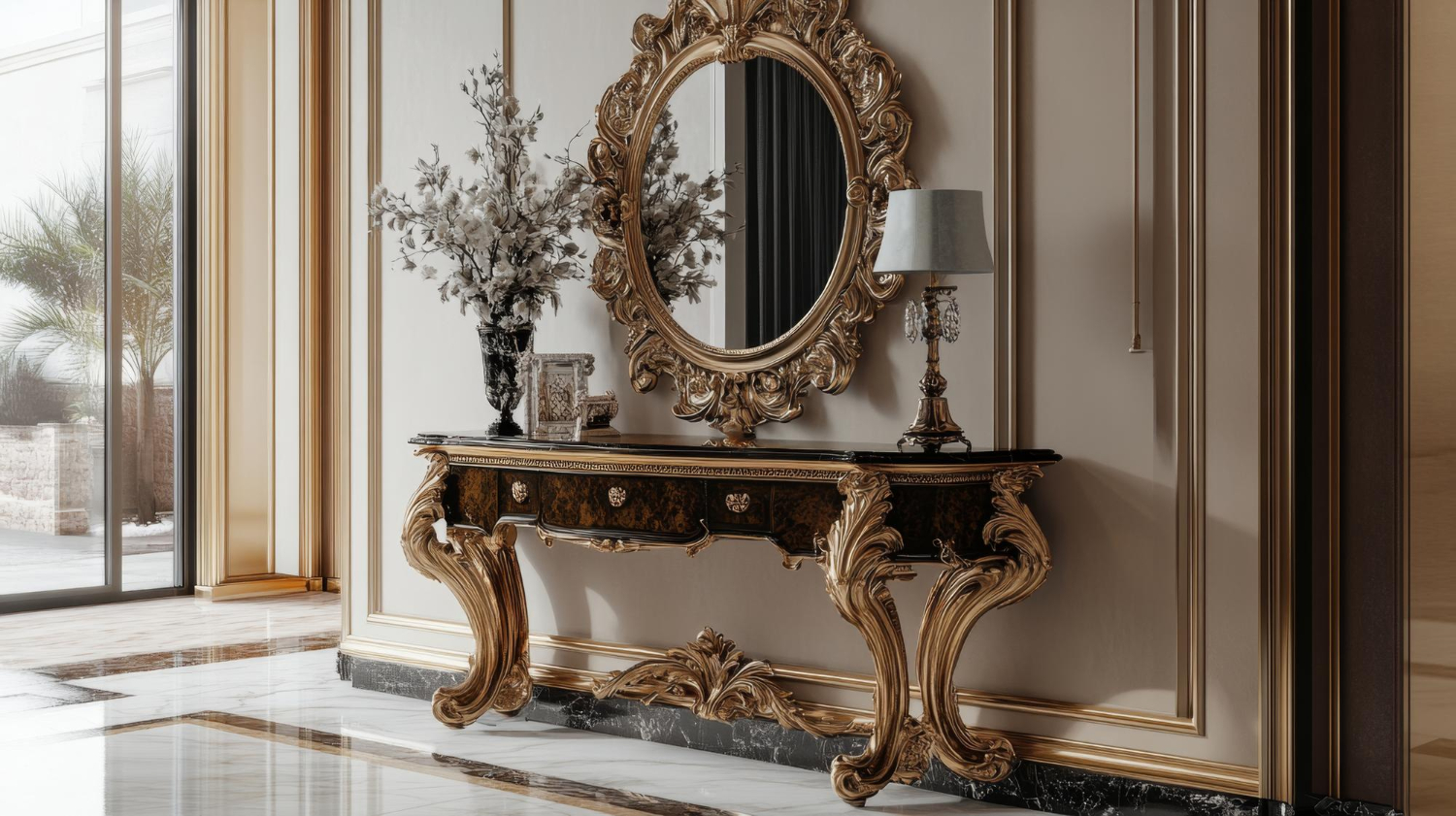
The carved legs cast soft shadows under natural light. Gold leaf accents reflect brightness. Mirrors placed above the console amplify the depth of the room. Whether styled with seasonal florals or sculptural décor, the look feels layered and luxurious.

Interior designers note that entryways with baroque furniture generate higher engagement on social platforms. The reason is simple: people are drawn to craftsmanship and detail. In a sea of minimalist interiors, ornamentation stands out.

But the key to making an entryway baroque console feel modern is balance.


How to Style a Baroque Console Table Without Overdoing It

While ornate by nature, a baroque console table doesn’t need heavy décor. In fact, restraint enhances sophistication.

Here are professional styling principles:

1. Anchor With a Mirror

A large mirror above the console amplifies light and reinforces symmetry. Choose a carved frame for cohesion or a sleek modern mirror for contrast.

2. Keep the Surface Curated

Avoid clutter. Two sculptural objects and one focal piece—such as a vase or lamp—are often enough. Let the detailing of the statement console table remain visible.

3. Play With Height Variation

Tall candlesticks paired with low decorative bowls create dynamic layering without overwhelming the design.

4. Add Subtle Texture

A linen runner, marble accessories, or ceramic sculptures add softness to the strong lines of luxury baroque furniture.

The goal is to let the console speak—without shouting.


The Bright Console Movement

Much like dining chairs and other baroque furniture, console tables are evolving toward lighter finishes. Ivory, white lacquer, and soft gold are replacing darker tones. This shift allows the entryway baroque console to feel airy rather than heavy.

Light finishes reflect natural daylight, making small entryways appear larger. Gold accents provide warmth without overpowering the palette.

This modern interpretation of luxury baroque furniture aligns perfectly with contemporary homes that prioritize brightness and openness.


Join the Styling Challenge: Show Us Your Console

Here’s where you come in.

We’re launching a monthly Baroque Entryway Styling Challenge—and we’d love to see your interpretation of the perfect instagram baroque console.

Each month features a new theme:

  • Spring Renewal: Fresh florals and pastel accents
  • Summer Light: Coastal textures and airy arrangements
  • Autumn Warmth: Candles, natural wood tones, and subtle metallics
  • Holiday Elegance: Garlands, statement mirrors, and festive layers

Participants can submit photos of their baroque console table styled according to the theme. The most creative entry will be featured in our monthly spotlight.

Why participate? Because entryways are personal. They reflect how you welcome the world into your home.


Why Baroque Console Tables Are Here to Stay

Trends come and go, but the enduring appeal of baroque furniture lies in craftsmanship. Hand-carved detailing, balanced proportions, and ornamental flourishes have defined European interiors for centuries.

The difference today is context.

Modern designers use the statement console table as a bridge—linking classical artistry with contemporary minimalism. The interplay feels curated rather than nostalgic.

Whether placed in a grand foyer or a compact apartment hallway, a well-chosen entryway baroque console becomes more than furniture. It becomes a signature.


Choosing the Right Baroque Console Table

If you’re considering investing in a baroque console table, think about scale and finish first.

  • In smaller entryways, opt for lighter tones to maximize brightness.
  • In larger spaces, deeper finishes create dramatic depth.
  • Consider pairing your console with complementary luxury baroque furniture pieces for cohesion.

Above all, prioritize quality. The beauty of baroque furniture lies in its detail—and detail demands craftsmanship.


Final Thoughts: The Entryway as a Design Statement

Your entryway is more than a passage—it’s an introduction. It hints at what lies beyond and reflects your personal style.

The rise of the instagram baroque console proves that homeowners are embracing bold, sculptural pieces once again. But they’re doing so thoughtfully—balancing ornamentation with light, restraint, and modern sensibility.

If you’ve been searching for a way to transform your entrance into something unforgettable, a baroque console table may be the piece that changes everything.

Now it’s your turn.

How would you style your statement console table? Share your vision, join the challenge, and let your entryway become the most photographed corner of your home.
The Top 5 Baroque Style Dining Tables That Will Never Go Out of Style

When it comes to outfitting a private estate, a luxury hotel, or a lavish modern home, few design choices make as profound a statement as the inclusion of a Baroque dining table. Originating in 17th-century Europe, the Baroque era was characterized by an unyielding dedication to drama, grandeur, and ornate detail. Today, that same spirit lives on. True luxury baroque furniture transcends mere trend; it is an investment in timeless appeal and architectural artistry.

For the discerning European luxury shopper, a dining space is not just a room—it is the grand stage for hosting, dining, and celebrating life’s most exquisite moments. A carefully selected Baroque style dining table anchors this space with historical gravity and unparalleled elegance.

Below, we explore the top five Baroque style dining tables that promise to never go out of style, showcasing the zenith of baroque furniture craftsmanship.


1. The Versailles Gilded Masterpiece

Inspired by the ultimate European symbol of absolute monarchy and opulent living, the Versailles-style Baroque dining table is the crown jewel of any dining hall.

Versailles dining room in Louis XVI

  • Design Signatures: This table features heavily carved, solid mahogany legs finished in authentic 24-karat gold leaf. The apron of the table is typically adorned with classic Baroque motifs—swirling acanthus leaves, cherubs, and intricate floral garlands.
  • The Timeless Appeal: Gold and rich wood will never lose their association with royalty. The dramatic contrast and reflective nature of the gilding bring warmth and light to large dining rooms.
  • Best Suited For: Private palaces and grand luxury homes where the dining room features high ceilings and crystal chandeliers.


2. The Roman Imperial Marble-Top Table

If you are seeking a Baroque style dining table that commands immediate respect, the Roman Imperial style is unmatched. Rome was the birthplace of the Baroque movement, and this table reflects the architectural weight of the city itself.

Marble and bronze table, Marble and bronze, Roman

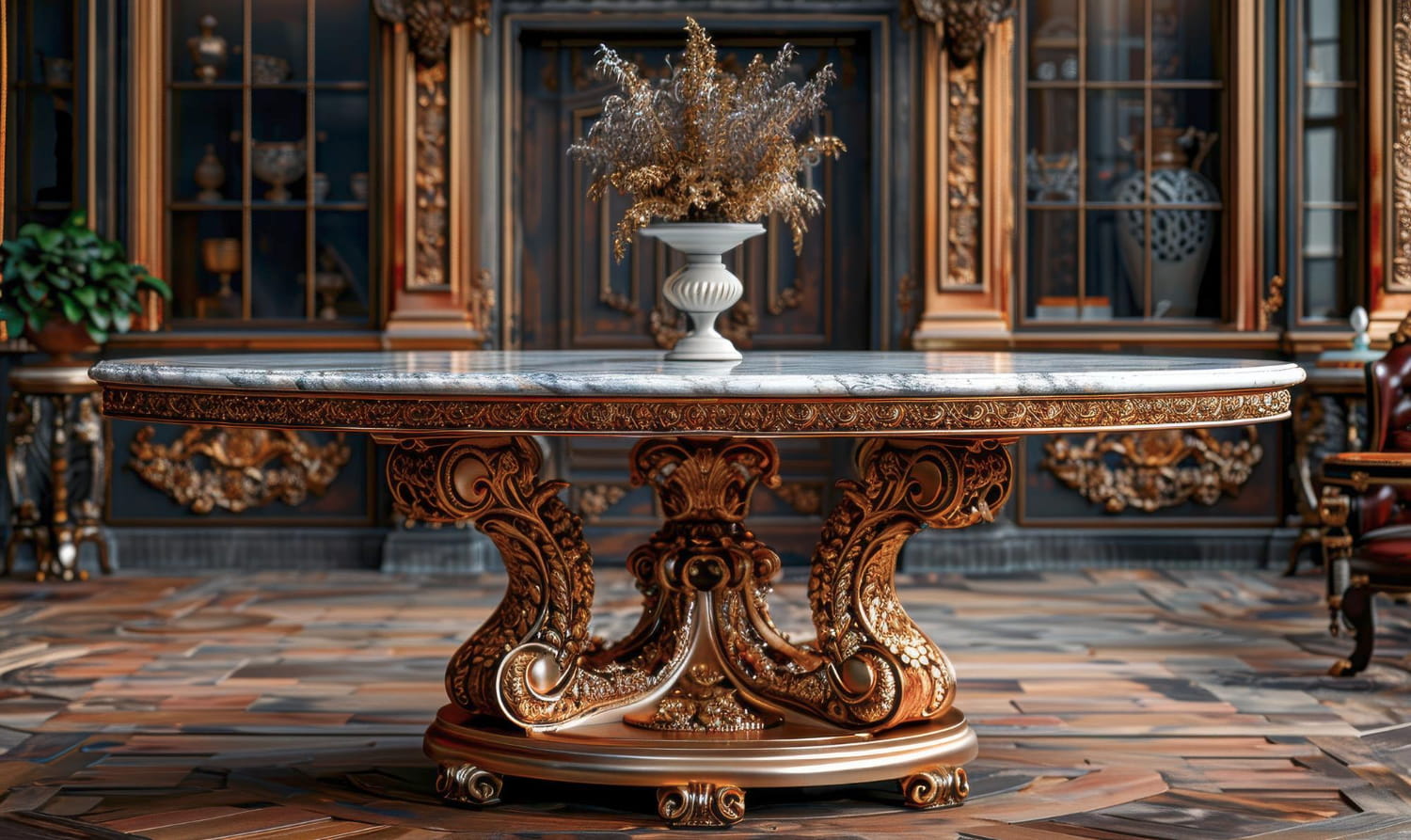
  • Design Signatures: Instead of a traditional wooden top, this piece boasts a thick, rare marble surface—often Nero Marquina or Calacatta Gold. The base is constructed from deeply stained walnut, carved into monumental pedestal legs that mimic classical columns.
  • The Timeless Appeal: Marble is eternally chic. When paired with the heavy, masculine carvings of traditional baroque furniture, it creates an indestructible heirloom piece that bridges the gap between art and utility.
  • Best Suited For: Luxury hotels and boutique dining spaces that require durable yet breathtakingly beautiful surfaces.


3. The Venetian Floral Marquetry Table

Venetian baroque style furniture is renowned for its romance, lightness, and extraordinary attention to surface detail. For those who appreciate subtle complexity, the Venetian Marquetry table is a breathtaking choice.

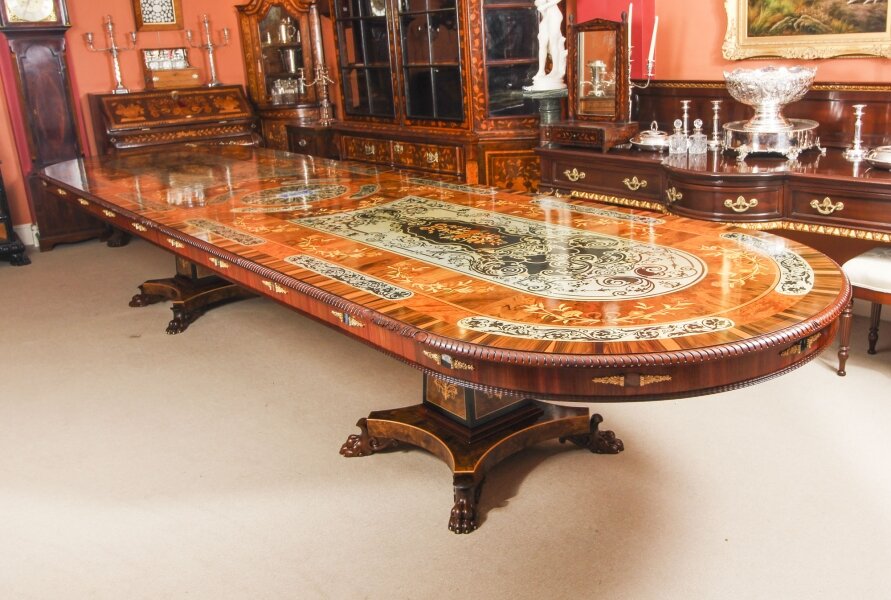
  • Design Signatures: The defining feature of this Baroque dining table is its top. Master artisans use marquetry—the art of applying pieces of veneer to form decorative patterns—to create sweeping floral designs using exotic woods. The legs feature the signature curved “cabriole” shape, ending in elegant scroll feet.
  • The Timeless Appeal: The artistry of hand-laid wood inlay is a dying art, making these tables highly sought-after collector’s items. The softer, curved lines offer a more romantic interpretation of luxury baroque furniture.
  • Best Suited For: Elegant luxury homes and refined estates situated on the coast or in the countryside.


4. The Neapolitan Ebony & Silver Escutcheon

For a more dramatic, almost gothic interpretation of baroque furniture, the Neapolitan Ebony table offers a striking departure from traditional gold and brown tones.

Dining Table Merton Dark Baroque Style Rectangular Black Lacquered Glossy and Silver Leaf 205 x 105 Cm


  • Design Signatures: This table is crafted from ebonized wood, providing a deep, lustrous black finish. The carvings are highlighted not with gold, but with meticulously applied silver leaf or solid silver escutcheons. The contrast is sharp, moody, and impossibly chic.
  • The Timeless Appeal: Black and silver provide a modern twist on historical baroque style furniture. This color palette allows the table to blend seamlessly with both contemporary and antique art collections.
  • Best Suited For: Modern luxury homes in metropolitan centers, where classic architecture meets contemporary interior design.


5. The Florentine Hand-Carved Walnut Banquet Table

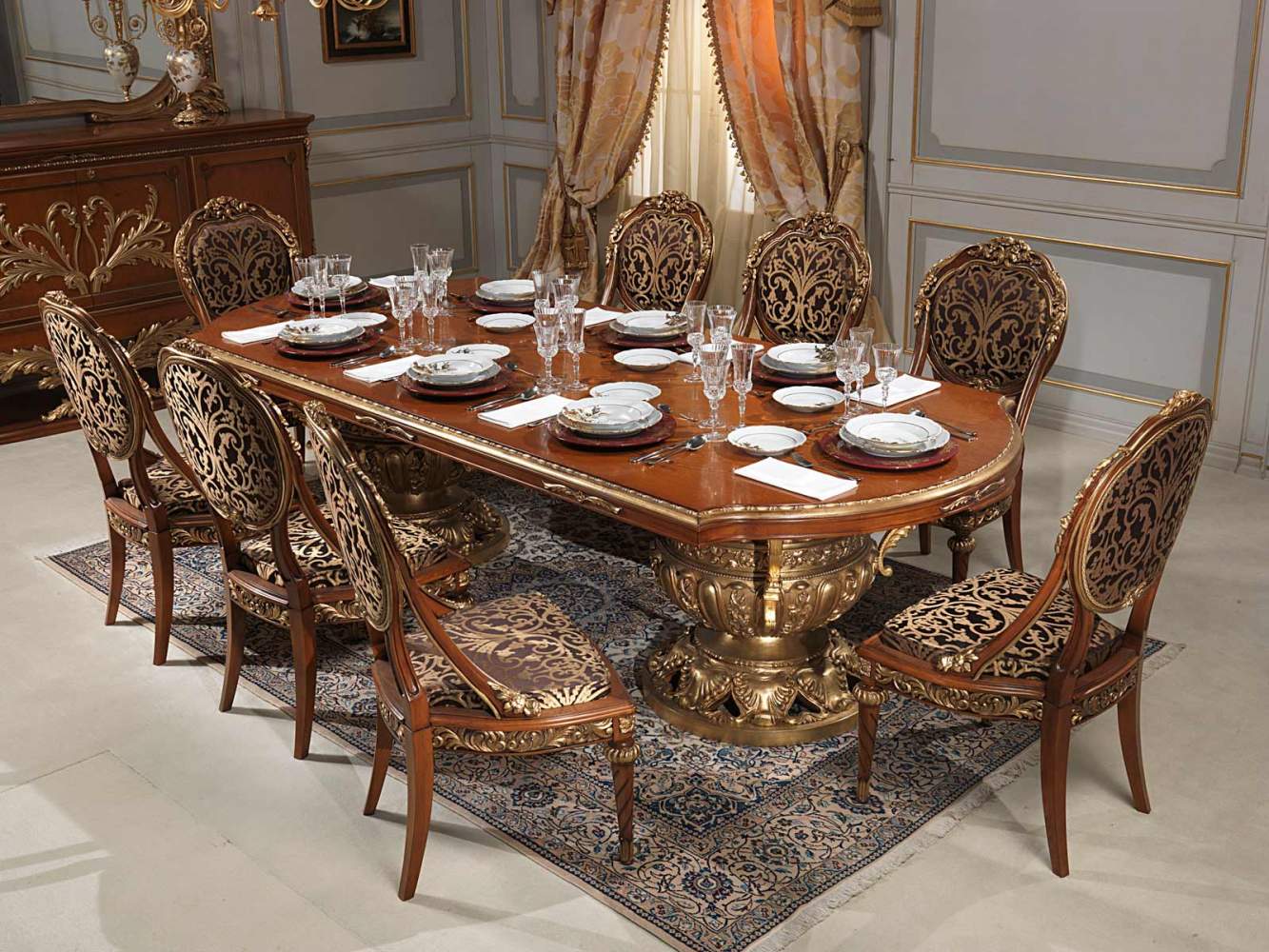
When you need to seat a sprawling family or host a grand gala, the Florentine Banquet table is the quintessential Baroque style dining table.

Dining room with wooden table and chairs, modern light fixture, and framed artwork on the wall.

  • Design Signatures: Crafted from solid, dark-stained Italian walnut, this table relies on the sheer volume of its carvings rather than metallics. Expect deep relief carvings of lions, mythological creatures, and robust scrolls along the apron and double-pedestal base.
  • The Timeless Appeal: The Florentine table represents the pure, unadulterated essence of woodworking. As the wood ages, it develops a rich patina that only enhances the depth of the baroque style furniture carvings.
  • Best Suited For: Historic chateaus, luxury hotel banqueting halls, and private estates where legacy and tradition are paramount.


Why Invest in Luxury Baroque Furniture?

In a world increasingly dominated by mass production and minimalist aesthetics, luxury baroque furniture stands as a bold rebellion. Investing in a Baroque dining table is an homage to history, art, and uncompromising quality.

Whether you are designing the dining room of a historic European manor, curating the aesthetic of a five-star luxury hotel, or bringing Old World charm into a newly built private palace, a Baroque style dining table serves as the perfect anchor. These tables are not just places to eat; they are the epicenters of conversation, celebration, and legacy.

By choosing authentic, well-crafted baroque furniture, you are ensuring that your interior design retains its grand, timeless appeal for generations to come.

The Craftsmanship Behind Luxury Baroque Furniture: What Makes It Worth the Investment

In a world increasingly dominated by fast production and minimalist trends, baroque furniture stands apart as a celebration of artistry, heritage, and timeless grandeur. For discerning homeowners and collectors, investing in baroque style furniture is not merely about acquiring décor—it is about owning a piece of history shaped by master craftsmanship.

Yet many buyers ask a reasonable question: Why does baroque furniture command such premium pricing? The answer lies not in branding or marketing hype, but in the extraordinary level of detail, time, and artisanal expertise behind every curve, carving, and gilded finish.

If you appreciate understanding what you are paying for, this guide will walk you through the craftsmanship, materials, techniques, and finishing processes that justify the investment in luxury baroque furniture.

Understanding the Heritage of Baroque Style Furniture

Before examining craftsmanship, it is important to understand the roots of baroque design. Emerging in 17th-century Europe, the baroque movement was synonymous with opulence, drama, and intricate ornamentation. Royal courts and aristocratic estates embraced elaborate furniture as symbols of power and prestige.

Today’s luxury baroque furniture remains faithful to that heritage. From carved thrones and ornate consoles to tufted baroque sofas and gilded dining sets, the style continues to reflect grandeur and sophistication.

Unlike contemporary mass-produced furniture, authentic baroque style furniture requires an artistic mindset. Every piece is treated as functional art rather than simply a household object.

The Art of Hand Carving: Where True Value Begins

One of the defining characteristics of premium baroque furniture is hand carving. This is where craftsmanship truly reveals itself.

1. Solid Wood Foundations

Authentic baroque furniture typically begins with high-quality hardwoods such as mahogany, walnut, or beechwood. These woods are selected for their density, durability, and ability to hold detailed carvings.

Mass-produced alternatives often rely on engineered wood or veneers. In contrast, luxury baroque pieces use solid wood frames that can last generations.

2. Intricate Motifs and Details

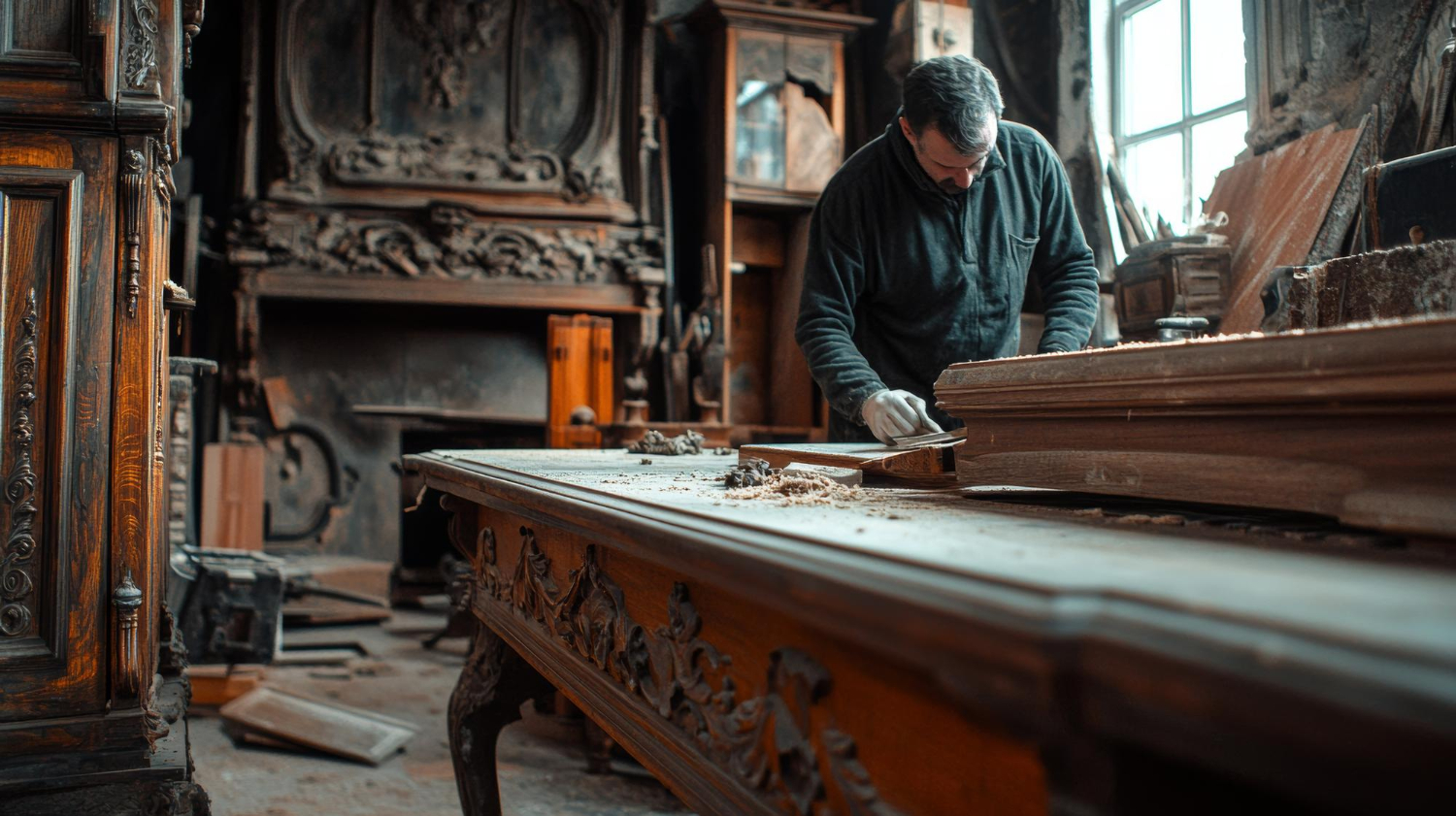
Hand carving is not a mechanical process. Skilled artisans spend hours, sometimes weeks, shaping elaborate scrolls, floral motifs, acanthus leaves, shells, and cherubs into the wood. Each detail must flow seamlessly into the next.

Because these carvings are done manually, no two pieces are ever perfectly identical. That uniqueness enhances their artistic and collectible value.

3. Time Investment

Carving a single armrest or crown crest can take several days of meticulous work. Larger statement pieces, such as a baroque bed frame or grand dining table, may require months to complete.

When buyers understand the sheer labor involved, the premium pricing begins to make sense.

Premium Materials That Define Luxury Baroque Furniture

Beyond carving, materials play a significant role in determining quality and longevity.

Upholstery Excellence

Baroque style furniture is known for luxurious upholstery. Velvet, silk blends, jacquard fabrics, and premium leather are commonly used to create plush seating surfaces.

Button tufting, deep padding, and hand-stitched details ensure both comfort and durability. High-density foam combined with traditional spring systems enhances structural integrity while maintaining classic aesthetics.

Gold and Silver Leaf Finishing

One of the most iconic features of luxury baroque furniture is gilding. Genuine gold leaf or silver leaf is applied by hand to carved surfaces, creating a luminous finish.

This process requires multiple stages:

  • Surface preparation and smoothing
  • Application of adhesive sizing
  • Careful placement of delicate metal leaf
  • Burnishing and sealing for durability

It is an art form in itself, demanding patience and precision.

Marble and Decorative Accents

Baroque consoles and side tables often feature marble tops. Natural stone adds both durability and visual contrast to intricate wooden bases. The combination of solid wood and stone elevates the piece beyond decorative furniture into heirloom territory.

The Finishing Process: Where Craft Becomes Mastery

Finishing is what transforms carved wood into refined baroque furniture worthy of luxury interiors.

Multi-Layer Polishing

Unlike factory spray finishes, baroque pieces undergo layered polishing techniques. Each coat is applied carefully, sanded, and reapplied to achieve depth and richness.

This layered method protects the wood while enhancing the carved details.

Antique Patina Effects

Some pieces feature intentional aging or patina treatments. This is not artificial wear—it is a specialized finishing technique designed to mimic the elegance of antique baroque furniture.

The result is depth, warmth, and historical character.

Quality Control

High-end baroque furniture workshops maintain rigorous inspection standards. Every joint, carving edge, and upholstery seam is examined before approval.

This commitment to detail ensures structural longevity and aesthetic perfection.

Structural Integrity: Built to Last Generations

Beyond aesthetics, structural craftsmanship distinguishes true luxury baroque furniture.

  • Mortise and tenon joinery strengthens frames.
  • Reinforced corner blocks enhance stability.
  • Hand-assembled frameworks prevent long-term warping.

Unlike modern flat-pack furniture, which may last a few years, well-crafted baroque style furniture can endure decades, even centuries, with proper care.

This long lifespan significantly improves its cost-per-year value.

The Investment Perspective: More Than Just Furniture

Luxury buyers often consider return on investment. While furniture is typically not seen as a financial asset, premium baroque furniture can retain or increase value over time, especially handcrafted and limited-edition pieces.

Heirloom Potential

Because of its durability and timeless appeal, baroque furniture is frequently passed down through generations. Its classical aesthetic does not follow fleeting trends, ensuring continued relevance.

Elevated Interior Impact

Baroque style furniture creates a focal point instantly. A single carved console or tufted baroque sofa can redefine an entire room, reducing the need for excessive additional décor.

Emotional and Experiential Value

There is also intangible value in owning handcrafted art. Knowing that a piece was shaped by skilled artisans rather than mass production adds a sense of pride and connection.

Why Luxury Baroque Furniture Justifies Its Price

When evaluating the cost of baroque furniture, consider what you are truly paying for:

  • Solid hardwood frames
  • Hand-carved ornamental details
  • Premium upholstery materials
  • Genuine metal leaf gilding
  • Multi-stage finishing techniques
  • Structural joinery designed for longevity
  • Skilled artisan labor

Each of these components contributes to durability, artistry, and exclusivity.

In comparison, lower-priced alternatives often sacrifice carving precision, use synthetic finishes, or rely on mass-manufactured frames. While they may replicate the look, they rarely replicate the craftsmanship.

Choosing the Right Baroque Furniture for Your Space

If you are considering investing in baroque style furniture, keep these factors in mind:

  1. Verify the material quality—solid wood over composite.
  2. Examine carving depth and symmetry.
  3. Ask about finishing methods and gilding techniques.
  4. Consider scale—baroque furniture thrives in spacious interiors.
  5. Choose pieces that align with your long-term design vision.

The right selection will not only enhance your interior but also serve as a lasting statement of refined taste.

Conclusion: Craftsmanship That Transcends Trends

The true value of baroque furniture lies in craftsmanship, heritage, and longevity. From hand-carved hardwood frames to layered finishes and intricate gilding, each step in its creation reflects dedication and artistry.

Investing in baroque style furniture is not about indulgence—it is about choosing quality over convenience and timeless design over temporary trends. When you understand the hours of carving, the premium materials, and the structural integrity involved, the investment becomes clear.

Luxury is not defined by price alone. It is defined by craftsmanship that endures, artistry that captivates, and furniture that tells a story.

If you are seeking interiors that embody grandeur and lasting elegance, baroque furniture remains one of the most distinguished choices you can make.

The Psychology of Sitting in Gold: How Baroque Chairs Change a Room’s Vibe

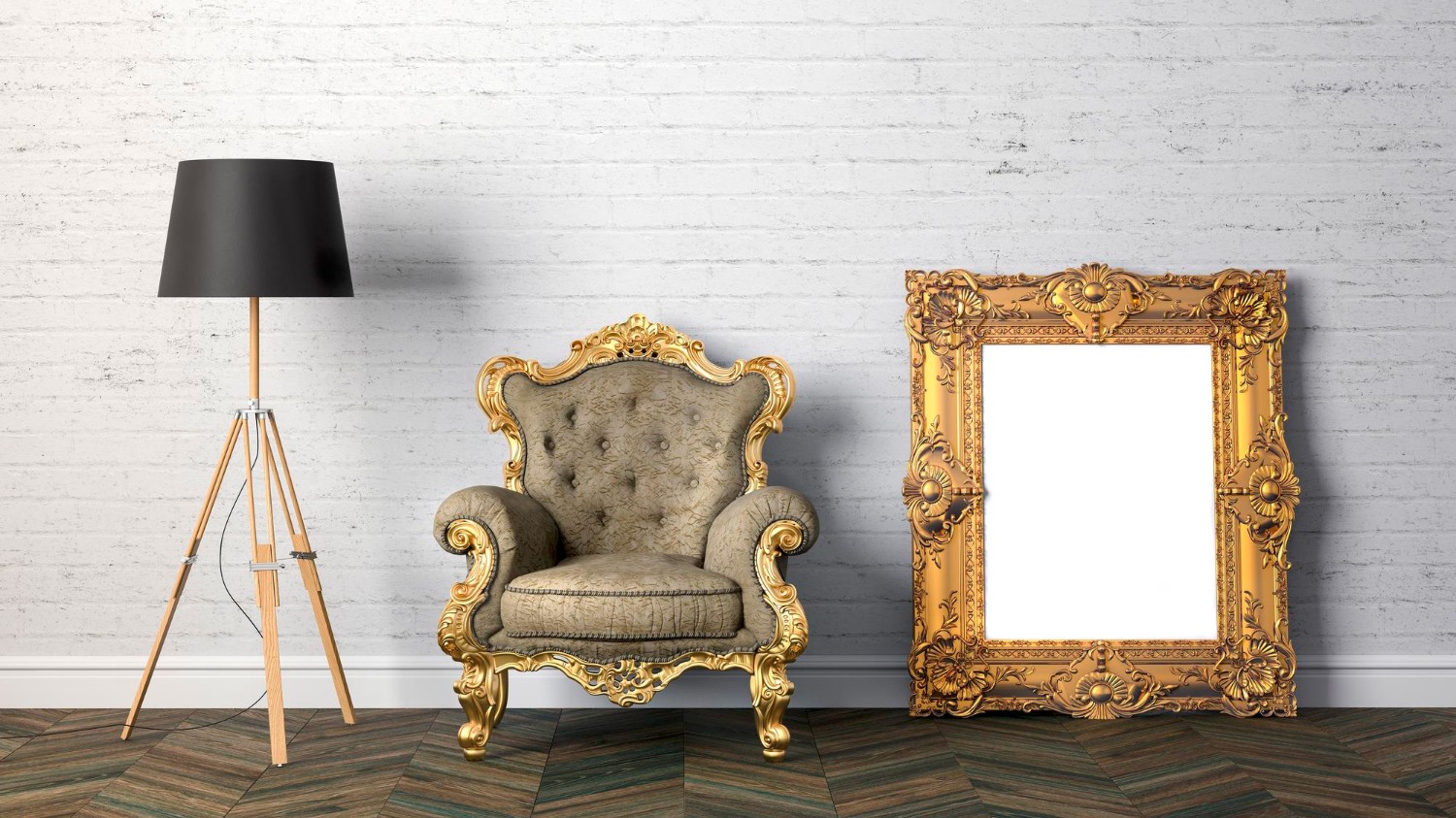
Luxury is not only seen. It is felt. The moment someone enters a room anchored by a gold Baroque chair, something shifts. The space feels heavier with presence, richer in meaning, and undeniably intentional. This is not accidental. Ornate seating—especially gilded Baroque chairs—has a deep psychological effect on how we perceive space, status, and even ourselves within a room. In this exploration, we look beyond surface beauty and uncover the gold baroque chair psychology—how form, color, and craftsmanship work together to transform mood, authority, and emotional response. If you’ve ever wondered why a single chair can redefine an entire interior, the answer lies in psychology as much as design.

Why Seating Is Psychological, Not Just Functional

Chairs are the most human piece of furniture. Unlike tables or cabinets, seating directly interacts with the body. Where and how we sit affects posture, perception, and behavior. This makes seating one of the strongest emotional anchors in any interior. When seating becomes ornamental—sculptural, elevated, and symbolic—it goes beyond comfort. It communicates hierarchy, intention, and identity. This is where Baroque chairs stand apart. Unlike modern minimalist seating designed to disappear into the background, Baroque chairs demand attention. Their presence signals that the room is not merely functional—it is curated. This is the foundation of luxurious seating psychology: furniture that shapes how people feel the moment they occupy a space.

Gold as a Power Color: What Our Brain Registers Instantly

Color psychology plays a central role in how we experience interiors, and gold is one of the most emotionally loaded hues in design history. Gold is associated with:

  • Power and authority
  • Achievement and legacy
  • Warmth combined with prestige
  • Celebration rather than restraint

Unlike yellow, which energizes, or brass, which feels industrial, gold carries a ceremonial weight. Our brains subconsciously associate gold finishes with value and rarity, which is why they have been used for centuries in palaces, thrones, and formal reception rooms. In the context of gold baroque chair psychology, the color doesn’t just decorate—it elevates. It makes the chair feel less like an object and more like a symbol. Placed in a room, a gold Baroque chair often becomes the emotional center of gravity, anchoring everything else around it.

Form Psychology: Why Baroque Shapes Feel Commanding

Beyond color, form plays an equally powerful psychological role. Baroque chairs are defined by:

  • Curved silhouettes
  • Elaborate carvings
  • Sculptural legs and arms
  • Symmetry balanced with movement

From a psychological perspective, curves suggest luxury and safety, while symmetry communicates order and authority. The elaborate detailing signals craftsmanship, which the brain associates with time, skill, and exclusivity. This combination explains the ornate furniture emotional impact. The chair doesn’t just fill space—it claims it. It subtly tells the sitter and the viewer that this is a place of importance. Where minimalist chairs encourage neutrality, Baroque chairs encourage presence.

How Baroque Chairs Change the Mood of a Room

The baroque style chair mood effect depends on placement and context, but the transformation is always noticeable. In living rooms, a gold Baroque chair introduces drama and hierarchy. Even in contemporary interiors, it creates a focal contrast that adds depth and narrative. In bedrooms or dressing areas, the same chair feels intimate yet indulgent—less about authority and more about personal luxury. In entryways or formal lounges, Baroque seating instantly signals status. Guests subconsciously adjust their posture and behavior around it, responding to the visual cue of importance. This is the subtle psychology of luxury: people don’t need to be told a space is premium—they sense it.

Craftsmanship as an Emotional Signal

One of the most overlooked psychological triggers in luxury furniture is craftsmanship. The human brain is highly sensitive to detail. Hand-carved elements, layered finishes, and sculpted frames communicate effort and permanence. Baroque chairs excel here. Their detailing tells a story of time invested, skills passed down, and design that resists trends. This creates emotional trust. People are more likely to value, respect, and preserve spaces that feel intentionally crafted. This reinforces the ornate furniture emotional impact—luxury that feels earned rather than manufactured.

Quick Personality Quiz: Which Baroque Chair Are You?

Let’s make this personal. Answer the questions below and see which Baroque seating style reflects your personality.

  1. How do you prefer to enter a room?
    A. Quietly, but with undeniable presence
    B. Confidently, commanding attention
    C. Elegantly, with refined charm
  2. Your ideal interior feels:
    A. Regal and composed
    B. Dramatic and bold
    C. Artistic and expressive
  3. Your style philosophy:
    A. Timeless over trendy
    B. Statement over subtle
    C. Detail over simplicity

    Mostly A: You gravitate toward classic gold Baroque armchairs with balanced detailing—commanding but composed.
    Mostly B: Ornately carved, throne-style Baroque chairs suit you—bold, sculptural, unapologetic.
    Mostly C: Curved, decorative Baroque chairs with expressive motifs reflect your artistic sensibility.

Why Designers Use Baroque Chairs as Emotional Anchors

Interior designers often use Baroque seating strategically. One statement chair can set the emotional tone for an entire room, allowing other elements to remain restrained. This is efficient luxury design: fewer pieces, higher impact. From a psychological standpoint, this works because the brain prefers clear focal points. A gold Baroque chair gives the eye a place to rest—and the mind a story to interpret. That story is always one of craftsmanship, history, and intentional excess.

Modern Spaces, Classic Psychology

Interestingly, Baroque chairs are increasingly used in modern interiors. The contrast amplifies their psychological effect. Against neutral walls or minimalist layouts, the ornate form feels even more powerful. This blend satisfies two emotional needs:

  • The modern desire for clarity and space
  • The human craving for richness and meaning

The result is a room that feels curated rather than styled—luxurious without being overwhelming.

Conclusion: Sitting in Gold Is a Psychological Experience

A gold Baroque chair does more than offer a place to sit. It changes posture, mood, and perception. It influences how a room is experienced and how people behave within it. By combining color psychology, sculptural form, and meticulous craftsmanship, Baroque chairs create an emotional resonance few furniture pieces can match. This is why they continue to appear in luxury interiors centuries after their origin. In the end, the psychology of sitting in gold is about identity. It reflects who you are, how you value space, and what you choose to express without saying a word. And that is the true power of luxurious seating psychology.