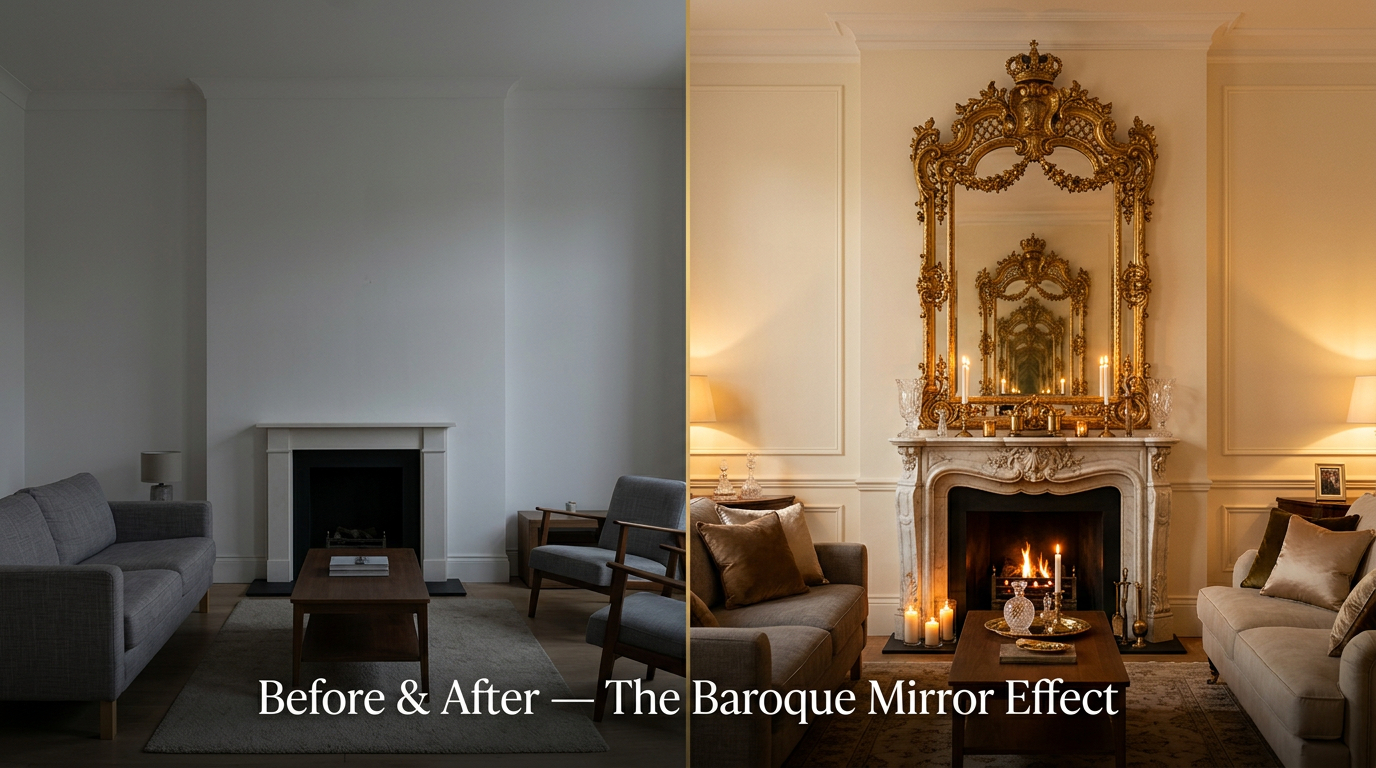
Why Baroque Mirrors Make Every Room Look More Expensive (+ How to Choose the Right One

There is a reason why the world’s most prestigious hotels, from the Ritz in Paris to the Savoy in London, rely on the Baroque style mirror to define their interiors. It isn’t just about the reflection; it’s about the “weight” of the room. A baroque mirror acts as an architectural anchor, a piece of functional art that suggests history, legacy, and, above all, a high-end lifestyle.

In the modern European home, where space is often at a premium—whether it’s a chic Berlin flat or a classic Victorian terrace in the UK—a luxury mirror is the ultimate “cheat code” for interior design. It instantly elevates the perceived value of your furniture and multiplies the natural light.

But how do you transition from a simple wall hanging to a curated Baroque vintage mirror that looks like an heirloom rather than an afterthought? This guide will walk you through why these pieces are the gold standard for expensive-looking interiors and how to choose the right one for your specific space.

The “Baroque Effect”: Why It Signals Luxury

The Baroque movement (roughly 1600–1750) was designed to awe. It was the era of the “Grand Style,” where every curve was dramatic and every surface was a canvas for intricate carvings. When you hang a Baroque style mirror, you are borrowing that historical gravity.

  1. Complexity Equals Value: In a world of flat-pack, minimalist furniture, the high-relief carvings of a luxury mirror—think acanthus leaves, scrolling vines, and ornate cherubs—signal craftsmanship. Human eyes are naturally drawn to detail; the more there is to look at, the “more expensive” the item feels.
  2. Light Multiplication: Because a baroque mirror often features a wide, gilded frame, it catches light from multiple angles, not just from the glass itself. This creates a glow that illuminates dark corners in traditional European apartments.
  3. Scale and Proportion: A Baroque vintage mirror is often larger and bolder than modern alternatives. This “oversized” look is a classic interior design trick used to make small rooms feel like grand halls.

1. The Entryway: The “First Impression” Luxury Mirror

In the UK and Germany, entryways are often functional but narrow. To make this transition space look expensive, you need a Baroque style mirror that draws the eye upward.

How to Choose:

  • The Shape: Look for a “Pier Mirror”—a tall, slender baroque mirror designed to sit between two windows or doors.
  • The Finish: In a London townhouse, a deep, burnished gold finish feels authentic. In a modern Munich apartment, a silver-leaf luxury mirror provides a cooler, more contemporary “expensive” vibe.
  • The Placement: Hang it opposite a light source. The intricate frame will break up the reflection, preventing a “glare” while still doubling the brightness of the hall.

2. The Living Room: The Power of the Overmantel

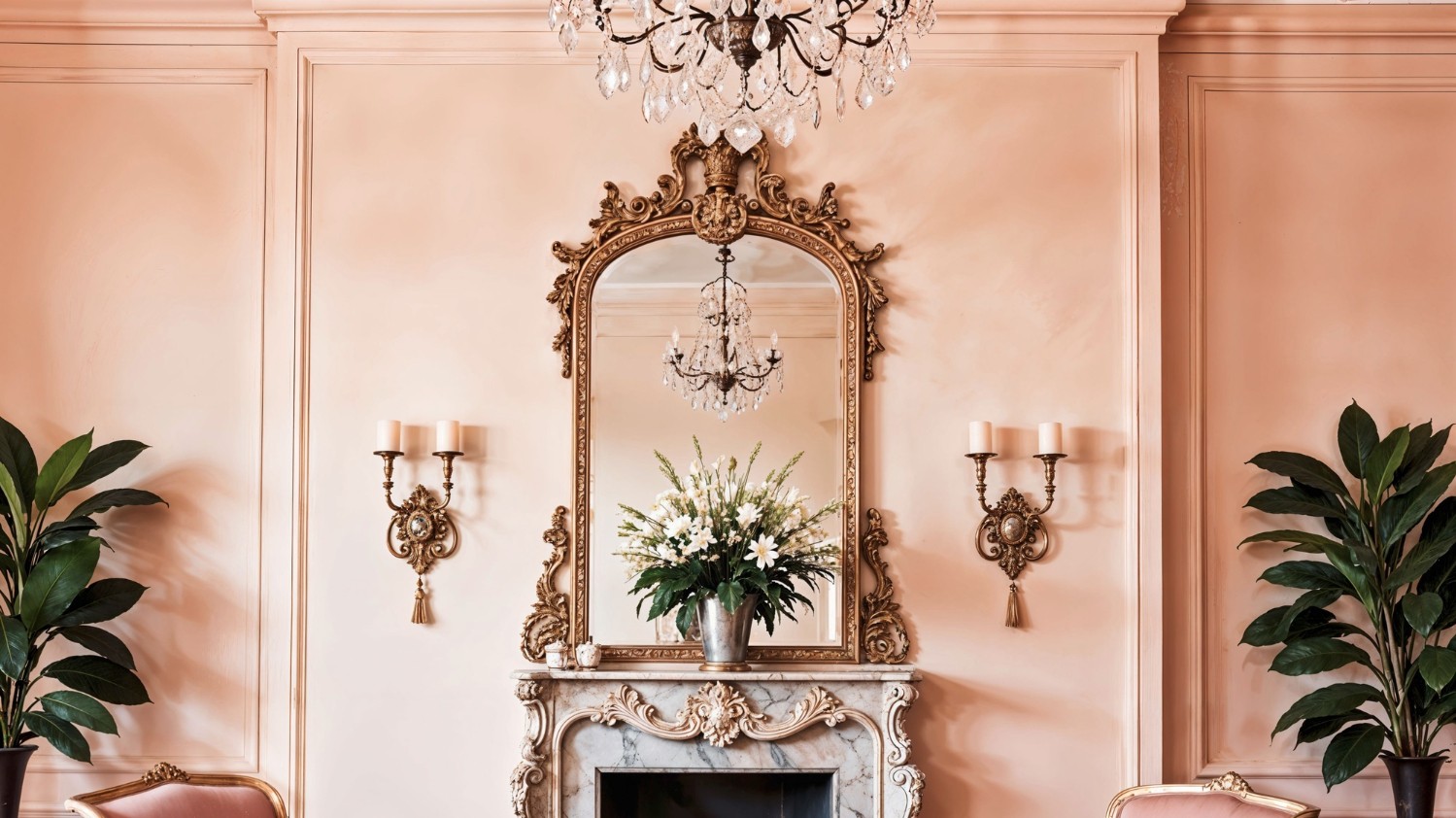
In France and Spain, the fireplace is the soul of the home. Replacing a standard mirror with a Baroque vintage mirror above the mantel is the quickest way to increase the “room’s IQ.”

How to Choose:

  • The Crest: To make the room look taller, choose a Baroque style mirror with a high “crown” or crest in the center. This draws the eye toward the ceiling.
  • The Width: An expensive-looking setup requires balance. Your luxury mirror should be approximately 70-80% of the width of the mantelpiece. If it is too small, it looks timid; if it is too wide, it feels cluttered.
  • The Tone: For a truly high-end Spanish look, consider a dark wood frame with gold-leaf accents. It feels grounded, historic, and incredibly sophisticated.

3. The Dining Room: Doubling the Drama

Dining rooms in Italy and France are built for long evenings and candlelight. A baroque mirror in this setting isn’t for checking your appearance; it’s for reflecting the “vibe.”

How to Choose:

  • The “Window” Effect: Use a massive, floor-length Baroque style mirror leaning against the main wall. This makes the dining table feel twice as long and the guest list twice as large.
  • The Glass Quality: For a truly expensive look, ensure your luxury mirror features beveled edges. The angled cut on the glass periphery catches light like a diamond, adding a subtle sparkle that flat glass lacks.

4. The Bedroom: The Romantic Luxury Mirror

The bedroom is where you can move away from the “bold” gold and toward the “soft” luxury of a Baroque vintage mirror.

How to Choose:

  • Oval Frames: While rectangular frames are dominant in living areas, an oval Baroque style mirror feels more intimate and feminine. It softens the hard lines of wardrobes and bed frames.
  • Distressed Finishes: In a French-inspired bedroom, a “white-washed” or “distressed” baroque mirror looks like a find from a Parisian flea market. This “shabby chic” luxury suggests you have the taste to appreciate the beauty of age.

5. The Bathroom: The “Boutique Hotel” Upgrade

Nothing says “expensive” like an ornate Baroque style mirror in a bathroom. It creates a stark, beautiful contrast against modern white tiles or dark marble.

How to Choose:

  • Size Matters: Don’t be afraid to go slightly larger than your vanity unit. A slightly oversized baroque mirror creates a “designer” look that feels custom-made for the space.
  • Moisture Protection: If you are placing a luxury mirror in a high-humidity area like a bathroom in rainy Manchester or humid Barcelona, ensure the back is properly sealed to prevent the “silvering” on the glass from peeling over time.

Buying Guide: How to Spot a High-End Baroque Mirror

If you want your home to look expensive, you must avoid “cheap” imitations that look like molded plastic. Here is what to look for when shopping for a Baroque style mirror:

Feature The “Expensive” Choice The “Cheap” Alternative
Frame Material Solid wood or high-density resin Lightweight, thin plastic
Detailing “High Relief” (deep, 3D carvings) Flat, stamped patterns
Finish Gold/Silver Leaf (textured) Uniform spray paint
Glass Beveled edges (4-5mm thick) Thin, flat-edge glass
Style Authentic Baroque vintage mirror Generic “scroll” pattern

Regional Style Tips for European Buyers

  • UK: Mix your Baroque style mirror with deep navy or hunter green walls. The contrast between the dark paint and the gold frame is a classic “Old Money” aesthetic.
  • Germany (DE): Keep the room minimalist. A single, massive luxury mirror in an otherwise white, clean room creates a “Gallery” effect that is very popular in Berlin.
  • Italy (IT): Go for the “Glossy” look. A black-framed baroque mirror with gold highlights fits perfectly in a high-fashion Milanese apartment.
  • Spain/France (SP/FR): Embrace the patina. A Baroque vintage mirror with slightly tarnished gilding looks more expensive because it implies the piece has a story to tell.

Maintenance: Keeping the Luxury Alive

An expensive-looking home is a well-maintained home. Because a Baroque style mirror has so many nooks and crannies, dust can dull its shine.

  • The Frame: Use a soft-bristled makeup brush to dust the intricate carvings of your luxury mirror. This reaches where cloths cannot.
  • The Glass: Never spray cleaner directly onto the mirror; it can seep into the frame and cause rot. Spray a microfiber cloth first, then wipe.

Conclusion: A Reflective Investment

Investing in a Baroque style mirror is the most cost-effective way to transform a room from “standard” to “stunning.” It is a piece that transcends trends, offering a sense of permanence and prestige that few other decor items can match. Whether it’s a Baroque vintage mirror in the hallway or a grand luxury mirror in the lounge, you are choosing a style that has defined elegance for over 300 years.
Why Baroque Dressers Are the Secret to a Luxurious Bedroom (And Where to Find Them)

The bedroom often feels nice but forgettable—clean lines, neutral tones, functional pieces, yet it lacks that wow factor that makes you linger. You step in and it’s comfortable, but it doesn’t spark joy or a sense of indulgence. The secret to transforming an ordinary space into a luxurious retreat? One bold statement piece that commands attention and elevates everything around it.

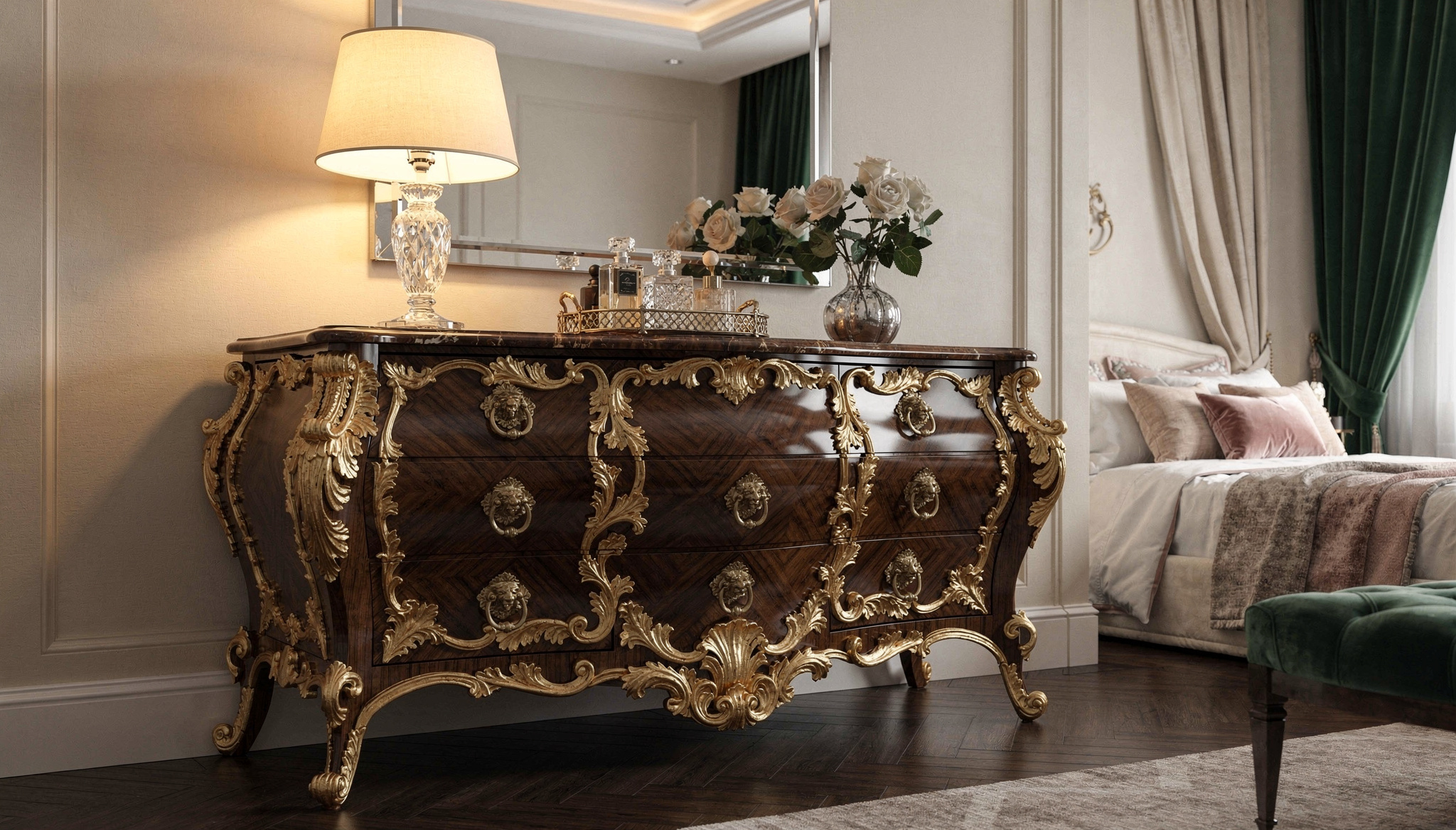
Enter the Baroque style dresser. This isn’t just furniture; it’s a slice of 17th-century opulence reborn for modern homes. With its dramatic curves, intricate carvings, and gilded accents, a Baroque dresser infuses centuries of royal design genius into your bedroom. Interior designers frequently turn to this style when they want instant drama without overhauling the entire room.

By the end of this guide, you’ll understand exactly why Baroque dressers remain a go-to for creating luxurious bedrooms—and you’ll know precisely where to source the perfect one for your space.

What Is a Baroque Style Dresser?

Baroque style emerged in the 17th century across European royal courts, particularly in France, Italy, and Spain. It was born during a time of Catholic Counter-Reformation and absolute monarchy, where art and design aimed to inspire awe, power, and divine grandeur. Furniture like dressers (or commodes) became symbols of wealth, commissioned for palaces.

Key design elements define a Baroque dresser:

  • Ornate carvings and gilded finishes — Elaborate motifs like acanthus leaves, scrolls, shells, and floral details, often highlighted with gold leaf for shimmering luxury.
  • Cabriole legs and curved silhouettes — Serpentine fronts, bombé (swelled) shapes, and S-curved legs that create movement and fluidity.
  • Rich materials — Solid woods such as walnut, mahogany, or oak, paired with veneers, inlays, and authentic gilding.
  • Dramatic hardware — Ornate brass drop pulls, lion-head motifs, keyhole escutcheons, and elaborate knobs that add theatrical flair.

Baroque differs from similar styles:

  • Vs. Rococo — Baroque is bold, symmetrical, and dramatic with heavy gilding and structured ornamentation; Rococo is lighter, asymmetrical, playful, with shell motifs and pastel palettes.
  • Vs. Victorian — Victorian is eclectic and revivalist, blending Gothic, Renaissance, and machine-made details; Baroque feels more theatrical and handcrafted.
  • Vs. Renaissance — Renaissance emphasizes classical symmetry, proportion, and restraint; Baroque breaks rules for dynamic, emotional impact.

Why Baroque Dressers Make Bedrooms Feel Luxurious

A Baroque dresser instantly becomes the room’s focal point. Its scale, curves, and detailing draw the eye away from plain walls or basic bedding, anchoring the space with purpose and drama. Unlike flat, minimalist pieces, the deep carvings create shadows and highlights that add texture and dimension—light dances across gilded surfaces, making the room feel alive and layered.

Psychologically, ornate design signals opulence and status. Humans associate elaborate craftsmanship with quality, exclusivity, and care—think royal palaces versus simple cottages. Curves evoke safety and comfort, while symmetry conveys order and authority. This combination triggers feelings of indulgence and emotional elevation, turning a bedroom into a personal sanctuary of luxury.

Baroque’s timelessness seals the deal. While trends come and go, this style has endured for centuries because it transcends fashion—it’s rooted in enduring ideas of grandeur. Ornate pieces like these evoke nostalgia, warmth, and a sense of curated heritage, making your space feel both personal and prestigious.

In short, a Baroque dresser doesn’t just store clothes; it communicates that your bedroom is a place of refined indulgence.

Baroque Dressers in Modern Bedroom Styles

Worried a Baroque dresser won’t fit your aesthetic? Think again—its versatility shines in mixed styles through smart contrast.

In maximalist rooms, pair it with mirrors, chandeliers, and layered patterns for full-on opulence.

For modern-classic mixes, place the ornate dresser against neutral walls with clean bedding and simple linens—the contrast lets the piece pop without overwhelming.

Eclectic or bohemian spaces love it with mixed metals, textured rugs, and global accents for an artistic, layered vibe.

In glam interiors, combine with velvet upholstery, gold hardware, and marble surfaces for dramatic flair.

The key tip: Use “contrast styling.” Let the Baroque dresser be the star—keep surrounding elements minimal, like sleek mirrors or understated lamps, to highlight its details without clashing.

How to Style a Baroque Dresser in Your Bedroom

Styling starts on top: Use a decorative tray for perfumes, jewelry, or candles. Add fresh flowers in a vase for softness, or a small sculpture for personality.

Mirror pairings matter—an ornate framed mirror echoes the dresser’s drama, while a sleek modern one creates striking contrast.

Lighting elevates: Flank with table lamps in gold or crystal, add wall sconces for ambiance, or install subtle LED strips underneath for a glowing pedestal effect.

Color palettes that complement: Ivory or cream bases with deep navy, emerald green, blush pink, or warm gold accents. These tones enhance the gilding without competing.

Avoid overcrowding—limit items to 3-5 curated pieces—and steer clear of clashing busy patterns. Keep it balanced for effortless luxury.

What to Look for When Buying a Baroque Dresser

Prioritize solid wood over MDF with veneer for durability and authentic feel. Check weight—heavier pieces indicate quality construction.

Examine drawers: Dovetail joints signal craftsmanship; smooth gliding is essential.

Gilding should be authentic gold leaf, not cheap paint that flakes.

Size wisely: Measure your room—a dresser should fit the wall without dominating (typically 50-70% of wall width for balance).

New reproductions offer affordability; antiques or vintage add character but require inspection for wear.

Where to Find Baroque Style Dressers

Look for high-end luxury furniture boutiques and antique stores for premium pieces.

Online marketplaces offer handcrafted, restored, or reproduction options, as well as authentic antiques and more affordable inspired designs.

Visit local antique markets or fairs to discover unique gems—focus on patina, solid construction, and authentic details.

For a perfect fit, consider custom furniture makers who can adapt the style to your exact specifications.

Pro tip: Use search terms like “baroque style dresser,” “ornate dresser,” “antique style dresser,” “baroque cabinet,” “gilded commode,” or “carved dresser with gold leaf” to find the best results.

Price Range Guide

  • Budget-friendly reproductions — $300 – $800
  • Mid-range quality pieces — $800 – $2,500
  • High-end / designer — $2,500 – $8,000+
  • Authentic antiques — $5,000 – $25,000+

Conclusion + CTA

A Baroque dresser isn’t mere storage—it’s a design statement that infuses your bedroom with timeless luxury, depth, and personality. One piece can shift “nice but forgettable” to “utterly indulgent.”

Ready to transform your space? Start browsing today—save this guide, pin your favorites, and envision your upgraded bedroom.

Explore Baroque dresser options now and begin your bedroom transformation. Your luxurious retreat awaits!

FAQ

What is a Baroque dresser?

An ornate, curved dresser inspired by 17th-century designs, featuring carvings, gilding, and cabriole legs.

Can Baroque fit modern bedrooms?

Yes—pair with neutrals or minimal elements for beautiful contrast.

How much does a Baroque dresser cost?

Ranges from $300 for reproductions to $25,000+ for antiques.

Is Baroque the same as Rococo?

No—Baroque is bolder and more symmetrical; Rococo is lighter and asymmetrical.

Why Baroque Armchairs Are Taking Over Maximalist Homes in 2026

For years, the interior design world was obsessed with “quiet luxury” and the stark, clinical lines of ultra-minimalism. We sat on flat, grey slabs of foam and called it sophisticated. But as we move through 2026, the pendulum has swung back—hard.

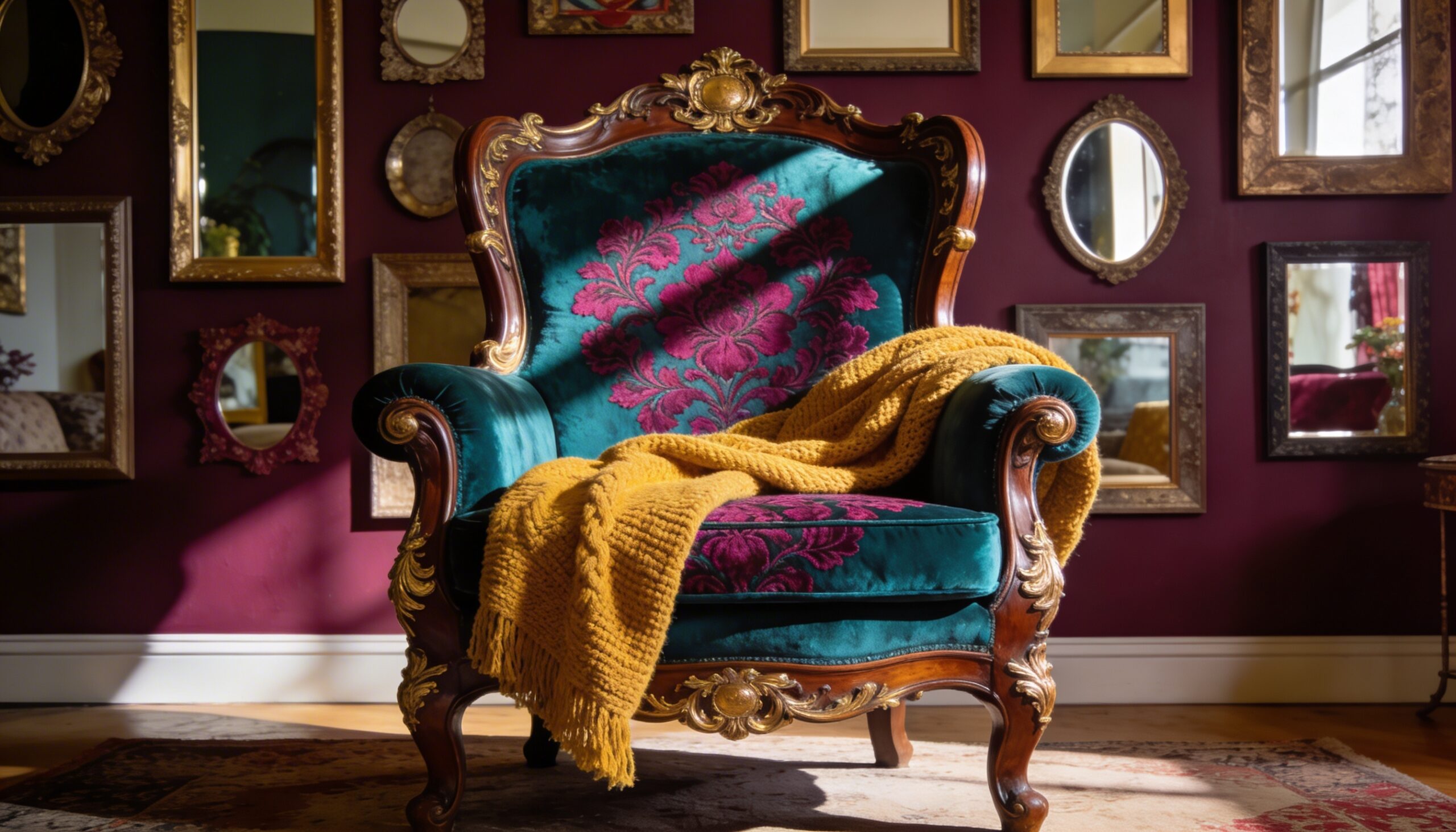
Welcome to the era of Mindful Maximalism, where our homes are no longer just “content backgrounds” but story-filled sanctuaries. At the heart of this revolution is a surprising comeback kid: the baroque armchair. Once dismissed as museum relics or “too formal,” these ornate seating powerhouses are being rediscovered as the ultimate comfort solution for the modern home.

If you’ve been eyeing a baroque style armchair but worry it might be more “stiff royalty” than “Saturday lounge,” think again. Here is why the most intricate seat in the house is actually the most comfortable one you’ll own this year.


1. The Ergonomics of Opulence: Beyond the Carvings

There is a common myth that “ornate” equals “uncomfortable.” In reality, the baroque style was birthed in an era where furniture was designed for long-term presence. In 2026, manufacturers are blending 17th-century aesthetics with 21st-century “workspitality” standards.

Unlike the low-slung, “blob” furniture of the early 2020s that offered zero lumbar support, a comfortable baroque chair provides:

  • High-Back Structural Integrity: The iconic high-back design of the baroque period aligns perfectly with today’s focus on spinal health.
  • Wider Proportions: Modern iterations feature generous seat widths that accommodate “active sitting”—the ability to shift, curl up, or cross your legs comfortably.
  • Memory Foam Integration: While the outside looks like a Versailles antique, the insides are often packed with high-density memory foam or pocket springs, a far cry from the stiff horsehair of the past.


2. Maximalist Living Room Seating: The “Anchor” Effect

In a maximalist home, where patterns clash and colors run deep (think chocolate browns, burgundies, and the 2026 favorite, Transformative Teal), you need a piece of furniture with “visual weight.”

An ornate armchair acts as a grounding anchor. Because these chairs are physically substantial—often featuring hand-carved solid wood frames in walnut or mahogany—they feel more secure. There is a psychological comfort in sitting in a chair that feels permanent and sturdy, especially in an era of “fast furniture” that creaks the moment you lean back.


3. Tactile Emotionalism: Velvet, Silk, and Soul

The 2026 design trend “Tactile Emotionalism” emphasizes sensory depth. We want to touch our furniture and feel something.

  • Baroque armchairs are the perfect canvas for rich fabrics like crushed velvet, heavy damask, and intricate embroidery.
  • Recent surveys show that 85% of designers are now sourcing vintage or “heritage-style” pieces to add soul to rooms.
  • Comfort Stat: Did you know that tactile fabrics like velvet have been shown to lower cortisol levels more effectively than synthetic, smooth surfaces? The “huggable” nature of a plush baroque chair is literally a stress-reliever.


Myth-Busting: Is Baroque “Too Much” for My Space?

The Myth: “I need a mansion to pull off a baroque armchair.”

The 2026 Reality: In the “Smart Shrinking” trend of 2026, designers are using one single, high-impact baroque style armchair to define “micro-spaces.” A single ornate chair in a corner creates an instant reading nook or mini-library, making even a small apartment feel like a curated estate.


4. Styling Your Ornate Armchair in 2026

To keep the look fresh and avoid the “grandma’s parlor” vibe, 2026 maximalism is all about the Juxtaposition:

  • The Fabric Flip: Pair a gold-leafed frame with a bold, neon-floral fabric or a monochrome bouclé.
  • The Metal Mix: Surround your chair with sleek, 2026-style “aged metals” or silver accents to bridge the gap between historical and futuristic.
  • The Rug Stack: Place your armchair on top of a layered rug setup—a traditional Persian rug topped with a smaller, irregularly shaped modern piece.


Your Turn: The Great Fabric Debate

We want to see how you’re lounging! Are you a fan of the classic “royal” look, or do you prefer a modern twist?

Poll: Which fabric makes a baroque armchair the ultimate “comfort zone” for you?

  1. Plush Velvet (The “Hug” Factor)
  2. Embroidered Linen (The “Nostalgic” Vibe)
  3. Bold Patterned Silk (The “Statement” Seat)
  4. Textured Bouclé (The “Modern” Fusion)

Drop a photo of your favorite maximalist seating nook in the comments below! We’ll be featuring our favorite reader “armchair showcases” in next month’s design roundup.


Conclusion

The baroque armchair is no longer a museum piece; it is a 2026 essential. By combining historical grandeur with modern comfort technology, these chairs offer a level of physical and emotional support that minimalist furniture simply can’t match. Whether you’re curling up with a book or hosting a long conversation, remember: in 2026, more is more, and comfort is king.

Hand-Carved Baroque Dining Tables: The 2026 Design Obsession Keeping Artisans Busier Than Ever

In the heart of Europe’s grand estates and five-star hotels, a quiet revolution is unfolding. While the world races toward sleek minimalism and AI-generated designs, discerning luxury shoppers are rediscovering the soul-stirring drama of a true baroque dining table. Not the mass-produced imitations flooding catalogues, but authentic hand carved dining tables born from weeks of chisels, mallets, and centuries-old Italian or French techniques.

As we step into 2026, Europe’s leading artisans report waitlists stretching 12–24 months. Commissions for artisan baroque tables have surged, driven by a renewed hunger for pieces that whisper heritage, sustainability, and unmistakable presence. Whether anchoring a private palazzo in Tuscany, a Michelin-starred hotel dining room in Paris, or a contemporary luxury home in London’s Mayfair, these carved wood dining tables 2026 are more than furniture—they are heirlooms in the making.

The Timeless Drama of a Baroque Dining Table

Baroque style emerged in 17th-century Italy and France as an explosion of movement, emotion, and opulence. Think sweeping scrolls, acanthus leaves, cherubs, and gilded flourishes that catch candlelight like living sculpture. A baroque dining table transforms an ordinary meal into theatre. The thick, solid walnut or oak top rests on legs that seem to dance—curved, carved, and undercut so deeply that they appear weightless yet remain rock-solid.

Unlike flat-pack alternatives, every curve tells a story of human hands. European buyers, especially those furnishing luxury hotels or private residences, understand this instinctively: a hand carved dining table doesn’t just seat guests; it elevates the entire space into a work of art worthy of Versailles.

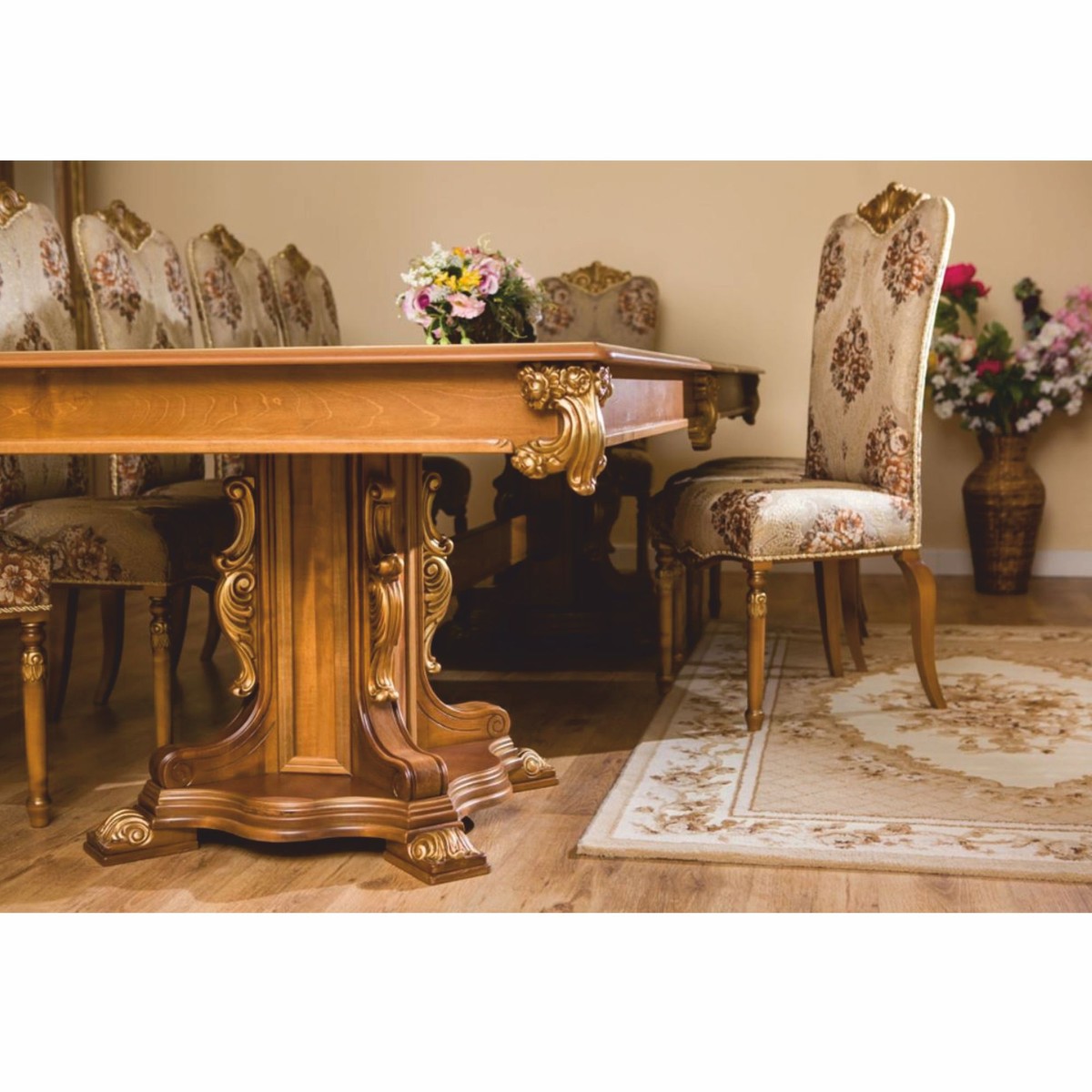
Casa Padrino Luxury Baroque Dining Table Brown / Gold 310 cm - Baroque Dining Room Furniture

Why Hand-Carved Beats Machine Perfection Every Time

Mass-produced “baroque-style” pieces may look convincing in photos, but stand beside a genuine artisan baroque table and the difference is visceral. Machine carving lacks undercuts, depth, and the subtle imperfections that give wood life. Hand carving allows the artisan to respond to the grain, adjusting depth and shadow in real time.

The result? A carved wood dining table that feels alive—warm to the touch, responsive to light, and built to last generations. In 2026, with sustainability top-of-mind for Europe’s luxury clientele, these pieces win on ethics too: traceable European hardwoods, zero-waste craftsmanship, and zero reliance on plastic finishes or cheap imports.

Spotlight on the Masters: Two Artisans Defining 2026’s Baroque Revival

No story about baroque tables is complete without meeting the people behind them. Here are two masters whose workshops are booked solid this year.

Dimitrios Klitsas – Master of French Baroque Drama Based in Massachusetts but commissioned by European clients worldwide, Klitsas is one of the few carvers still mastering the swooping lines of Louis XIV-era furniture. In a recent interview-style reflection on his process, he shared: “The piece is an expression of the patron, not the artist… The client will have to live with it their whole life. To make them happy it needs to come from the heart.”

One of his signature projects—a French Baroque dining table in basswood—took twenty months of deliberate carving with rest periods “to allow the artist and the work to absorb the changes.” He explains the challenge: “Carved work emerges in three dimensions… The painstaking undercutting multiplies these vantage points and helps to give the work an active, living presence.” Clients who have waited report that the wait itself becomes part of the luxury story.

Maurizio Betti – Keeper of Italian Tradition in Santarcangelo di Romagna In his family workshop La Bottega di Betti, Maurizio continues a post-war legacy of lacquering, gilding, and hand-decorated furniture for historic villas. Awarded Maestro d’Arte e Mestiere by Fondazione Cologni, he creates bespoke pieces using rare ancient techniques. In his own words: “I was constantly looking to be one step ahead… by creating something more difficult and truly unique… using rare and ancient techniques.”

Working with son Jonathan and partner Loredana Cangini, Betti restores period furnishings and crafts new “lacquered and finely decorated furniture” for clients who value nature-inspired beauty. “Curiosity, years of work on site, the observation of beauty in nature… ensure that we never lack ideas.” His commissions for ornate dining pieces reflect the same patience that defines true hand carved dining table artistry.

Casa Padrino luxury baroque dining table gray / gold 226 cm - Baroque dining room furniture

The Waitlist Reality: Patience Is the Ultimate Luxury in 2026

Here’s the truth luxury shoppers in Europe are embracing: a genuine baroque dining table cannot be rushed. From initial sketches and wood selection to final gilding and finishing, a single piece often demands 6–20 months. Workshops like those of Klitsas and Betti deliberately limit output to protect quality.

Yet demand is exploding. Europe’s luxury furniture market is projected to reach €26.7 billion by 2032, with handcrafted Baroque revival pieces leading the charge. In 2026, Gen Z and millennial inheritors of family estates, alongside hotel groups seeking signature experiences, are willing to wait—because nothing else delivers the same emotional impact.

Casa Padrino Luxury Baroque Dining Table Brown Inlaid / Gold 420 cm - Baroque Furniture - Made in Italy

Ideal for Luxury Hotels, Private Estates & Grand Homes

Imagine this artisan baroque table in situ:

  • Luxury hotels: A 12-seater walnut masterpiece in a Paris palace hotel instantly becomes the Instagram-worthy centrepiece for private dinners.
  • Private places: In a Tuscan villa or London townhouse, it anchors family gatherings that span generations.
  • Luxury homes: Paired with matching carved chairs and a crystal chandelier, it creates the ultimate entertaining space.

These tables suit spaces where drama and durability matter—solid construction supports heavy marble tops or intricate inlays while the carvings remain crisp for centuries.

How to Commission Your Own Hand-Carved Baroque Masterpiece

  1. Start with a direct conversation with the artisan (skip middlemen for authenticity).
  2. Share your vision—room dimensions, wood preference (walnut, oak, lime), and any personal motifs.
  3. Approve detailed drawings and a small-scale model.
  4. Prepare for the journey: 8–20 months of anticipation, regular updates, and finally delivery and installation.

European buyers often fly to the workshop for the first meeting—turning the commission into a cultural experience.

The 2026 Baroque Renaissance Is Here

In an age of instant everything, the slow beauty of a hand carved dining table feels revolutionary. Artisans are busier than ever because Europe’s most discerning clients have remembered what matters: pieces made with heart, history, and human hands.

Ready to bring timeless opulence to your table? Reach out to a master carver today. Your future baroque dining table—and the stories it will host—is worth every month of waiting.

Building a Baroque Bedroom Set Piece by Piece (Smarter Than Buying All at Once)

In the gilded corridors of Europe’s grandest homes and boutique luxury hotels, the baroque bedroom set remains the ultimate expression of timeless opulence. Yet the most discerning shoppers—from the châteaux of France to the palazzos of Italy and the villas of Germany—are no longer rushing to buy the entire baroque bedroom furniture collection in a single swoop.

Instead, they are building their dream baroque bedroom piece by piece over 12 deliberate months.

Why? Because this measured approach delivers three irreplaceable luxuries: flawless quality control, financial breathing room, and a deeply personal design story that evolves with you.

The result? A baroque bedroom that doesn’t just look expensive—it feels like it was always meant to be yours.

If you’re a luxury shopper in Europe ready to create a private sanctuary, outfit guest suites in your boutique hotel, or elevate your principal residence, this guide is your roadmap. Follow the priority order, pace your budget, and join thousands of readers who are sharing monthly progress updates below. Let’s begin.


Why Building Piece by Piece Is Smarter Than Buying a Complete Baroque Bedroom Set at Once

Purchasing an entire baroque bedroom set in one transaction may seem convenient, but it often backfires for three very European reasons:

  1. Budget Shock – A hand-carved baroque bed alone can represent 35-45 % of the total investment. Paying €18,000–€35,000 upfront strains even the most comfortable portfolios.
  2. Design Regret – Tastes evolve. The velvet you loved in the showroom may clash with the new silk drapes you discover six months later.
  3. Quality Compromise – Mass-produced “complete sets” rarely match the heirloom craftsmanship found when sourcing each baroque furniture piece individually from specialist ateliers in Tuscany, Provence, or the Black Forest.

By spreading the project over 12 months you gain control, flexibility, and the joy of watching your baroque bedroom furniture collection grow like a living work of art.


Your 12-Month Baroque Bedroom Transformation Plan

This plan is designed for a realistic luxury budget of €18,000–€32,000 (depending on whether you choose solid walnut with 24-carat gold leaf or more contemporary interpretations with antique-bronze finishes).

Priority Order Recommendation (never deviate from this sequence):

  1. Baroque bed (the undisputed focal point)
  2. Nightstands
  3. Dresser / commode
  4. Armoire or wardrobe
  5. Accent chairs + mirror
  6. Finishing accessories

Budget Pacing Rule Month 1–3: 40 % of total budget Month 4–6: 25 % Month 7–9: 20 % Month 10–12: 15 %

This pacing keeps cash flow elegant and allows you to adjust based on seasonal sales from European artisans.


Months 1–3: Lay the Foundation – Invest in the Perfect Baroque Bed

Your baroque bed is the heart of the entire baroque bedroom set. Choose first, choose wisely.

What to look for (European luxury checklist):

  • Hand-carved solid hardwood (walnut or mahogany preferred)
  • Canopy or dramatic scrolled headboard with acanthus-leaf motifs
  • Generous proportions: king or super-king for European ceiling heights
  • Optional hidden storage drawers beneath (ideal for luxury hotels)


Budget allocation:
€7,000–€12,000

Reader Progress Tip Take a “before” photo the day your baroque bed arrives. Post it in the comments with #MyBaroqueBedJourney. Hundreds of readers have already shared theirs—your inspiration starts here!

By the end of Month 3 you will already be sleeping in pure baroque luxury. The rest of the room will feel incomplete, but that tension is exactly what drives the next purchases.


Months 4–6: Add Functionality with Matching Nightstands & Dresser

Now that the baroque bed commands the room, flank it with symmetry.

Priority pieces:

  • Pair of baroque nightstands (carved cabriole legs, marble tops)
  • One statement dresser or bombe commode

Why this order? Nightstands are used daily; the dresser balances visual weight opposite the bed.

Budget allocation: €4,500–€7,000

Pro Tip for Luxury Homes & Hotels Request nightstands with soft-close drawers and integrated charging ports—modern convenience hidden behind 300-year-old aesthetics. European five-star hotels quietly do exactly this.

At the six-month mark, readers often report the same sensation: “The room finally feels like a complete baroque bedroom furniture composition.”


Months 7–9: Storage That Steals the Show – The Armoire or Wardrobe

European bedrooms rarely have built-in closets. A magnificent baroque armoire becomes both storage and sculpture.

Selection criteria:

  • Full-length mirrored doors (doubles light beautifully)
  • Interior LED lighting (a 2026 luxury must)
  • Hand-applied gold or silver leaf details matching your baroque bed

Budget allocation: €3,500–€5,500

Budget Pacing Note If you stayed under budget in earlier phases, upgrade to a three-door armoire with secret jewellery drawers—perfect for private residences or VIP hotel suites.


Months 10–12: The Finishing Flourishes

Now add the pieces that turn “beautiful” into “breathtaking”:

  • One or two baroque accent chairs (bergère style)
  • Oversized Venetian-style mirror above the dresser
  • Crystal sconces, velvet cushions, and a small gilded side table

Budget allocation: €2,500–€4,500

These final touches are where personality shines. One reader in Vienna replaced the traditional bergère with a modern baroque wing chair in emerald velvet—her hotel guests now beg for the “same room” every visit.


Adapting the Plan for Luxury Hotels vs Private Homes


Luxury Hotel Owners

  • Choose fire-retardant velvet and commercial-grade finishes from the start
  • Order duplicate nightstands for multiple suites
  • Keep colour palettes consistent (ivory, gold, deep burgundy) across rooms


Private Residences

  • Mix eras: pair your baroque bed with a contemporary crystal chandelier
  • Commission custom monogramming on chair backs
  • Add hidden safes inside the armoire

Both audiences benefit from the same 12-month pacing—cash flow remains graceful and design decisions stay sharp.

Track Your Progress – Join the Community

Every month, thousands of European luxury shoppers update us with photos and stories:

  • “Month 4 – nightstands arrived and the room finally feels balanced!”
  • “Month 8 – the armoire changed everything.”

Drop your own update in the comments below (or tag #BaroqueBedroomPieceByPiece on Instagram). We feature the most inspiring transformations in our quarterly round-ups.


Final Thoughts: Patience Creates Perfection

Building your baroque bedroom set piece by piece is not slower—it is smarter. You protect your investment, honour centuries of European craftsmanship, and create a space that tells your unique story rather than a catalogue’s.

By following this 12-month plan, priority order, and budget pacing, you will own a baroque bedroom furniture collection that appreciates in both beauty and value.

Ready to begin? Start with the baroque bed. The rest of your masterpiece will follow naturally.

Share your Month 1 update below—we can’t wait to watch your transformation unfold.

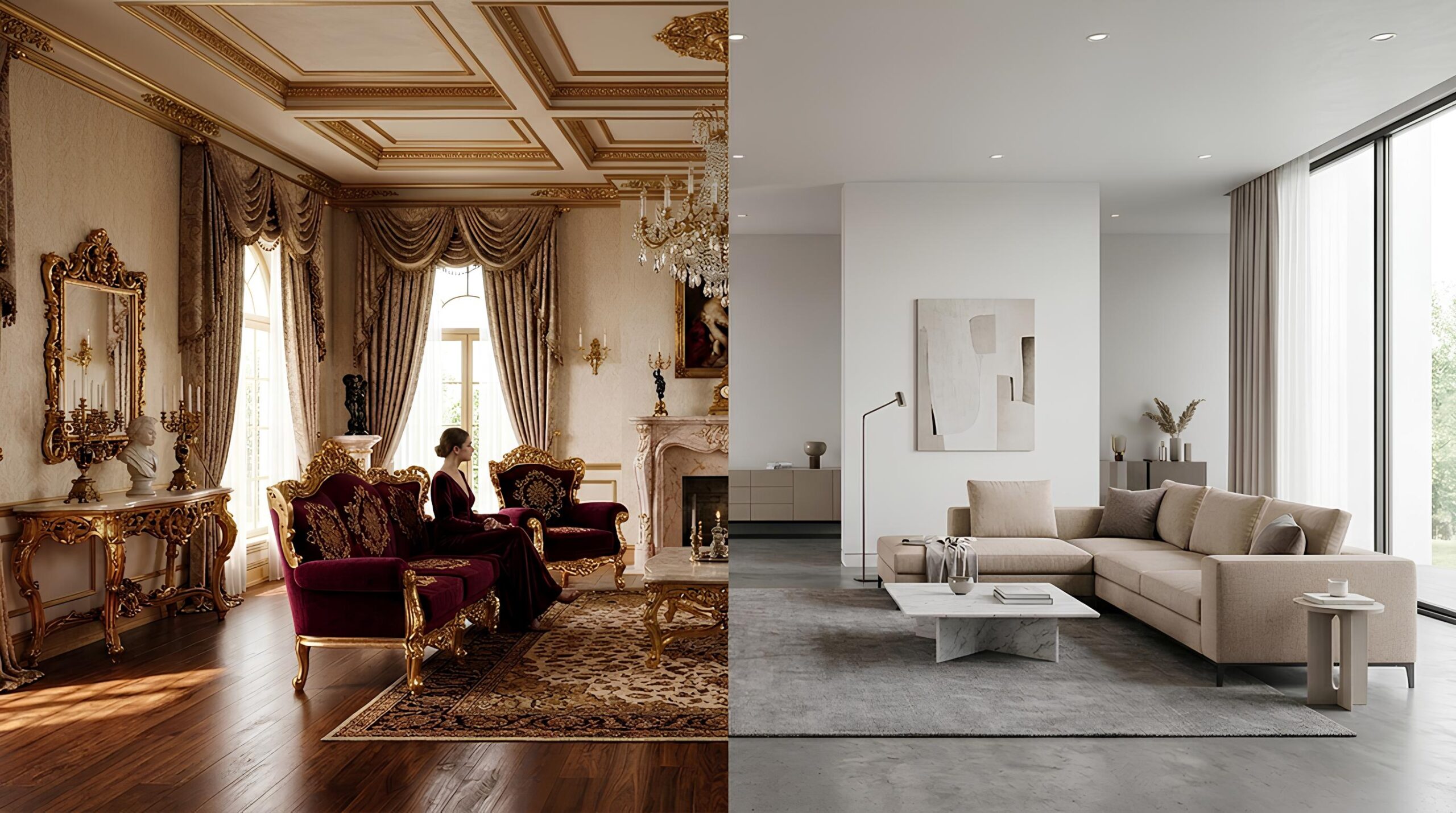
Baroque vs. Minimalism: Which Luxury Style Actually Feels More Timeless?

Luxury design has always evolved with changing cultural tastes, architectural movements, and artistic philosophies. Yet two distinct styles continue to dominate conversations in modern interiors—baroque furniture and modern furniture inspired by minimalism. One represents centuries of ornamentation, carved craftsmanship, and dramatic elegance, while the other celebrates simplicity, clean lines, and restrained sophistication.

Both design approaches are widely used in today’s luxury furniture market, appearing in high-end homes, boutique hotels, and contemporary villas across Europe. But when it comes to timeless luxury, the debate becomes fascinating. Does timelessness lie in elaborate craftsmanship and historical heritage, or in minimal designs that resist decorative trends?

Interior designers and homeowners often find themselves divided on this question. Some believe that the artistic character of baroque-style furniture carries a permanence that transcends trends. Others argue that minimalist modern furniture achieves timelessness through simplicity and adaptability.

Let’s explore both perspectives to understand which luxury style truly feels more timeless.

The Enduring Heritage of Baroque Furniture

Few furniture styles possess the historical depth of baroque furniture. Originating in 17th-century Europe, the Baroque movement celebrated grandeur, artistic expression, and dramatic visual impact. Furniture created during this period reflected the wealth and power of aristocratic courts.

A typical piece of baroque-style furniture features intricate carvings, sculptural silhouettes, and luxurious finishes such as gold leaf or polished wood. These pieces were designed not merely for function but to communicate prestige and artistic craftsmanship.

Key characteristics of baroque furniture include:

• Elaborate carved wood detailing
• Ornamental scrolls and floral motifs
• Dramatic silhouettes and curved forms
• Luxurious finishes such as gilded accents

Furniture historian Alessandro Ricci explains the lasting appeal of the style:

“Baroque furniture carries centuries of artistic tradition. Its craftsmanship connects modern interiors with a heritage that cannot easily be replicated.”

Because of this historical richness, many designers consider baroque-style furniture an expression of timeless luxury. A carved console table or ornate chair can instantly elevate a room, creating an atmosphere reminiscent of European palaces and grand estates.

In luxury homes, hotels, and villas, baroque furniture often acts as a statement piece that anchors the entire interior design.

The Rise of Minimalism and Modern Furniture

While Baroque design celebrates ornamentation, minimalism takes the opposite approach. Modern interior movements of the 20th century introduced modern furniture that prioritized simplicity, functionality, and clean lines.

Minimalist spaces emphasize openness and clarity. Instead of decorative carvings and elaborate finishes, modern furniture relies on geometric shapes, neutral color palettes, and subtle materials such as marble, steel, or natural wood.

Common characteristics of minimalist luxury furniture include:

• Clean architectural lines
• Neutral tones such as white, grey, and beige
• Smooth surfaces with minimal ornamentation
• Functional and uncluttered design

Interior designer Elena Weiss describes why minimalism appeals to contemporary homeowners:

“Modern furniture creates calm interiors. By removing visual noise, minimal design allows architecture and space to become the focal point.”

For many people, this simplicity represents a modern interpretation of timeless luxury. A carefully designed minimalist interior can remain visually relevant for decades because it avoids decorative elements that may feel dated over time.

This adaptability is one reason modern furniture is widely used in luxury apartments, contemporary villas, and high-end urban residences.

Baroque vs. Minimalism: Two Opposite Design Philosophies

The debate between baroque furniture and minimalist modern furniture ultimately reflects two different philosophies of luxury.

Baroque Design Philosophy

Baroque interiors celebrate expressive beauty and craftsmanship. Designers who favor baroque-style furniture often focus on creating dramatic visual experiences.

The advantages of Baroque design include:

• Strong artistic identity
• Historical cultural heritage
• Rich craftsmanship and detailing
• Immediate visual impact

In spaces designed around baroque furniture, each piece contributes to a layered and luxurious atmosphere.

Minimalist Design Philosophy

Minimalism approaches luxury through restraint. Instead of decorative complexity, modern furniture emphasizes balance, proportion, and architectural clarity.

Key advantages of minimalist design include:

• Clean and uncluttered interiors
• Flexible design that adapts to trends
• Emphasis on functionality and comfort
• A calm and spacious atmosphere

For homeowners seeking contemporary luxury furniture, minimalist design offers a refined aesthetic that feels modern and sophisticated.

Which Style Ages Better Over Time?

The question of timelessness often depends on how interiors evolve. Designers note that both baroque furniture and modern furniture can feel timeless when used thoughtfully.

However, each style ages differently.

Baroque-style furniture maintains its appeal through craftsmanship and heritage. Because it represents a historical design tradition, it rarely feels outdated in classic interiors.

Minimalist modern furniture, on the other hand, remains relevant through simplicity. Its clean lines and neutral forms make it easy to adapt to changing décor trends.

Interior architect Claudia Werner summarizes the debate perfectly:

“Baroque furniture is timeless because it celebrates art and heritage. Modern furniture is timeless because it removes unnecessary decoration. Both approaches achieve luxury in different ways.”

This perspective suggests that timelessness is not defined by style alone but by the quality of the design and materials used.

The Emerging Trend: Blending Both Styles

Interestingly, many contemporary designers are no longer choosing one style over the other. Instead, they are combining baroque-style furniture with minimalist architecture to create interiors that balance history and modernity.

Examples of this approach include:

• A sculptural baroque furniture console placed in a minimalist hallway
• Ornate carved chairs paired with modern marble dining tables
• Classical mirrors used within contemporary living spaces

This combination allows homeowners to enjoy the heritage of baroque furniture while maintaining the clarity of modern interiors.

According to designer Marco Bellini:

“The most exciting luxury homes today mix design eras. A single baroque piece inside a modern space creates a powerful visual contrast.”

This hybrid approach is becoming increasingly popular in luxury villas and boutique hotels across Europe.

What Defines Timeless Luxury Today?

In the end, the concept of timeless luxury goes beyond choosing between Baroque and minimalism. Instead, it comes down to three essential factors:

Craftsmanship – High-quality luxury furniture lasts longer and retains its beauty.
Design integrity – Well-balanced interiors remain appealing regardless of trends.
Personal expression – Spaces that reflect personality feel authentic and enduring.

Both baroque-style furniture and modern furniture can embody these qualities when used thoughtfully.

The real key to timeless interiors is not simply the style itself but the intention behind the design.

Conclusion: Which Style Feels More Timeless?

So which style truly defines timeless luxury—baroque furniture or minimalist modern furniture?

Baroque interiors offer artistic richness, historical heritage, and dramatic craftsmanship that have inspired designers for centuries. Minimalist spaces, meanwhile, create calm environments through simplicity and architectural clarity.

Rather than a clear winner, the debate reveals something more interesting: both styles contribute to the evolving definition of timeless luxury.

Some interiors feel timeless because of ornate craftsmanship. Others achieve the same effect through elegant simplicity.

Now we want to hear your opinion.

Which style feels more timeless to you—Baroque elegance or minimalist modern design?

Share your thoughts and vote in the comments, and let’s see which luxury style truly wins the debate.

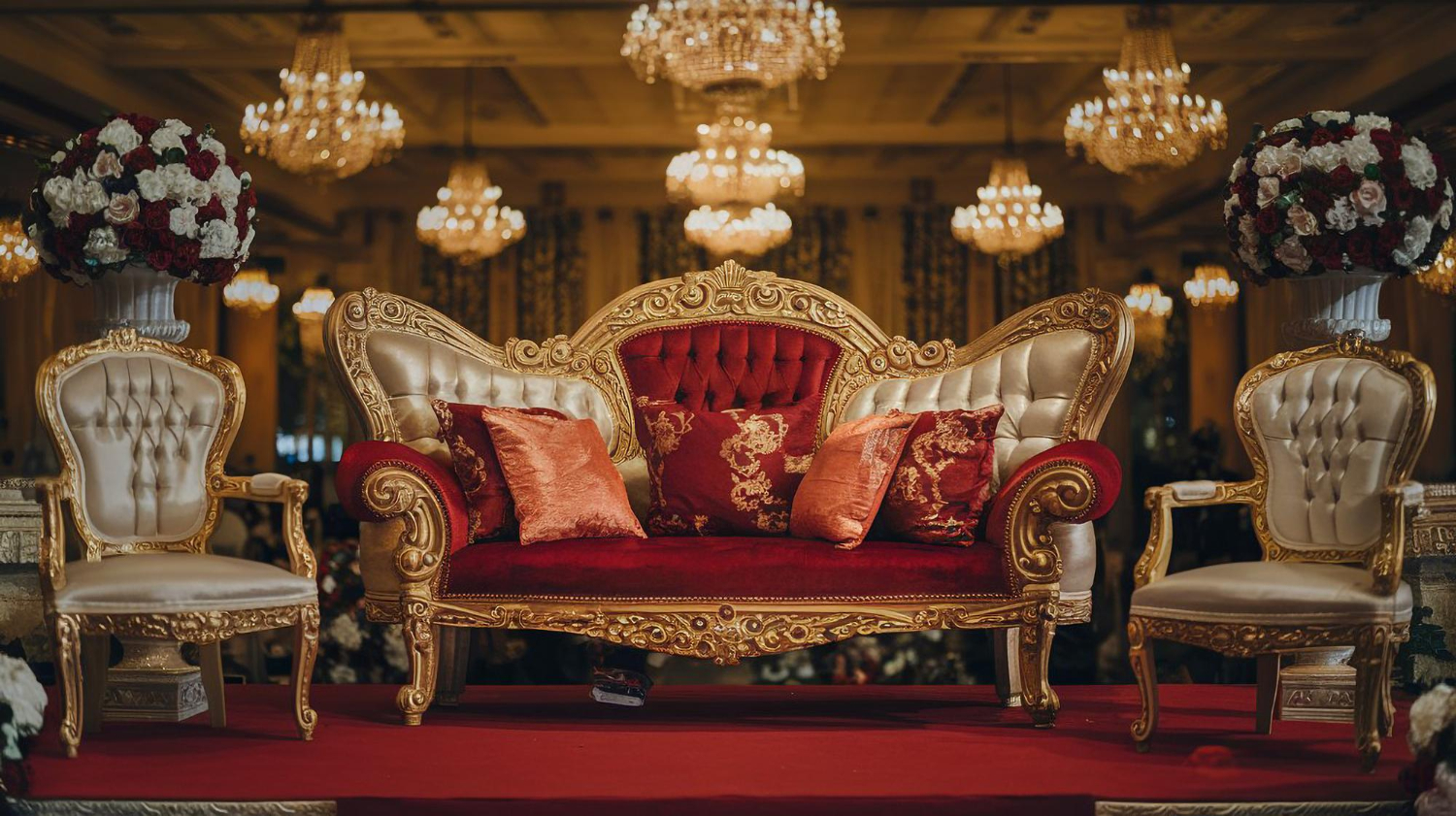
Royal Seating Design: Baroque Chairs That Command Elegance

Luxury interiors are often defined by statement pieces that immediately communicate sophistication and heritage. Among the most iconic examples are baroque chairs—seating designs that combine dramatic sculptural silhouettes, elaborate carved wood detailing, and radiant gold finishes. These pieces are not simply furniture; they represent centuries of European craftsmanship and aristocratic style.

A well-crafted baroque chair instantly transforms a space. Whether placed in a luxury home, a boutique hotel suite, or an elegant reception area, it introduces grandeur and artistic character. As part of the broader tradition of baroque furniture, these chairs embody a design philosophy that celebrates ornamentation, craftsmanship, and timeless elegance.

Why Baroque Chairs Remain a Symbol of Luxury

Across Europe, interior designers and luxury homeowners continue to choose baroque chairs for their powerful visual presence and heritage craftsmanship.

Here are some of the reasons why they remain highly desirable:

Architectural presence – A baroque chair acts as a focal point in a room due to its dramatic silhouette and sculptural form.
Handcrafted artistry – The carved wood frames showcase traditional European craftsmanship rarely found in mass-produced furniture.
Luxurious finishes – Gold leaf, antique silver, and polished wood finishes enhance the elegance of baroque furniture.
Versatility in luxury interiors – These chairs complement both classic and contemporary luxury spaces.
Timeless design appeal – Unlike temporary trends, baroque chairs maintain relevance across generations.

Interior designer Sophie Laurent once described the impact of classical seating beautifully:

“A well-crafted baroque chair does more than offer a seat—it becomes a sculptural centerpiece that elevates the entire atmosphere of a room.”

Sculptural Silhouettes That Define Baroque Design

One of the most distinctive elements of baroque chairs is their dramatic silhouette. Unlike minimalist furniture styles, a baroque chair celebrates bold curves and elaborate forms.

Typical structural characteristics include:

High decorative backrests that create a sense of grandeur
Gracefully curved legs that add movement and elegance
Ornamental armrests with carved scroll patterns
Crested tops or decorative crowns that emphasize regal design

These sculptural forms give baroque furniture its unmistakable identity. The design is intentionally dramatic, allowing the chair to function almost like an art object within the room.

In luxury hotels and private residences, designers often place baroque chairs in spaces where visual impact matters most—such as living rooms, entry halls, and reception lounges.

Hand-Carved Wood Detailing: The Heart of Baroque Craftsmanship

A defining feature of every authentic baroque chair is the intricate carving that shapes its wooden frame. Skilled artisans carefully sculpt hardwood to create decorative motifs that enhance the elegance of the design.

Common carving patterns found in baroque furniture include:

Acanthus leaves – A classic motif from European decorative arts
Floral scrollwork – Flowing patterns that create depth and movement
Royal crests – Symbolic elements that reflect aristocratic heritage
Decorative vines and curves – Details that soften the structural lines

Each carved element adds dimension and character to the chair. When light touches the carved surfaces of a baroque chair, shadows and highlights reveal the complexity of the craftsmanship.

Furniture historian Alessandro Ricci once noted:

“Baroque furniture was never meant to be quiet. Every curve and carving speaks of craftsmanship, power, and artistic expression.”

Gold Leaf Finishes That Reflect Royal Heritage

No discussion of baroque chairs is complete without mentioning the luxurious finishes that define the style. Historically, European royal courts favored furniture decorated with gold leaf—a tradition that continues today.

Gold detailing enhances the beauty of a baroque chair in several ways:

Highlights carved details in the wooden frame
Reflects natural light, creating a luminous visual effect
Adds a regal aesthetic that elevates the entire interior

Although gold remains the most recognizable finish, modern baroque furniture also appears in:

• Antique silver tones
• Ivory or cream lacquer finishes
• Rich dark wood textures

These variations allow baroque chairs to complement a wide range of luxury interior styles while maintaining their classical identity.

Where Baroque Chairs Work Best

One of the reasons baroque chairs remain popular in modern design is their versatility. They can enhance both residential and hospitality interiors.

Luxury Homes

In private residences, a baroque chair is often used as an accent piece. Ideal placements include:

• Living rooms as decorative statement seating
• Dressing rooms or vanity areas
• Elegant reading corners or private salons

The presence of baroque furniture introduces a refined European atmosphere that instantly elevates the space.

Luxury Hotels and Boutique Properties

Hospitality designers frequently incorporate baroque chairs into hotel interiors to create a memorable guest experience.

Common placements include:

• Hotel lobby lounges
• VIP suites and executive rooms
• Fine dining spaces
• Reception areas

As hospitality designer Claudia Werner explains:

“Guests remember spaces that feel distinctive. Baroque seating introduces character and heritage that modern furniture alone cannot replicate.”

The Timeless Appeal of Baroque Furniture

Design trends constantly evolve, yet baroque chairs remain consistently admired. Their longevity comes from the unique balance of artistry, craftsmanship, and dramatic design.

Key qualities that make baroque furniture timeless include:

• Heritage craftsmanship rooted in European tradition
• Sculptural design that functions as decorative art
• Luxurious finishes that maintain visual richness
• A strong connection to historical architecture and culture

For luxury homeowners and designers across Europe, investing in a baroque chair is not simply about acquiring furniture—it is about bringing a piece of artistic heritage into the interior.

Conclusion

In the world of luxury interiors, baroque chairs stand as enduring symbols of elegance and craftsmanship. Their sculptural silhouettes, intricate carved wood detailing, and luminous gold finishes create seating pieces that feel both majestic and timeless.

Whether used in a luxury home, boutique hotel, or refined private space, a carefully chosen baroque chair adds character, prestige, and visual drama. As part of the rich tradition of baroque furniture, these chairs continue to inspire designers and collectors who appreciate artistry, heritage, and sophisticated design.

For those seeking seating that goes beyond function and truly commands attention, baroque chairs remain one of the most powerful expressions of royal European elegance.

Hand-Carved Baroque Mirrors: A Masterpiece of Traditional European Craftsmanship

Somewhere between a painting and a portal, a hand-carved baroque mirror does something no modern fixture ever could — it holds time still. Long before luxury became a marketing term, European master craftsmen were quietly perfecting an art form that would outlast empires. These were not decorative afterthoughts; they were statements of culture, power, and singular beauty. Today, as discerning homeowners and hospitality designers across Europe seek spaces that whisper of history rather than shout of trend, the baroque mirror has returned — not as a revival, but as a recognition that true artistry never truly left.


The Art of Hand-Carving: Where Wood Tells a Story

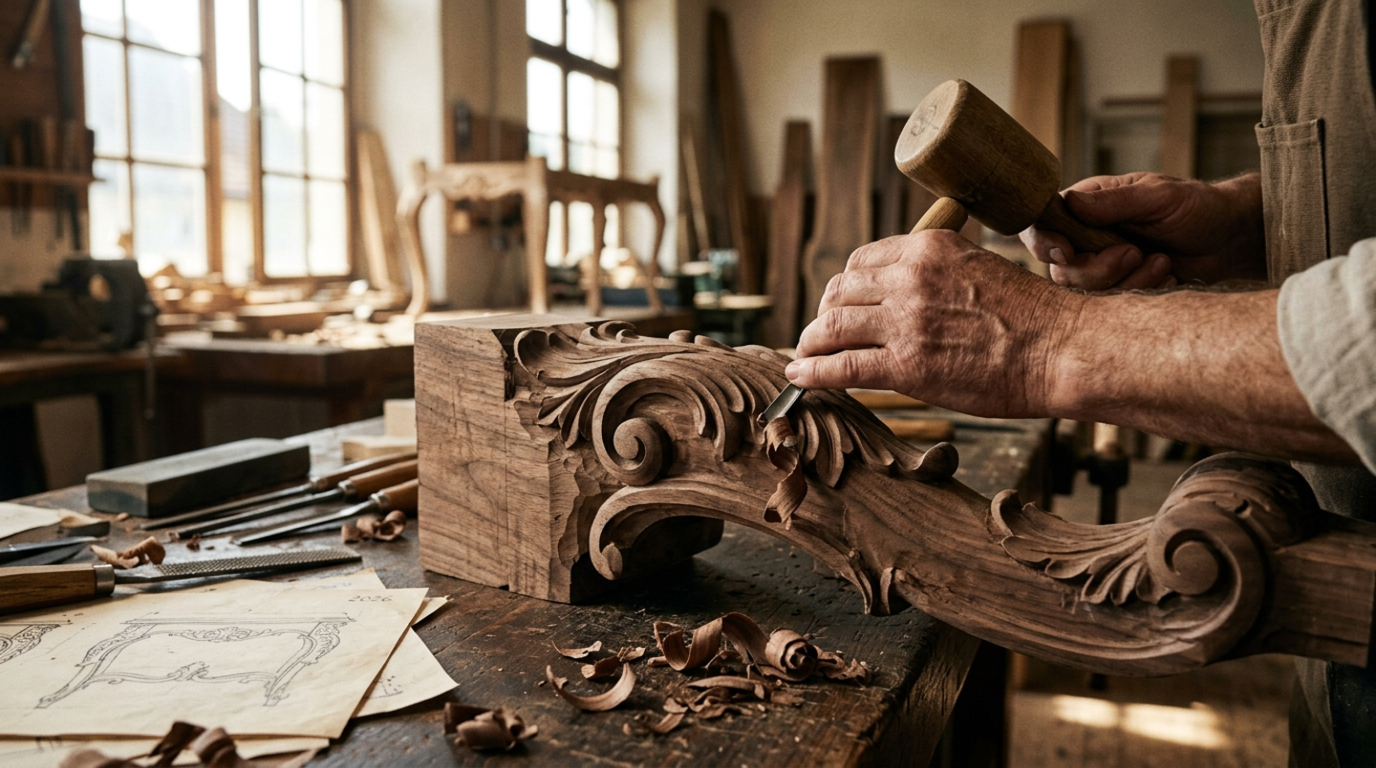
Every carved wood mirror begins as a block of timber — lime wood, walnut, or gilded beech — selected by artisans who understand that the material itself has character. Using chisels and gouges unchanged in design for centuries, master carvers coax intricate scrollwork, acanthus leaves, cherubs, and floral garlands from raw grain. No two pieces are identical. A slight variation in depth, a curl of foliage that catches light differently — these are not imperfections. They are signatures.

The carving process alone can take several weeks for a single frame. Artisans work layer by layer, first roughing out the broad composition, then refining details with increasingly fine tools until the motifs emerge with a depth and dimensionality that machine production simply cannot replicate. It is slow, intentional work — the antithesis of mass manufacturing, and precisely what luxury demands.

Heritage Techniques Passed Through Generations

The Baroque period — spanning the 17th and early 18th centuries — gave birth to an aesthetic of grandeur that swept through the courts of France, Italy, Austria, and Spain. Craftsmen working under royal patronage developed techniques in wood gilding, gesso application, and relief carving that became the hallmark of European luxury interiors. An antique carved mirror from this tradition was never simply functional; it was an architectural element, a centrepiece that commanded an entire room.

Today’s finest baroque mirrors are crafted in workshops that honour these very same methods. Artisans apply multiple layers of traditional gesso — a chalk and glue mixture — to the carved wood before burnishing gold leaf by hand using agate tools. The result is a finish of extraordinary warmth and depth; one that ages beautifully rather than deteriorating, gaining character with every passing decade.


Where These Mirrors Belong: Spaces Worthy of a Masterpiece

A baroque mirror is not merely décor — it is a defining presence. In luxury hotels, a grand carved wood mirror in the lobby creates an immediate sense of arrival, signalling to guests that they have stepped into a space where quality and history are taken seriously. In private residences, it transforms a drawing room, master bedroom, or entrance hall into something that feels curated across centuries rather than assembled in an afternoon.

For interior designers working on high-end European properties, an antique carved mirror — whether a genuine period piece or a faithful handcrafted reproduction — serves as an anchor around which the entire room can be designed. Its scale, its gilding, and its elaborate wood detailing draw the eye and establish tone in a way no other single object can.

Choosing Authenticity in a World of Imitation

When investing in a baroque mirror of genuine quality, the markers of authenticity are clear to those who know where to look. The weight of solid wood versus hollow resin composites. The subtle irregularity of hand-gilded surfaces versus the uniform flatness of spray-applied finishes. The crispness of hand-tooled acanthus leaves versus the rounded softness of moulded plastic replicas. These distinctions matter — not merely aesthetically, but in terms of longevity and enduring value.

A hand-carved mirror of true baroque heritage is an heirloom. It appreciates. It tells a story that enriches every space it inhabits.

Old-world luxury is not nostalgia — it is a standard. Hand-carved baroque mirrors represent the very pinnacle of that standard, offering a connection to European artistic heritage that no contemporary piece can replicate. For those who demand the finest in their homes, hotels, and private spaces, there is simply no substitute for the real thing: timber, chisel, gold leaf, and centuries of unbroken craft.

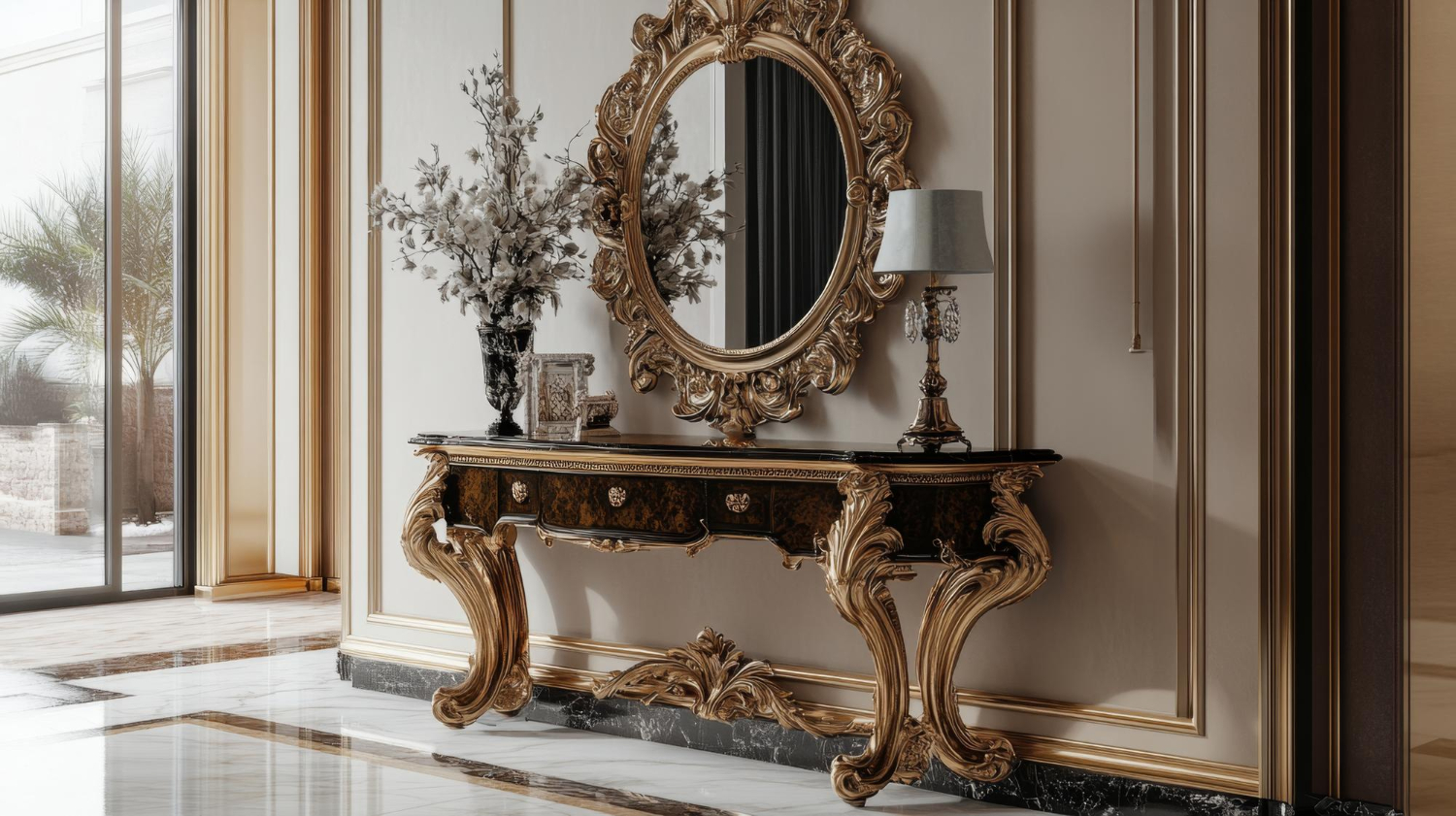
Baroque Console Tables: The Most Photographed Piece in Entryways Right Now

Scroll through Instagram or Pinterest and you’ll notice a pattern: the entryway is no longer an afterthought. It has become the most styled, curated, and photographed corner of the home. And at the center of this visual trend? The baroque console table.

Once reserved for grand halls and classical interiors, baroque furniture has found new life in modern homes—especially in entryways. Ornate carvings, sculptural legs, and gilded finishes are now being reimagined in brighter palettes and contemporary settings. The result is a dramatic yet elegant focal point that instantly elevates first impressions.

In fact, designers are calling the entryway baroque console the new “statement piece” of luxury interiors.


Why Entryways Are Getting the Baroque Treatment

The entryway sets the tone for the entire home. It’s the first thing guests see and the backdrop for countless social media photos. A thoughtfully styled statement console table transforms this transitional space into something intentional and expressive.

Unlike large furniture pieces that require full-room coordination, a baroque console table delivers impact without overwhelming the space. Its narrow profile fits comfortably along walls, yet its carved detailing and symmetrical form create visual drama.

Today’s homeowners are blending classic luxury baroque furniture with modern elements—neutral walls, contemporary lighting, and minimalist art. This contrast makes the console feel curated rather than theatrical.

The result? An entryway that feels both timeless and current.


The Rise of the Instagram Baroque Console

There’s a reason the instagram baroque console has become so popular. It photographs beautifully.

The carved legs cast soft shadows under natural light. Gold leaf accents reflect brightness. Mirrors placed above the console amplify the depth of the room. Whether styled with seasonal florals or sculptural décor, the look feels layered and luxurious.

Interior designers note that entryways with baroque furniture generate higher engagement on social platforms. The reason is simple: people are drawn to craftsmanship and detail. In a sea of minimalist interiors, ornamentation stands out.

But the key to making an entryway baroque console feel modern is balance.


How to Style a Baroque Console Table Without Overdoing It

While ornate by nature, a baroque console table doesn’t need heavy décor. In fact, restraint enhances sophistication.

Here are professional styling principles:

1. Anchor With a Mirror

A large mirror above the console amplifies light and reinforces symmetry. Choose a carved frame for cohesion or a sleek modern mirror for contrast.

2. Keep the Surface Curated

Avoid clutter. Two sculptural objects and one focal piece—such as a vase or lamp—are often enough. Let the detailing of the statement console table remain visible.

3. Play With Height Variation

Tall candlesticks paired with low decorative bowls create dynamic layering without overwhelming the design.

4. Add Subtle Texture

A linen runner, marble accessories, or ceramic sculptures add softness to the strong lines of luxury baroque furniture.

The goal is to let the console speak—without shouting.


The Bright Console Movement

Much like dining chairs and other baroque furniture, console tables are evolving toward lighter finishes. Ivory, white lacquer, and soft gold are replacing darker tones. This shift allows the entryway baroque console to feel airy rather than heavy.

Light finishes reflect natural daylight, making small entryways appear larger. Gold accents provide warmth without overpowering the palette.

This modern interpretation of luxury baroque furniture aligns perfectly with contemporary homes that prioritize brightness and openness.


Join the Styling Challenge: Show Us Your Console

Here’s where you come in.

We’re launching a monthly Baroque Entryway Styling Challenge—and we’d love to see your interpretation of the perfect instagram baroque console.

Each month features a new theme:

  • Spring Renewal: Fresh florals and pastel accents
  • Summer Light: Coastal textures and airy arrangements
  • Autumn Warmth: Candles, natural wood tones, and subtle metallics
  • Holiday Elegance: Garlands, statement mirrors, and festive layers

Participants can submit photos of their baroque console table styled according to the theme. The most creative entry will be featured in our monthly spotlight.

Why participate? Because entryways are personal. They reflect how you welcome the world into your home.


Why Baroque Console Tables Are Here to Stay

Trends come and go, but the enduring appeal of baroque furniture lies in craftsmanship. Hand-carved detailing, balanced proportions, and ornamental flourishes have defined European interiors for centuries.

The difference today is context.

Modern designers use the statement console table as a bridge—linking classical artistry with contemporary minimalism. The interplay feels curated rather than nostalgic.

Whether placed in a grand foyer or a compact apartment hallway, a well-chosen entryway baroque console becomes more than furniture. It becomes a signature.


Choosing the Right Baroque Console Table

If you’re considering investing in a baroque console table, think about scale and finish first.

  • In smaller entryways, opt for lighter tones to maximize brightness.
  • In larger spaces, deeper finishes create dramatic depth.
  • Consider pairing your console with complementary luxury baroque furniture pieces for cohesion.

Above all, prioritize quality. The beauty of baroque furniture lies in its detail—and detail demands craftsmanship.


Final Thoughts: The Entryway as a Design Statement

Your entryway is more than a passage—it’s an introduction. It hints at what lies beyond and reflects your personal style.

The rise of the instagram baroque console proves that homeowners are embracing bold, sculptural pieces once again. But they’re doing so thoughtfully—balancing ornamentation with light, restraint, and modern sensibility.

If you’ve been searching for a way to transform your entrance into something unforgettable, a baroque console table may be the piece that changes everything.

Now it’s your turn.

How would you style your statement console table? Share your vision, join the challenge, and let your entryway become the most photographed corner of your home.

The Top 5 Baroque Style Dining Tables That Will Never Go Out of Style

When it comes to outfitting a private estate, a luxury hotel, or a lavish modern home, few design choices make as profound a statement as the inclusion of a Baroque dining table. Originating in 17th-century Europe, the Baroque era was characterized by an unyielding dedication to drama, grandeur, and ornate detail. Today, that same spirit lives on. True luxury baroque furniture transcends mere trend; it is an investment in timeless appeal and architectural artistry.

For the discerning European luxury shopper, a dining space is not just a room—it is the grand stage for hosting, dining, and celebrating life’s most exquisite moments. A carefully selected Baroque style dining table anchors this space with historical gravity and unparalleled elegance.

Below, we explore the top five Baroque style dining tables that promise to never go out of style, showcasing the zenith of baroque furniture craftsmanship.


1. The Versailles Gilded Masterpiece

Inspired by the ultimate European symbol of absolute monarchy and opulent living, the Versailles-style Baroque dining table is the crown jewel of any dining hall.

Versailles dining room in Louis XVI

  • Design Signatures: This table features heavily carved, solid mahogany legs finished in authentic 24-karat gold leaf. The apron of the table is typically adorned with classic Baroque motifs—swirling acanthus leaves, cherubs, and intricate floral garlands.
  • The Timeless Appeal: Gold and rich wood will never lose their association with royalty. The dramatic contrast and reflective nature of the gilding bring warmth and light to large dining rooms.
  • Best Suited For: Private palaces and grand luxury homes where the dining room features high ceilings and crystal chandeliers.


2. The Roman Imperial Marble-Top Table

If you are seeking a Baroque style dining table that commands immediate respect, the Roman Imperial style is unmatched. Rome was the birthplace of the Baroque movement, and this table reflects the architectural weight of the city itself.

Marble and bronze table, Marble and bronze, Roman

  • Design Signatures: Instead of a traditional wooden top, this piece boasts a thick, rare marble surface—often Nero Marquina or Calacatta Gold. The base is constructed from deeply stained walnut, carved into monumental pedestal legs that mimic classical columns.
  • The Timeless Appeal: Marble is eternally chic. When paired with the heavy, masculine carvings of traditional baroque furniture, it creates an indestructible heirloom piece that bridges the gap between art and utility.
  • Best Suited For: Luxury hotels and boutique dining spaces that require durable yet breathtakingly beautiful surfaces.


3. The Venetian Floral Marquetry Table

Venetian baroque style furniture is renowned for its romance, lightness, and extraordinary attention to surface detail. For those who appreciate subtle complexity, the Venetian Marquetry table is a breathtaking choice.

  • Design Signatures: The defining feature of this Baroque dining table is its top. Master artisans use marquetry—the art of applying pieces of veneer to form decorative patterns—to create sweeping floral designs using exotic woods. The legs feature the signature curved “cabriole” shape, ending in elegant scroll feet.
  • The Timeless Appeal: The artistry of hand-laid wood inlay is a dying art, making these tables highly sought-after collector’s items. The softer, curved lines offer a more romantic interpretation of luxury baroque furniture.
  • Best Suited For: Elegant luxury homes and refined estates situated on the coast or in the countryside.


4. The Neapolitan Ebony & Silver Escutcheon

For a more dramatic, almost gothic interpretation of baroque furniture, the Neapolitan Ebony table offers a striking departure from traditional gold and brown tones.

Dining Table Merton Dark Baroque Style Rectangular Black Lacquered Glossy and Silver Leaf 205 x 105 Cm


  • Design Signatures: This table is crafted from ebonized wood, providing a deep, lustrous black finish. The carvings are highlighted not with gold, but with meticulously applied silver leaf or solid silver escutcheons. The contrast is sharp, moody, and impossibly chic.
  • The Timeless Appeal: Black and silver provide a modern twist on historical baroque style furniture. This color palette allows the table to blend seamlessly with both contemporary and antique art collections.
  • Best Suited For: Modern luxury homes in metropolitan centers, where classic architecture meets contemporary interior design.


5. The Florentine Hand-Carved Walnut Banquet Table

When you need to seat a sprawling family or host a grand gala, the Florentine Banquet table is the quintessential Baroque style dining table.

Dining room with wooden table and chairs, modern light fixture, and framed artwork on the wall.

  • Design Signatures: Crafted from solid, dark-stained Italian walnut, this table relies on the sheer volume of its carvings rather than metallics. Expect deep relief carvings of lions, mythological creatures, and robust scrolls along the apron and double-pedestal base.
  • The Timeless Appeal: The Florentine table represents the pure, unadulterated essence of woodworking. As the wood ages, it develops a rich patina that only enhances the depth of the baroque style furniture carvings.
  • Best Suited For: Historic chateaus, luxury hotel banqueting halls, and private estates where legacy and tradition are paramount.


Why Invest in Luxury Baroque Furniture?

In a world increasingly dominated by mass production and minimalist aesthetics, luxury baroque furniture stands as a bold rebellion. Investing in a Baroque dining table is an homage to history, art, and uncompromising quality.

Whether you are designing the dining room of a historic European manor, curating the aesthetic of a five-star luxury hotel, or bringing Old World charm into a newly built private palace, a Baroque style dining table serves as the perfect anchor. These tables are not just places to eat; they are the epicenters of conversation, celebration, and legacy.

By choosing authentic, well-crafted baroque furniture, you are ensuring that your interior design retains its grand, timeless appeal for generations to come.